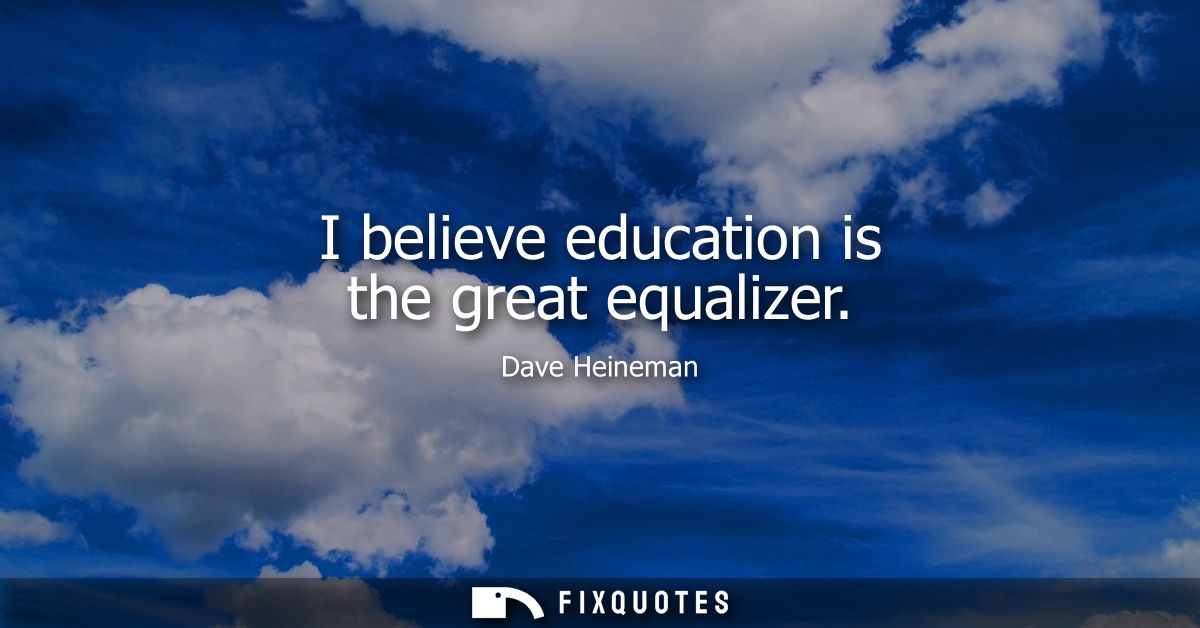
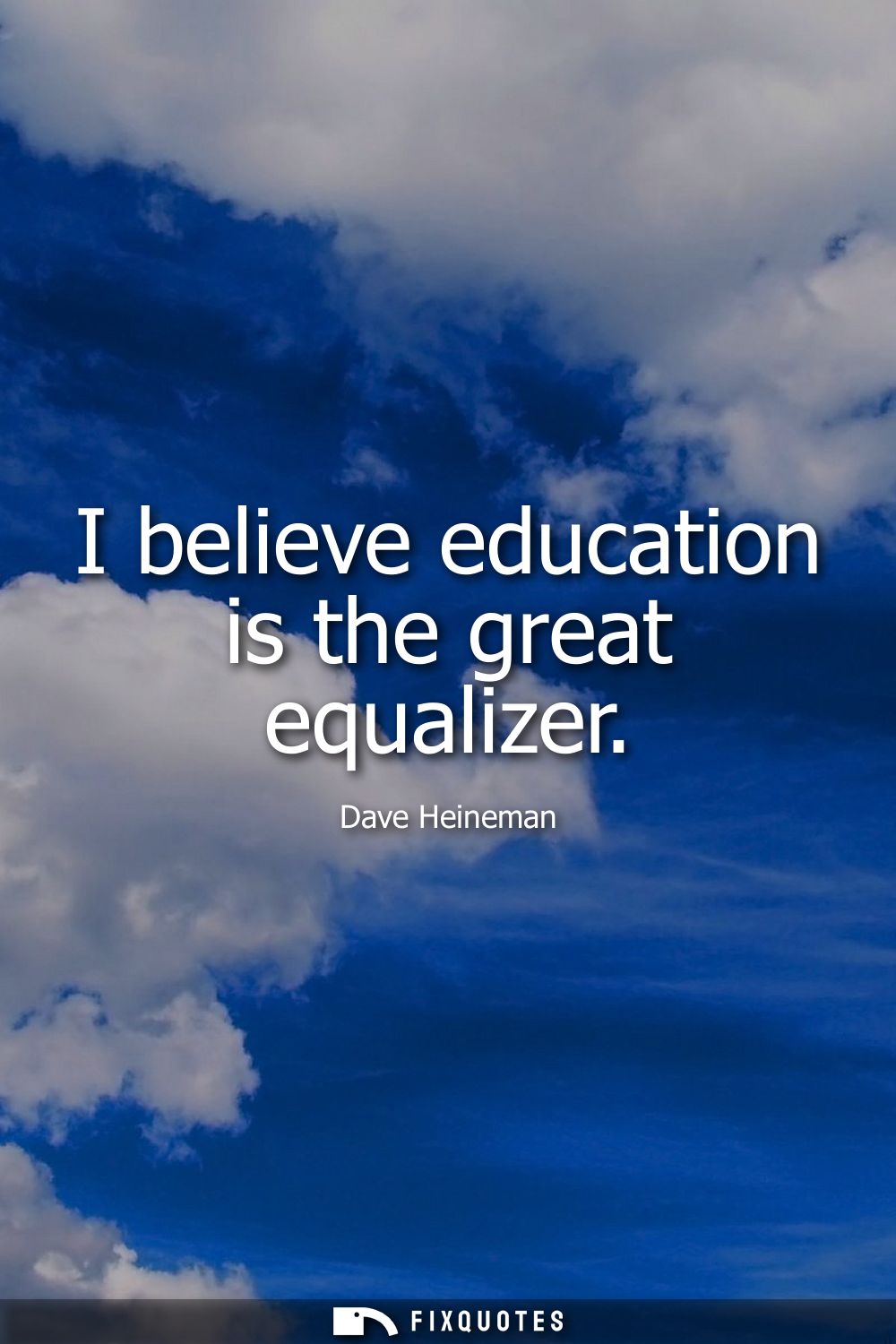
"I believe education is the great equalizer"
About this Quote
“Education is the great equalizer” is the kind of line politicians love because it sounds both moral and practical: invest in schools, and inequality shrinks without anyone having to name villains or pick fights. Dave Heineman, a Republican governor from Nebraska, used this framing in a context where public spending, workforce development, and “opportunity” rhetoric have to coexist with fiscal caution. It’s aspirational, but also strategically tidy.
The intent is to shift the conversation from redistribution to mobility. “Equalizer” implies fairness without promising sameness; it reassures middle-class voters that the system stays merit-based while offering a dignified ladder to people shut out of it. The subtext is that inequality is best solved upstream, through skills and credentials, rather than downstream, through taxes, labor power, or direct cash support. It converts structural problems into a personal and institutional project: study hard, get trained, compete.
The line works because it flatters almost everyone. Educators hear respect. Businesses hear “human capital.” Taxpayers hear investment rather than entitlement. Parents hear protection for their kids. Even critics can nod along because the claim is hard to reject without sounding anti-education.
What’s left unsaid is where “education” actually equalizes and where it doesn’t. School quality tracks property wealth; college debt can widen gaps; credentials can become gatekeeping instead of liberation. Calling education the equalizer is a promise and an alibi: it suggests the playing field can be leveled without talking too much about who controls the field.
The intent is to shift the conversation from redistribution to mobility. “Equalizer” implies fairness without promising sameness; it reassures middle-class voters that the system stays merit-based while offering a dignified ladder to people shut out of it. The subtext is that inequality is best solved upstream, through skills and credentials, rather than downstream, through taxes, labor power, or direct cash support. It converts structural problems into a personal and institutional project: study hard, get trained, compete.
The line works because it flatters almost everyone. Educators hear respect. Businesses hear “human capital.” Taxpayers hear investment rather than entitlement. Parents hear protection for their kids. Even critics can nod along because the claim is hard to reject without sounding anti-education.
What’s left unsaid is where “education” actually equalizes and where it doesn’t. School quality tracks property wealth; college debt can widen gaps; credentials can become gatekeeping instead of liberation. Calling education the equalizer is a promise and an alibi: it suggests the playing field can be leveled without talking too much about who controls the field.
Quote Details
| Topic | Learning |
|---|---|
| Source | Help us find the source |
| Cite |
Citation Formats
APA Style (7th ed.)
Heineman, Dave. (2026, January 16). I believe education is the great equalizer. FixQuotes. https://fixquotes.com/quotes/i-believe-education-is-the-great-equalizer-132227/
Chicago Style
Heineman, Dave. "I believe education is the great equalizer." FixQuotes. January 16, 2026. https://fixquotes.com/quotes/i-believe-education-is-the-great-equalizer-132227/.
MLA Style (9th ed.)
"I believe education is the great equalizer." FixQuotes, 16 Jan. 2026, https://fixquotes.com/quotes/i-believe-education-is-the-great-equalizer-132227/. Accessed 19 Feb. 2026.
More Quotes by Dave
Add to List