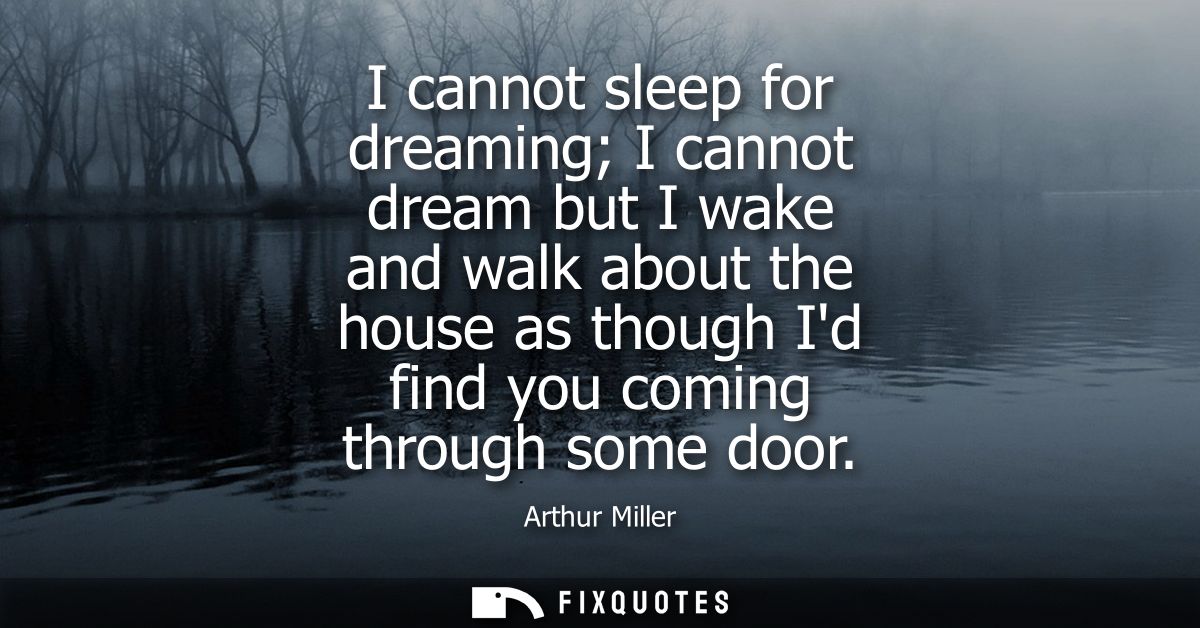
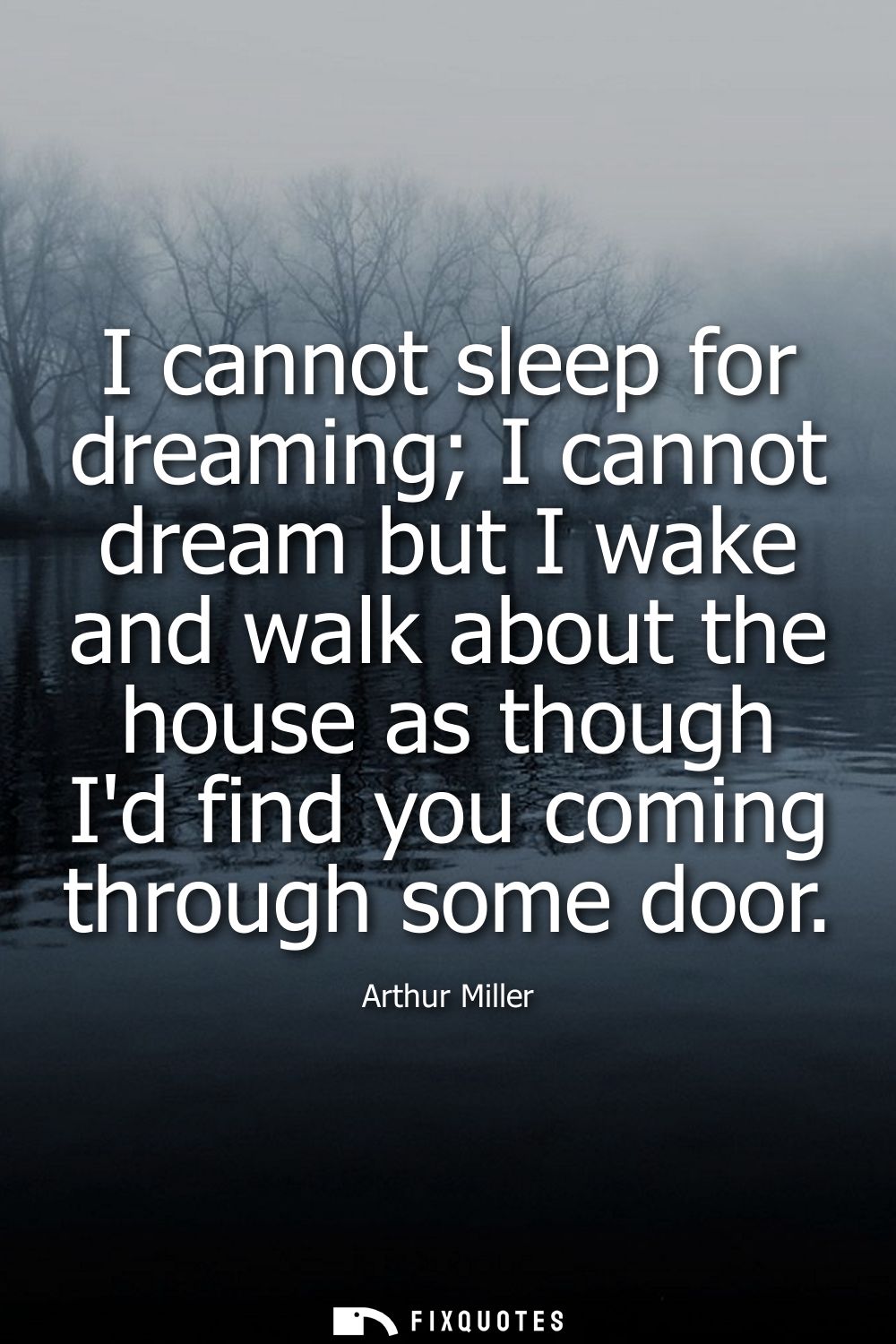
"I cannot sleep for dreaming; I cannot dream but I wake and walk about the house as though I'd find you coming through some door"
About this Quote
The specific intent is to make yearning concrete and humiliatingly ordinary. No metaphors of oceans or stars, just a person shuffling through domestic space, negotiating with hope like its an unwanted houseguest. Subtext: the speaker knows the beloved is not coming, yet cannot stop testing reality anyway. The conditional "as though" is the tell - its self-aware, almost ashamed, acknowledging the performance while still compelled to perform it. In Millers world, thats tragedy: the mind can diagnose its own delusion and still be governed by it.
Context matters because Miller is obsessed with the ways private need becomes a relentless moral weather system. His plays map how longing, guilt, and loyalty haunt the American home, where doors promise reinvention but deliver silence. This sentence turns the house into a tribunal: every room asks what you did, what you lost, what you still expect. The brilliance is how it frames love not as comfort, but as a restless search pattern - intimacy as the inability to stop checking the doors.
Quote Details
| Topic | Heartbreak |
|---|---|
| Source | Help us find the source |
| Cite |
Citation Formats
APA Style (7th ed.)
Miller, Arthur. (2026, January 18). I cannot sleep for dreaming; I cannot dream but I wake and walk about the house as though I'd find you coming through some door. FixQuotes. https://fixquotes.com/quotes/i-cannot-sleep-for-dreaming-i-cannot-dream-but-i-6818/
Chicago Style
Miller, Arthur. "I cannot sleep for dreaming; I cannot dream but I wake and walk about the house as though I'd find you coming through some door." FixQuotes. January 18, 2026. https://fixquotes.com/quotes/i-cannot-sleep-for-dreaming-i-cannot-dream-but-i-6818/.
MLA Style (9th ed.)
"I cannot sleep for dreaming; I cannot dream but I wake and walk about the house as though I'd find you coming through some door." FixQuotes, 18 Jan. 2026, https://fixquotes.com/quotes/i-cannot-sleep-for-dreaming-i-cannot-dream-but-i-6818/. Accessed 25 Mar. 2026.