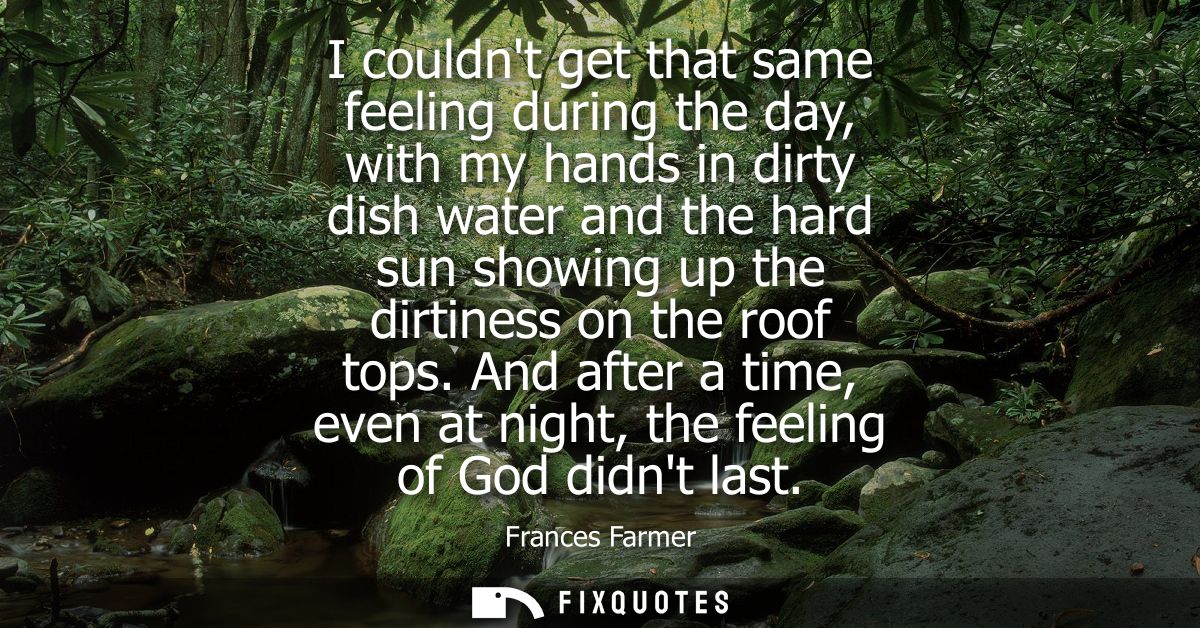
"I couldn't get that same feeling during the day, with my hands in dirty dish water and the hard sun showing up the dirtiness on the roof tops. And after a time, even at night, the feeling of God didn't last"
About this Quote
The intent feels less like atheism than a report from someone who’s tried to keep faith alive in conditions that make inner life feel like a luxury. Night offers cover, a softened atmosphere where emotion can inflate into the “feeling of God.” Day is the opposite: blunt, public, unromantic. Farmer’s brilliance is in refusing a tidy moral. She doesn’t blame God; she blames the world’s texture, its relentless insistence on surfaces, wages, chores, appearances.
Context sharpens the ache. Farmer was an actress whose life became a cautionary tale about Hollywood discipline, institutional power, and the punishment of unruly women. Read that way, the line isn’t only spiritual fatigue; it’s survival fatigue. Even at night, even in private, the transcendent “didn’t last” because the machinery of work, judgment, and control keeps humming. The subtext is brutal: if grace exists, it’s hard to hold onto when your life is organized to keep you busy, compliant, and seen in the worst light.
Quote Details
| Topic | Faith |
|---|---|
| Source | Help us find the source |
| Cite |
Citation Formats
APA Style (7th ed.)
Farmer, Frances. (2026, January 16). I couldn't get that same feeling during the day, with my hands in dirty dish water and the hard sun showing up the dirtiness on the roof tops. And after a time, even at night, the feeling of God didn't last. FixQuotes. https://fixquotes.com/quotes/i-couldnt-get-that-same-feeling-during-the-day-130168/
Chicago Style
Farmer, Frances. "I couldn't get that same feeling during the day, with my hands in dirty dish water and the hard sun showing up the dirtiness on the roof tops. And after a time, even at night, the feeling of God didn't last." FixQuotes. January 16, 2026. https://fixquotes.com/quotes/i-couldnt-get-that-same-feeling-during-the-day-130168/.
MLA Style (9th ed.)
"I couldn't get that same feeling during the day, with my hands in dirty dish water and the hard sun showing up the dirtiness on the roof tops. And after a time, even at night, the feeling of God didn't last." FixQuotes, 16 Jan. 2026, https://fixquotes.com/quotes/i-couldnt-get-that-same-feeling-during-the-day-130168/. Accessed 13 Feb. 2026.