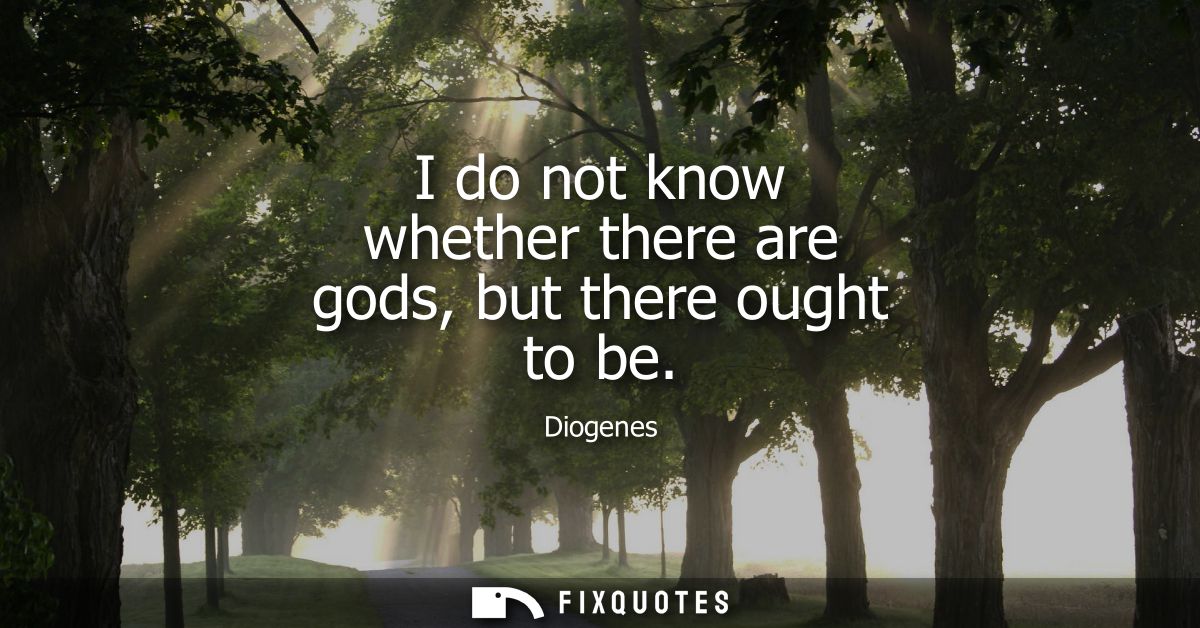
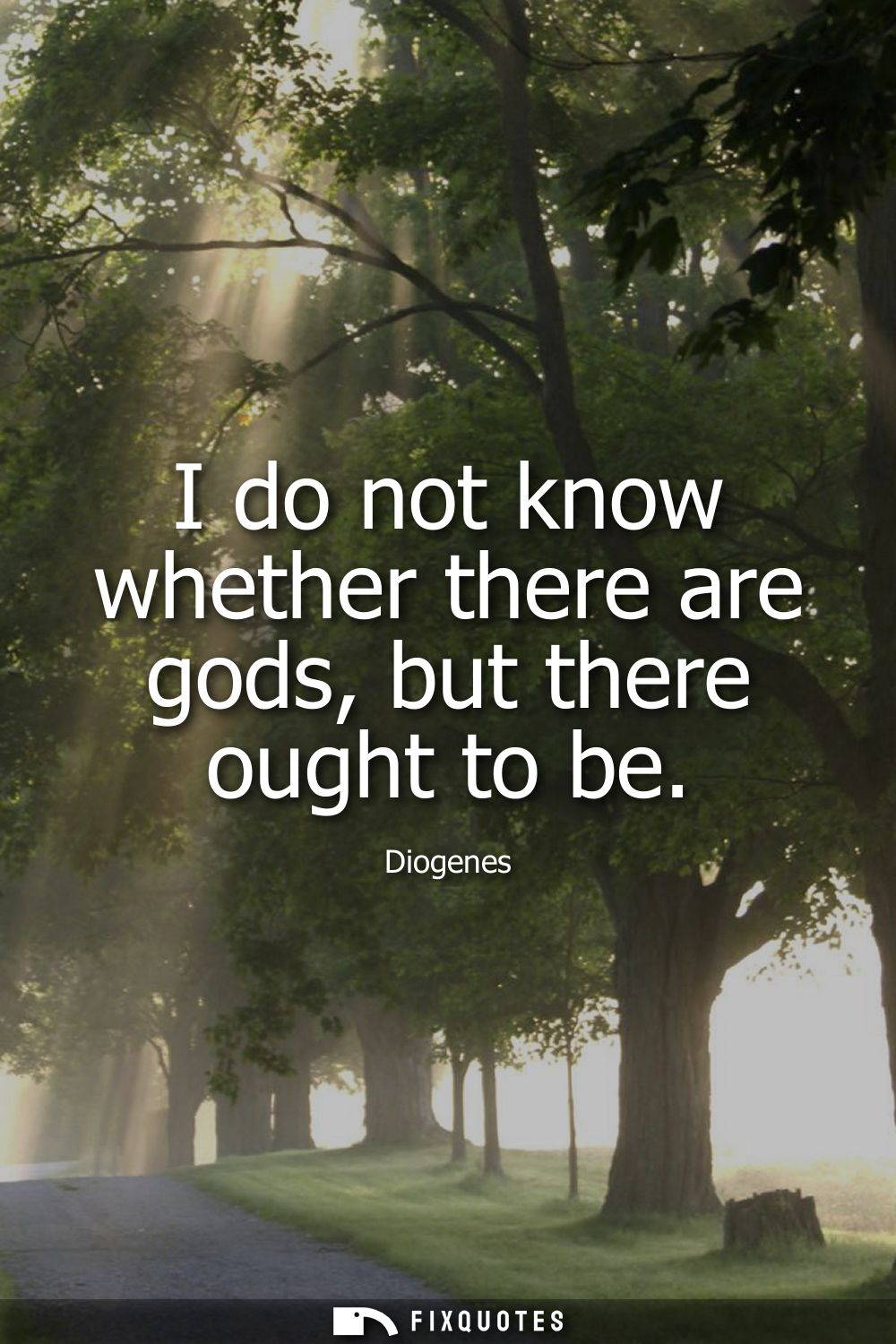
"I do not know whether there are gods, but there ought to be"
About this Quote
It reads like a prayer written by someone who refuses to kneel. Diogenes doesn’t offer theology; he offers a moral provocation. “I do not know” is the Cynic’s trademark honesty, a jab at the confident metaphysicians and civic priests who sold certainty as social glue. But the twist - “there ought to be” - isn’t capitulation. It’s indictment.
In Diogenes’ world, the gods functioned less as cosmic caretakers than as the city’s enforcement mechanism: oaths, festivals, public piety, respectable hypocrisy. By saying gods ought to exist, he exposes a human need for accountability that politics and custom keep failing to provide. If people were decent, the line implies, we wouldn’t require divine surveillance. The “ought” is not about metaphysical likelihood; it’s about ethical necessity, the kind you invoke when the marketplace is full of frauds and the assembly is full of liars.
The subtext is classic Diogenes: civilization pretends it has transcendent standards, then lives as if it doesn’t. So he imagines gods not as comforting parents but as a missing institution - a check on vanity, greed, and performative virtue. The joke is dark: the best argument for gods is how badly humans behave without them, and the best argument against our piety is that it rarely improves that behavior.
Diogenes turns religious language into a mirror, and it’s not flattering.
In Diogenes’ world, the gods functioned less as cosmic caretakers than as the city’s enforcement mechanism: oaths, festivals, public piety, respectable hypocrisy. By saying gods ought to exist, he exposes a human need for accountability that politics and custom keep failing to provide. If people were decent, the line implies, we wouldn’t require divine surveillance. The “ought” is not about metaphysical likelihood; it’s about ethical necessity, the kind you invoke when the marketplace is full of frauds and the assembly is full of liars.
The subtext is classic Diogenes: civilization pretends it has transcendent standards, then lives as if it doesn’t. So he imagines gods not as comforting parents but as a missing institution - a check on vanity, greed, and performative virtue. The joke is dark: the best argument for gods is how badly humans behave without them, and the best argument against our piety is that it rarely improves that behavior.
Diogenes turns religious language into a mirror, and it’s not flattering.
Quote Details
| Topic | God |
|---|---|
| Source | Help us find the source |
| Cite |
Citation Formats
APA Style (7th ed.)
Sinope, Diogenes of. (2026, January 17). I do not know whether there are gods, but there ought to be. FixQuotes. https://fixquotes.com/quotes/i-do-not-know-whether-there-are-gods-but-there-27239/
Chicago Style
Sinope, Diogenes of. "I do not know whether there are gods, but there ought to be." FixQuotes. January 17, 2026. https://fixquotes.com/quotes/i-do-not-know-whether-there-are-gods-but-there-27239/.
MLA Style (9th ed.)
"I do not know whether there are gods, but there ought to be." FixQuotes, 17 Jan. 2026, https://fixquotes.com/quotes/i-do-not-know-whether-there-are-gods-but-there-27239/. Accessed 25 Mar. 2026.
More Quotes by Diogenes
Add to List