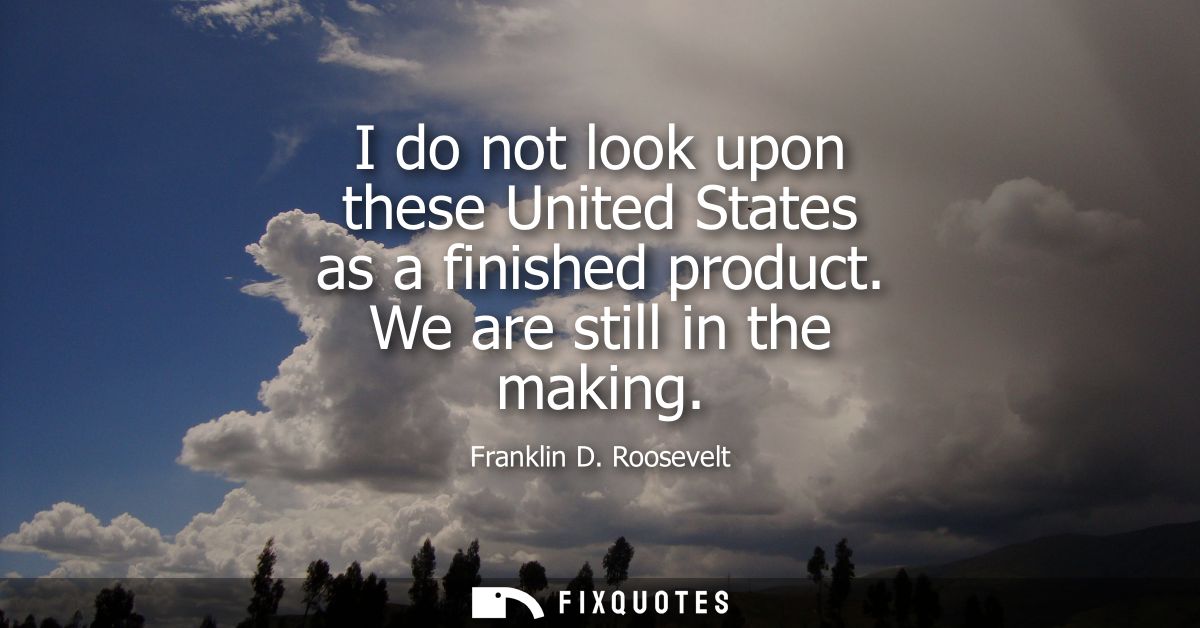
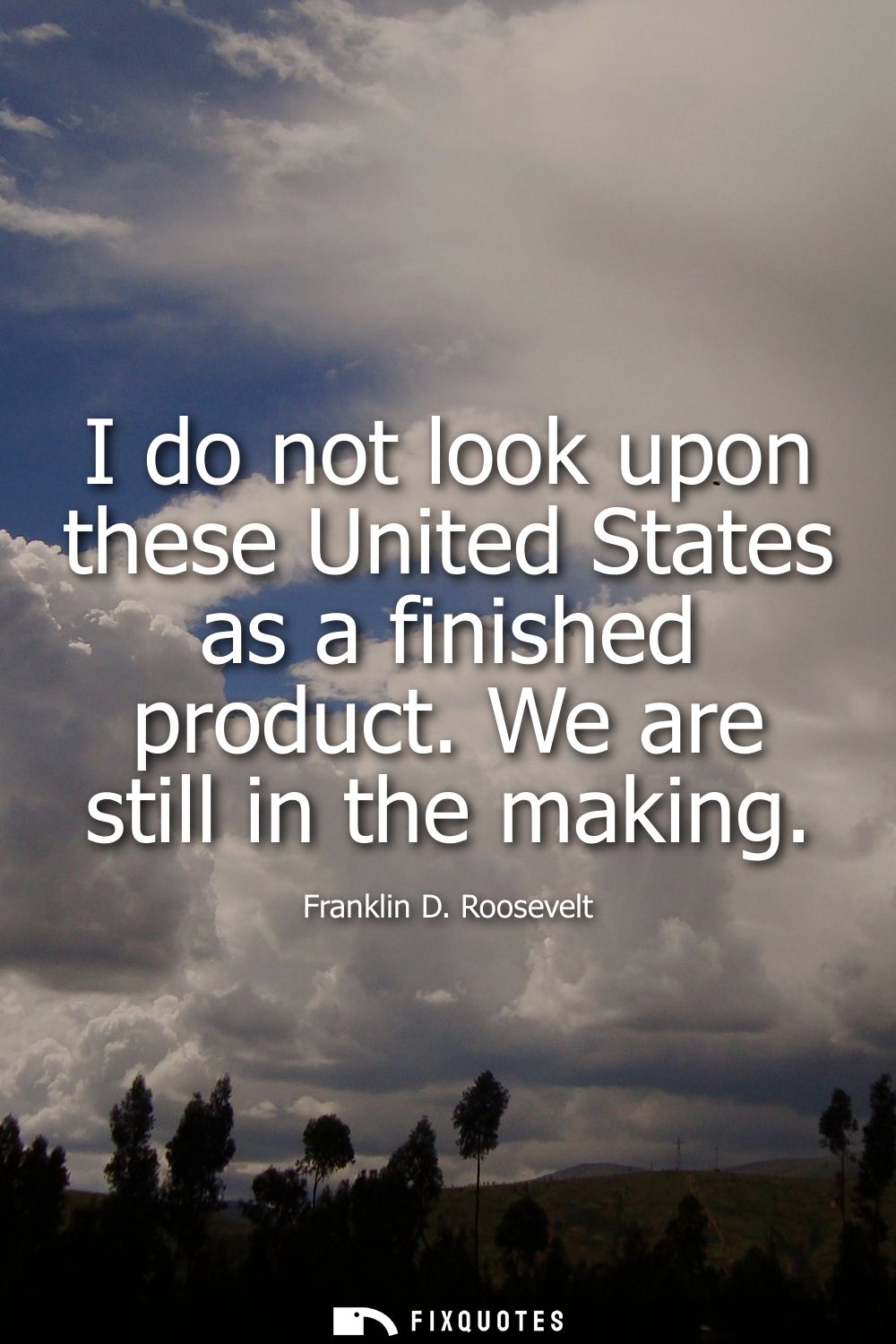
"I do not look upon these United States as a finished product. We are still in the making"
About this Quote
The specific intent is political: to legitimize change. In the New Deal era, opponents framed federal experimentation as heresy against an original, fixed America. Roosevelt sidesteps that trap by redefining patriotism as maintenance and renovation. If the nation is "still in the making", then policy innovation isn't vandalism; it's carpentry. The phrasing also smuggles in a moral claim: unfinished things can be improved, but they can also fail. Progress is not guaranteed; it has to be built.
The subtext is coalition management. "We" spreads ownership and responsibility across citizens, not just elites. It's democratic reassurance during crisis - the Great Depression, and later the pressures of global conflict - when people needed a story that made uncertainty feel purposeful. Roosevelt’s genius is turning instability into a national identity: not "we were great", but "we are becoming", with government as the scaffolding rather than the enemy of freedom.
Quote Details
| Topic | Change |
|---|---|
| Source | Help us find the source |
| Cite |
Citation Formats
APA Style (7th ed.)
Roosevelt, Franklin D. (2026, January 17). I do not look upon these United States as a finished product. We are still in the making. FixQuotes. https://fixquotes.com/quotes/i-do-not-look-upon-these-united-states-as-a-25249/
Chicago Style
Roosevelt, Franklin D. "I do not look upon these United States as a finished product. We are still in the making." FixQuotes. January 17, 2026. https://fixquotes.com/quotes/i-do-not-look-upon-these-united-states-as-a-25249/.
MLA Style (9th ed.)
"I do not look upon these United States as a finished product. We are still in the making." FixQuotes, 17 Jan. 2026, https://fixquotes.com/quotes/i-do-not-look-upon-these-united-states-as-a-25249/. Accessed 23 Mar. 2026.