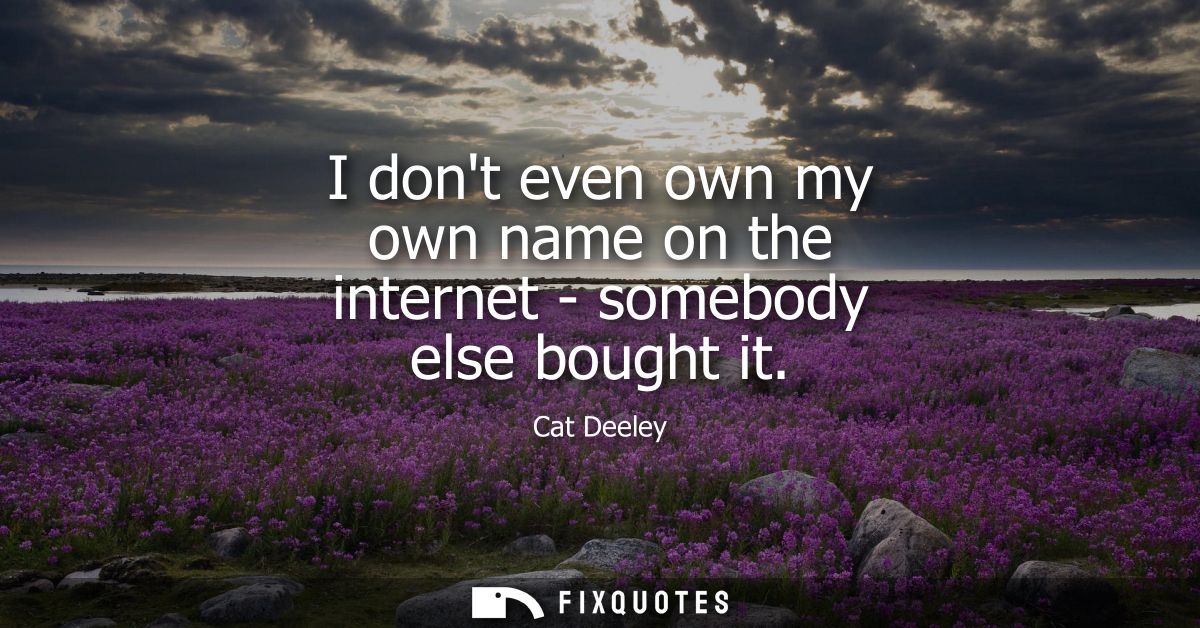
"I don't even own my own name on the internet - somebody else bought it"
About this Quote
Celebrity used to mean owning your face; now it means renting your identity from a patchwork of platforms, trademarks, and opportunists. Cat Deeley’s line lands because it’s delivered with that half-laugh of disbelief: not a tragic confession, but a clean, modern indignity. The punch is in the inversion. A public figure whose job depends on recognizability can’t secure the most basic digital real estate tied to her selfhood. In the internet economy, the “real” Cat Deeley is less the person than the URL.
The intent feels equal parts complaint and cultural diagnosis. She’s not merely annoyed about a domain name squatter; she’s pointing at the way online systems treat names as commodities first, identities second. The subtext is that fame doesn’t translate cleanly into control. You can be widely known and still be structurally powerless in the small, bureaucratic ways that matter: search results, handles, impersonation, and the endless low-grade theft of attention.
Contextually, it captures a shift from early web optimism to platform-era enclosure. In the 2000s, buying yourname.com was savvy branding; in today’s attention market, not owning your name reads like a vulnerability, even a safety issue. For celebrities, it’s also about reputation management: if someone else owns the name, they can siphon traffic, shape narratives, or profit off confusion.
What makes the line work is its simplicity. “My own name” sounds primal, almost legalistic, and “somebody else bought it” reduces identity to a receipt. That’s the joke, and the sting.
The intent feels equal parts complaint and cultural diagnosis. She’s not merely annoyed about a domain name squatter; she’s pointing at the way online systems treat names as commodities first, identities second. The subtext is that fame doesn’t translate cleanly into control. You can be widely known and still be structurally powerless in the small, bureaucratic ways that matter: search results, handles, impersonation, and the endless low-grade theft of attention.
Contextually, it captures a shift from early web optimism to platform-era enclosure. In the 2000s, buying yourname.com was savvy branding; in today’s attention market, not owning your name reads like a vulnerability, even a safety issue. For celebrities, it’s also about reputation management: if someone else owns the name, they can siphon traffic, shape narratives, or profit off confusion.
What makes the line work is its simplicity. “My own name” sounds primal, almost legalistic, and “somebody else bought it” reduces identity to a receipt. That’s the joke, and the sting.
Quote Details
| Topic | Internet |
|---|---|
| Source | Help us find the source |
| Cite |
Citation Formats
APA Style (7th ed.)
Deeley, Cat. (2026, January 18). I don't even own my own name on the internet - somebody else bought it. FixQuotes. https://fixquotes.com/quotes/i-dont-even-own-my-own-name-on-the-internet--12058/
Chicago Style
Deeley, Cat. "I don't even own my own name on the internet - somebody else bought it." FixQuotes. January 18, 2026. https://fixquotes.com/quotes/i-dont-even-own-my-own-name-on-the-internet--12058/.
MLA Style (9th ed.)
"I don't even own my own name on the internet - somebody else bought it." FixQuotes, 18 Jan. 2026, https://fixquotes.com/quotes/i-dont-even-own-my-own-name-on-the-internet--12058/. Accessed 16 Feb. 2026.
More Quotes by Cat
Add to List