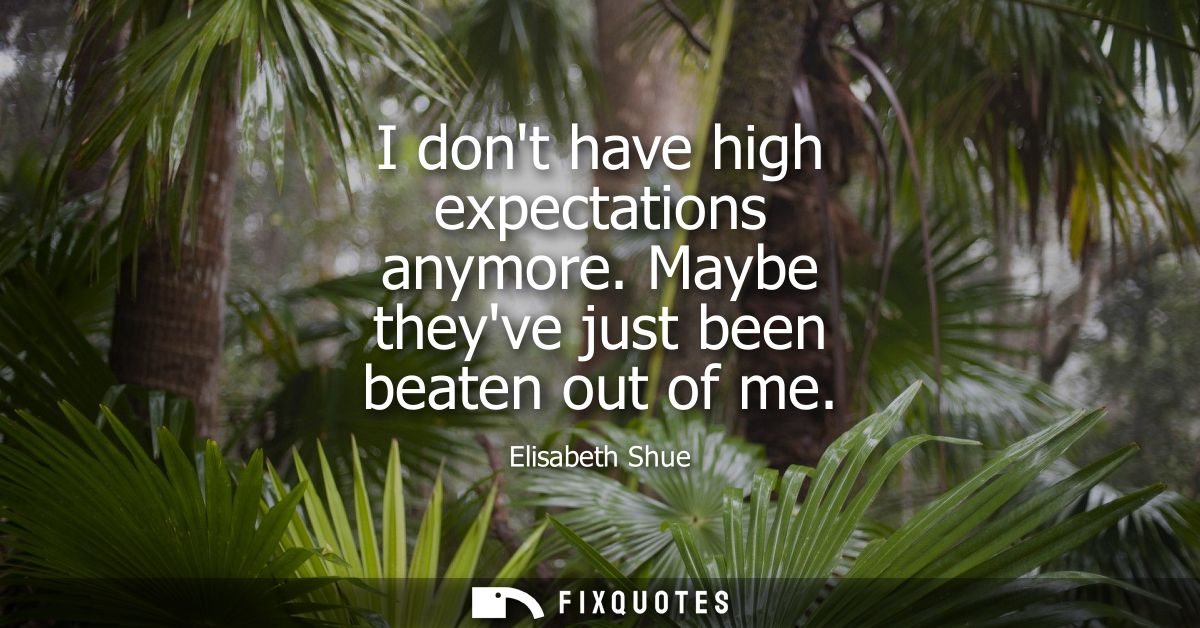
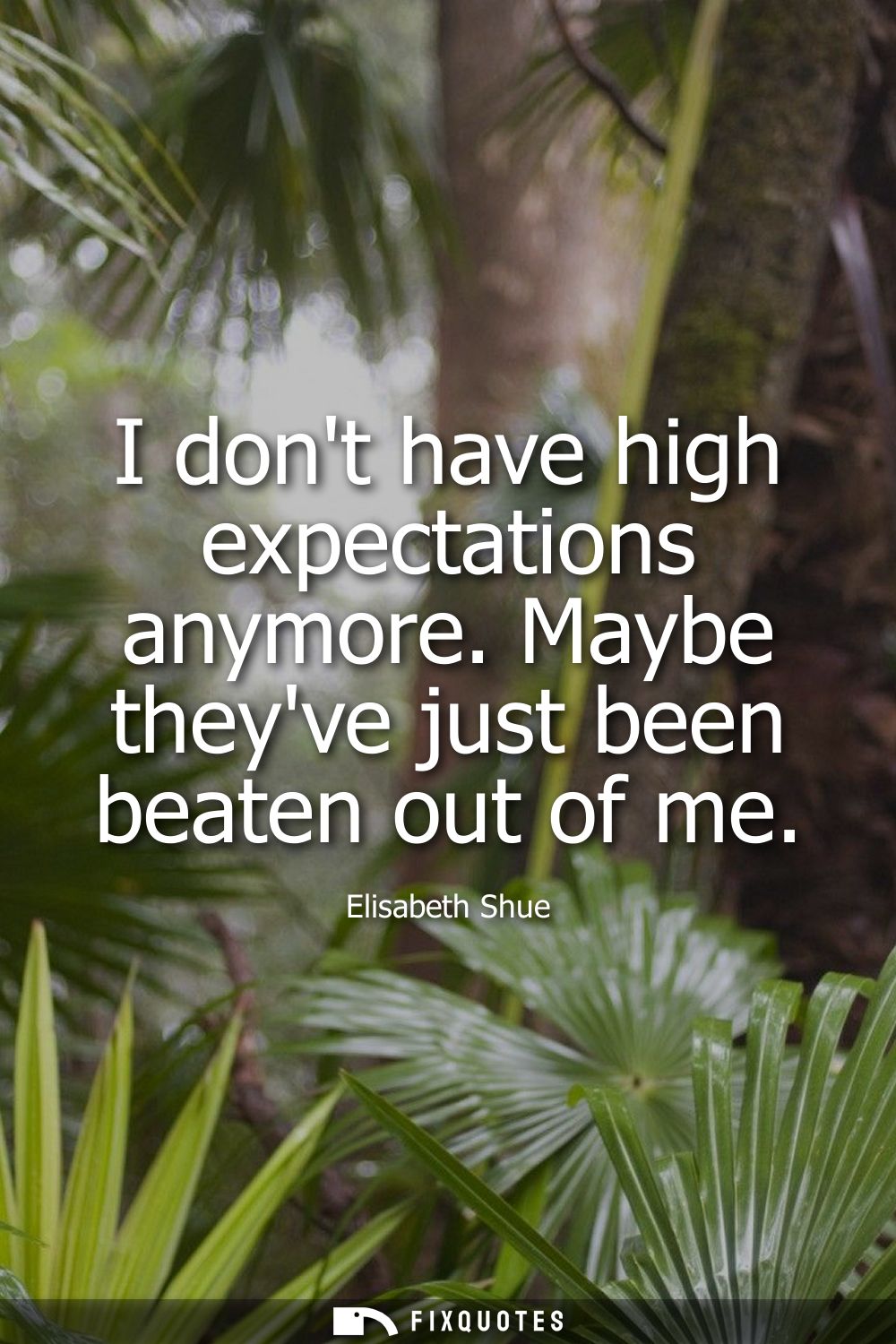
"I don't have high expectations anymore. Maybe they've just been beaten out of me"
About this Quote
As an actress, Shue is speaking from inside an industry built on judgment, scarcity, and the constant recalibration of self-worth. The first sentence reads like adult realism, a practiced lowering of the bar so disappointment has less room to sting. The second sentence reframes that "realism" as a survival adaptation. The word "beaten" is doing heavy work: it implies repetition, force, and a system (or series of encounters) that trains you out of wanting too much. It also carries just enough ambiguity to be socially acceptable in an interview while still hinting at something darker: emotional attrition, professional gaslighting, the slow violence of being told - directly or indirectly - that your hopes are naive.
What makes the quote effective is its tonal pivot. Shue opens with restraint, then reveals the cost of that restraint. It's not a triumphant narrative of resilience; it's the quieter, more uncomfortable truth that sometimes "managing expectations" isn't wisdom at all. It's what you do when optimism keeps getting punished.
Quote Details
| Topic | Sadness |
|---|---|
| Source | Help us find the source |
| Cite |
Citation Formats
APA Style (7th ed.)
Shue, Elisabeth. (2026, January 17). I don't have high expectations anymore. Maybe they've just been beaten out of me. FixQuotes. https://fixquotes.com/quotes/i-dont-have-high-expectations-anymore-maybe-47916/
Chicago Style
Shue, Elisabeth. "I don't have high expectations anymore. Maybe they've just been beaten out of me." FixQuotes. January 17, 2026. https://fixquotes.com/quotes/i-dont-have-high-expectations-anymore-maybe-47916/.
MLA Style (9th ed.)
"I don't have high expectations anymore. Maybe they've just been beaten out of me." FixQuotes, 17 Jan. 2026, https://fixquotes.com/quotes/i-dont-have-high-expectations-anymore-maybe-47916/. Accessed 5 Apr. 2026.