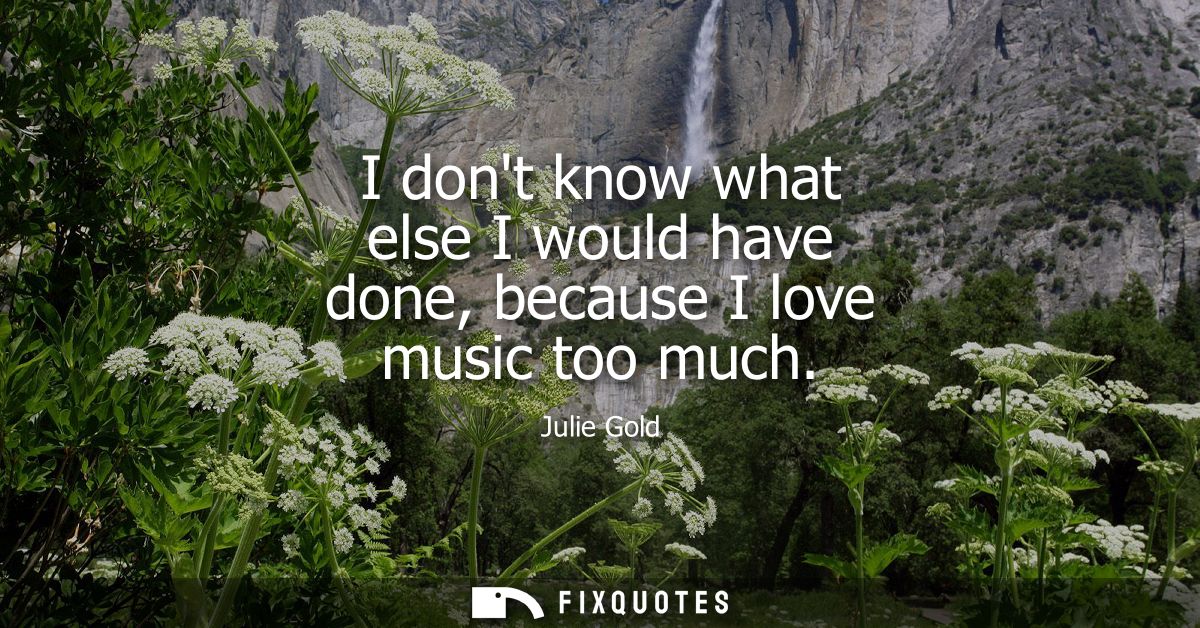
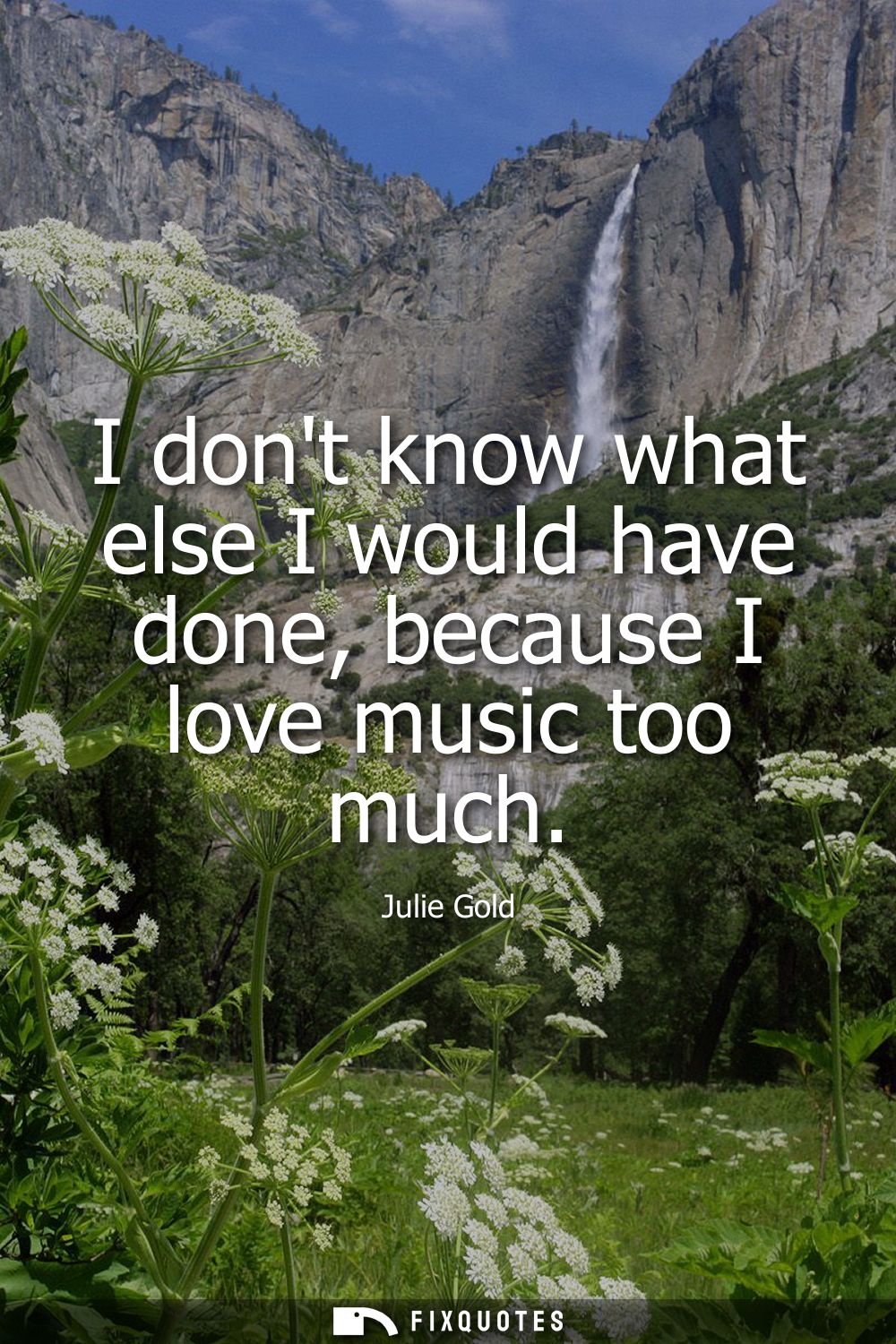
"I don't know what else I would have done, because I love music too much"
About this Quote
The second clause, “because I love music too much,” does the real work. It frames love as excess, something that overruns practical considerations. That “too much” is telling: it acknowledges the cost. Loving music at that intensity is rarely neat. It can mean instability, rejection, long stretches of invisibility, the exhausting paradox of making art for money without letting money make the art. The line carries the emotional logic of an artist who stayed not because the industry welcomed her, but because leaving would have felt like a kind of self-betrayal.
Context matters with Gold: a songwriter best known for “From a Distance,” a global hit that’s often heard as serene, even comforting. This quote complicates that public image. Behind the anthem is a worker’s truth: the art wasn’t a side quest, it was the only route that made sense. It’s less mythmaking than a clear-eyed portrait of compulsion, and that honesty is exactly why it lands.
Quote Details
| Topic | Music |
|---|---|
| Source | Help us find the source |
| Cite |
Citation Formats
APA Style (7th ed.)
Gold, Julie. (2026, January 16). I don't know what else I would have done, because I love music too much. FixQuotes. https://fixquotes.com/quotes/i-dont-know-what-else-i-would-have-done-because-i-126598/
Chicago Style
Gold, Julie. "I don't know what else I would have done, because I love music too much." FixQuotes. January 16, 2026. https://fixquotes.com/quotes/i-dont-know-what-else-i-would-have-done-because-i-126598/.
MLA Style (9th ed.)
"I don't know what else I would have done, because I love music too much." FixQuotes, 16 Jan. 2026, https://fixquotes.com/quotes/i-dont-know-what-else-i-would-have-done-because-i-126598/. Accessed 15 Feb. 2026.