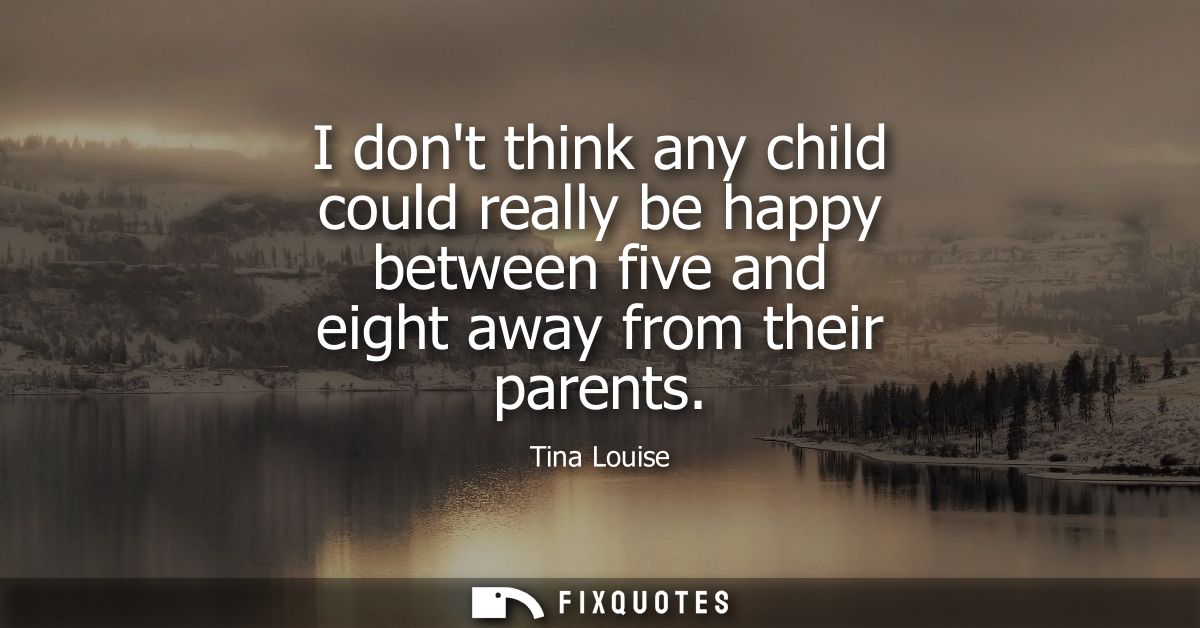
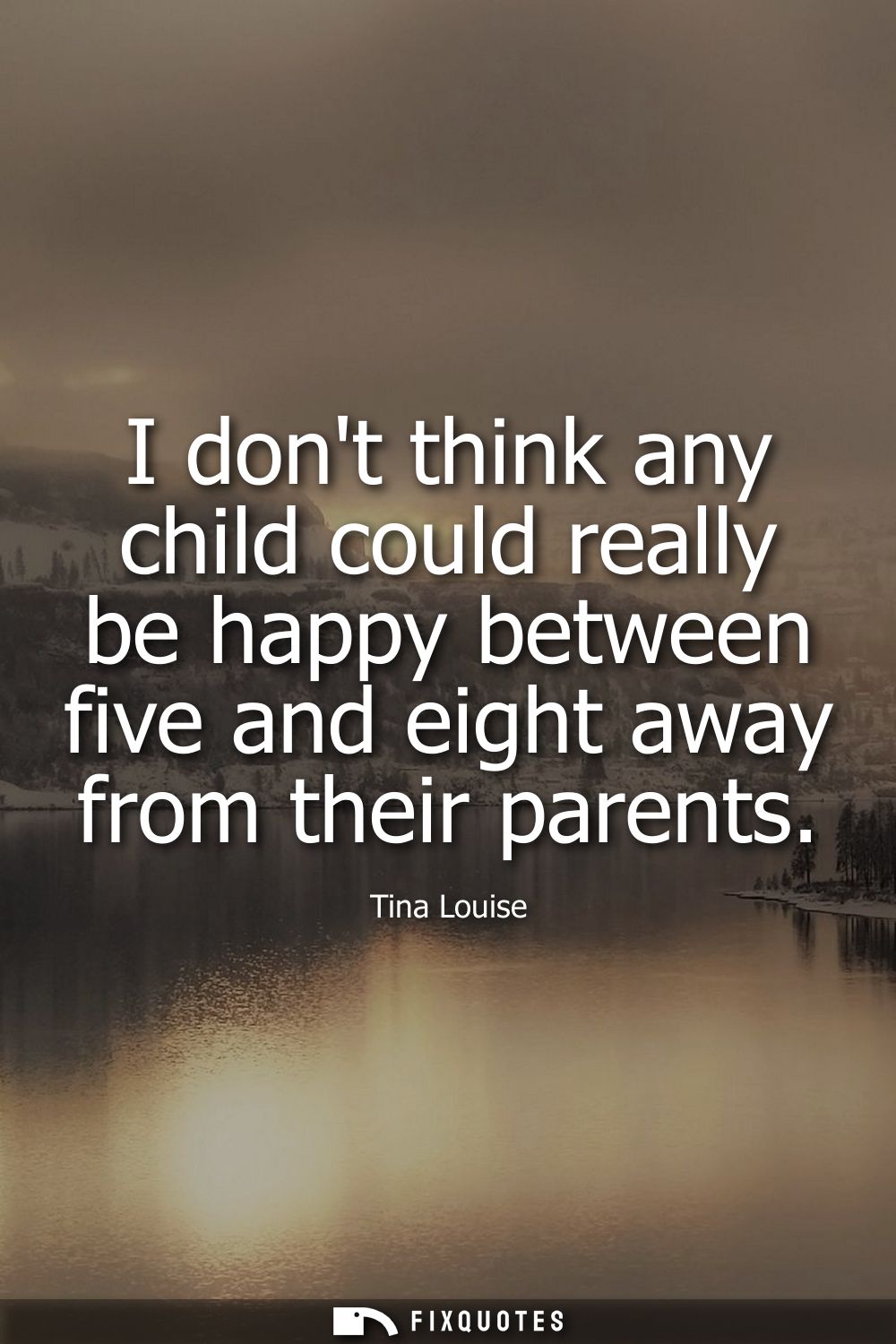
"I don't think any child could really be happy between five and eight away from their parents"
About this Quote
The subtext is a critique of adult convenience disguised as character-building. Sending a child away can be framed as opportunity, discipline, even love (“they’ll be fine; it’ll make them stronger”). Louise’s insistence on happiness - not achievement, not toughness - is a values swap. She’s not debating whether a child can cope; she’s questioning why we keep mistaking coping for thriving.
Context matters because Louise’s generation grew up alongside mid-century ideas about boarding schools, summer camps, touring work, and the glamorization of distance: parents chasing careers, children being “raised” by institutions. As an actress, she’s also adjacent to a world where parental absence is normalized, even romanticized as the price of ambition. The quote reads like a refusal of that bargain. It’s intimate, almost maternal, but it also carries a larger cultural suspicion: when we separate kids from their parents early, we’re often managing adult lives, not protecting childhood.
Quote Details
| Topic | Parenting |
|---|---|
| Source | Help us find the source |
| Cite |
Citation Formats
APA Style (7th ed.)
Louise, Tina. (2026, January 16). I don't think any child could really be happy between five and eight away from their parents. FixQuotes. https://fixquotes.com/quotes/i-dont-think-any-child-could-really-be-happy-137030/
Chicago Style
Louise, Tina. "I don't think any child could really be happy between five and eight away from their parents." FixQuotes. January 16, 2026. https://fixquotes.com/quotes/i-dont-think-any-child-could-really-be-happy-137030/.
MLA Style (9th ed.)
"I don't think any child could really be happy between five and eight away from their parents." FixQuotes, 16 Jan. 2026, https://fixquotes.com/quotes/i-dont-think-any-child-could-really-be-happy-137030/. Accessed 10 Mar. 2026.