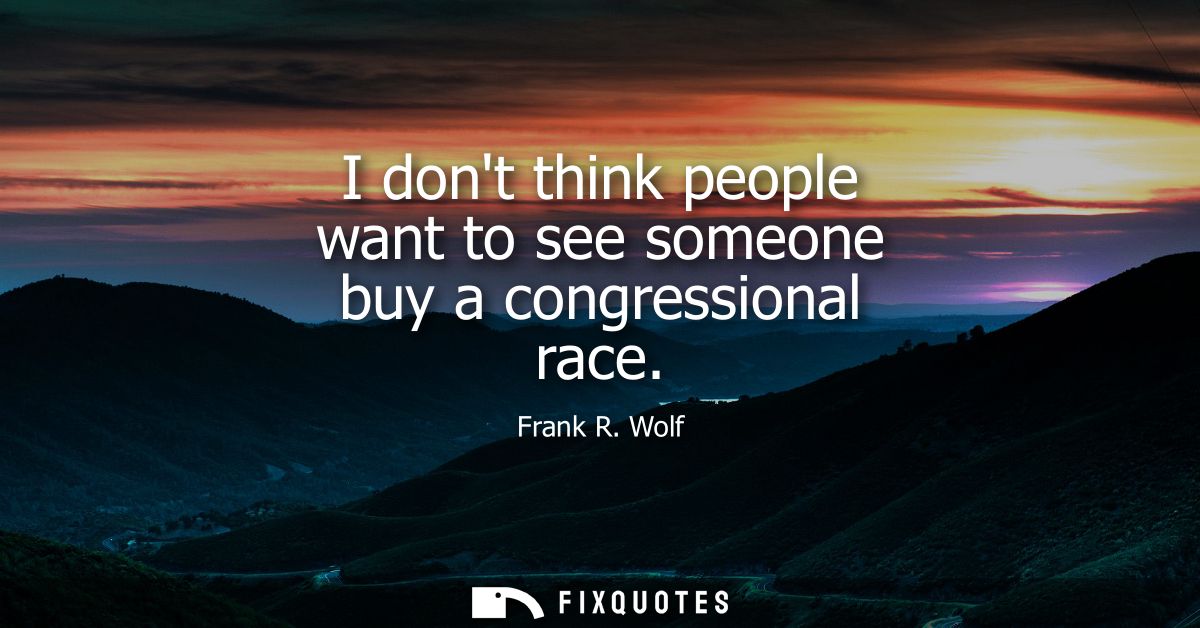
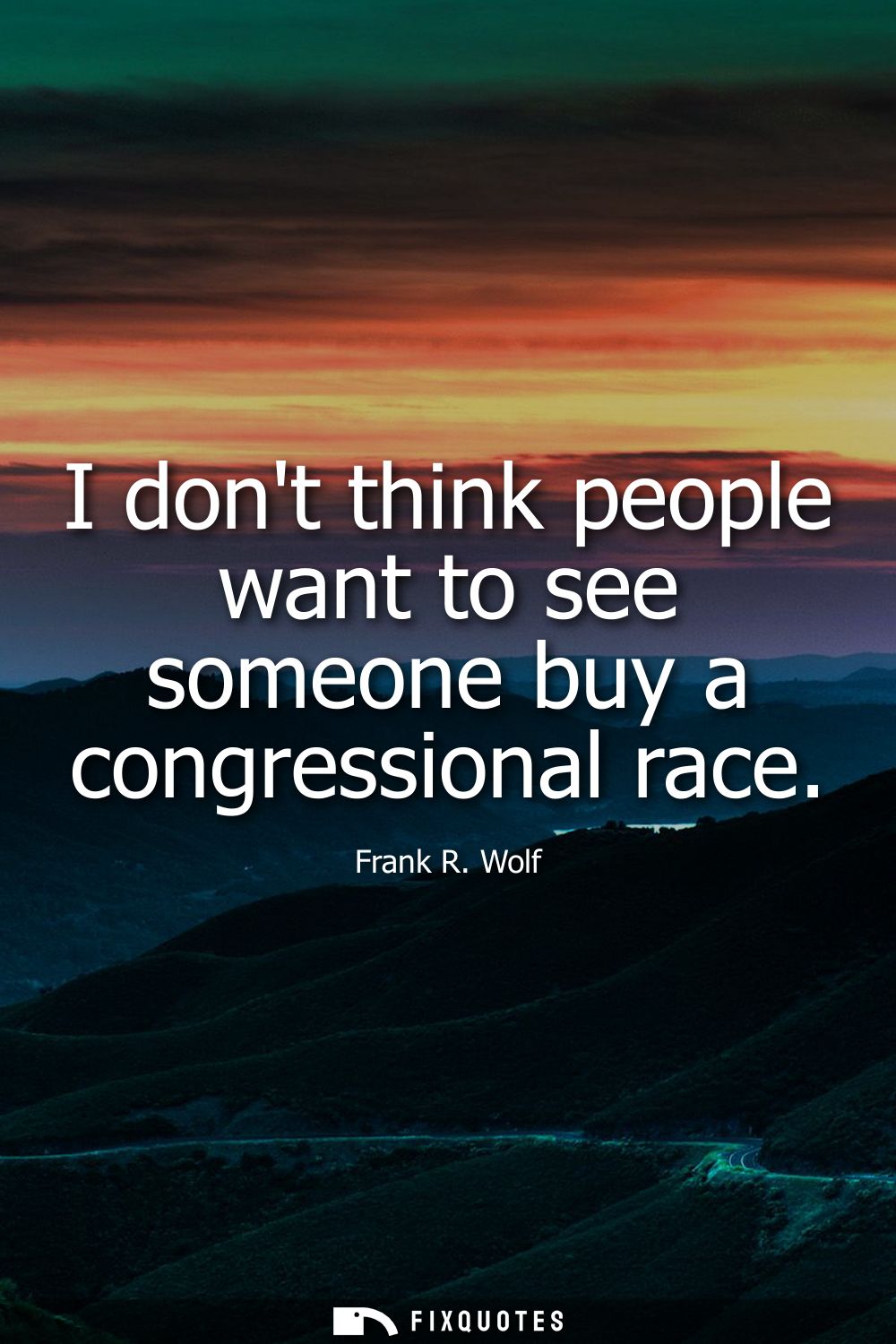
"I don't think people want to see someone buy a congressional race"
About this Quote
Wolf’s line lands like a mild rebuke, but it’s really a warning shot at the era of checkbook politics. “I don’t think” is the softener politicians use when they’re about to say something hard: the public is already primed to distrust the legitimacy of elections that look purchased. The verb choice matters. Not “win,” not “run,” but “buy” - a word that collapses democratic participation into a market transaction. It’s a moral claim disguised as a bit of retail common sense.
The sneaky power of the quote is its appeal to aesthetics as much as ethics. “Want to see” frames democracy like a public spectacle. Voters, in this telling, aren’t only citizens guarding norms; they’re an audience with a threshold for obviousness. Money in politics may be tolerated when it’s diffused, indirect, and dressed up as grassroots energy. What people reject is the unseemly, visible act of wealth converting directly into power - the bluntness of a billionaire-style purchase order.
Contextually, a longtime congressman like Wolf is speaking from inside an institution that depends on fundraising while publicly performing disdain for it. That tension is the subtext: he’s not denying money’s influence; he’s arguing for the politics of plausible deniability. The line defends a fragile legitimacy - not by promising a money-free system, but by insisting the transaction shouldn’t look like one.
The sneaky power of the quote is its appeal to aesthetics as much as ethics. “Want to see” frames democracy like a public spectacle. Voters, in this telling, aren’t only citizens guarding norms; they’re an audience with a threshold for obviousness. Money in politics may be tolerated when it’s diffused, indirect, and dressed up as grassroots energy. What people reject is the unseemly, visible act of wealth converting directly into power - the bluntness of a billionaire-style purchase order.
Contextually, a longtime congressman like Wolf is speaking from inside an institution that depends on fundraising while publicly performing disdain for it. That tension is the subtext: he’s not denying money’s influence; he’s arguing for the politics of plausible deniability. The line defends a fragile legitimacy - not by promising a money-free system, but by insisting the transaction shouldn’t look like one.
Quote Details
| Topic | Justice |
|---|---|
| Source | Help us find the source |
| Cite |
Citation Formats
APA Style (7th ed.)
Wolf, Frank R. (2026, January 15). I don't think people want to see someone buy a congressional race. FixQuotes. https://fixquotes.com/quotes/i-dont-think-people-want-to-see-someone-buy-a-167430/
Chicago Style
Wolf, Frank R. "I don't think people want to see someone buy a congressional race." FixQuotes. January 15, 2026. https://fixquotes.com/quotes/i-dont-think-people-want-to-see-someone-buy-a-167430/.
MLA Style (9th ed.)
"I don't think people want to see someone buy a congressional race." FixQuotes, 15 Jan. 2026, https://fixquotes.com/quotes/i-dont-think-people-want-to-see-someone-buy-a-167430/. Accessed 5 Apr. 2026.
More Quotes by Frank
Add to List