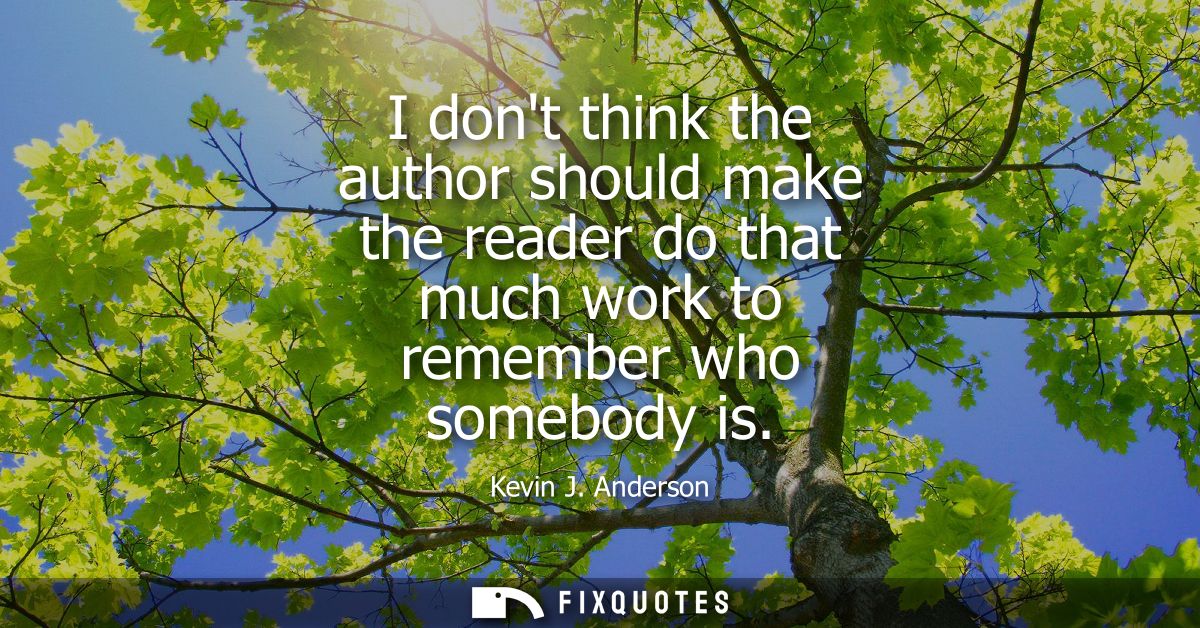
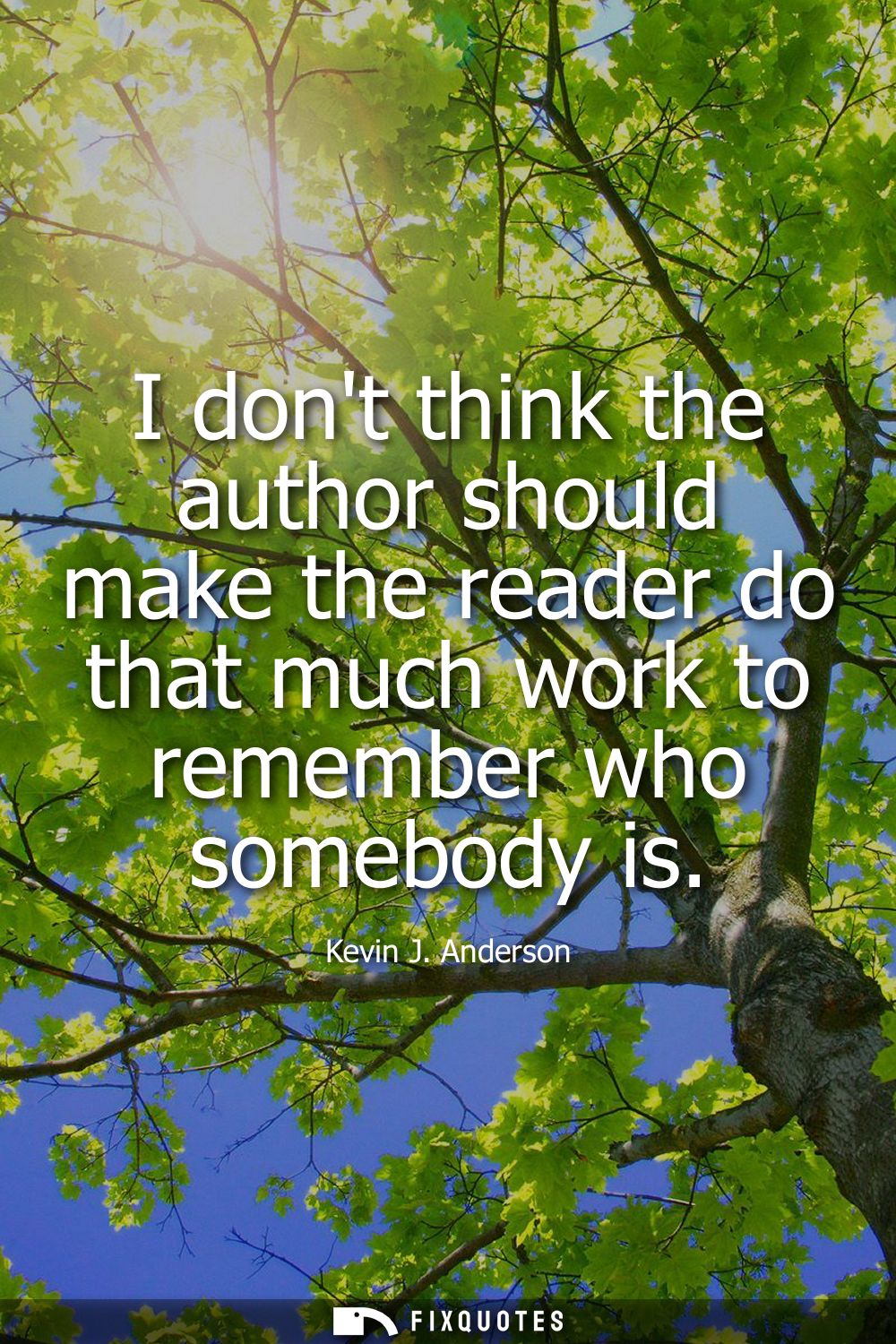
"I don't think the author should make the reader do that much work to remember who somebody is"
About this Quote
Anderson comes out of the industrial side of storytelling: tie-in universes, long series, genre ecosystems where momentum is sacred and the audience often arrives midstream. In that context, “work” is less about interpretive challenge and more about clerical labor. If a reader is flipping back pages to re-identify “that guy from three chapters ago,” the spell is broken. The subtext is almost screenwriterly: narrative should be a smooth interface. Any friction that doesn’t pay off emotionally or thematically is bad design.
There’s also a quiet ethics claim here. Readers aren’t failing when they forget; authors are failing when they don’t seed recognition - through distinctive characterization, strategic reminders, clean scene architecture. The best stories make you feel smart without making you do homework. Anderson’s point isn’t anti-ambition; it’s anti-sloppiness disguised as “trusting the reader.”
Quote Details
| Topic | Writing |
|---|---|
| Source | Help us find the source |
| Cite |
Citation Formats
APA Style (7th ed.)
Anderson, Kevin J. (2026, January 15). I don't think the author should make the reader do that much work to remember who somebody is. FixQuotes. https://fixquotes.com/quotes/i-dont-think-the-author-should-make-the-reader-do-156509/
Chicago Style
Anderson, Kevin J. "I don't think the author should make the reader do that much work to remember who somebody is." FixQuotes. January 15, 2026. https://fixquotes.com/quotes/i-dont-think-the-author-should-make-the-reader-do-156509/.
MLA Style (9th ed.)
"I don't think the author should make the reader do that much work to remember who somebody is." FixQuotes, 15 Jan. 2026, https://fixquotes.com/quotes/i-dont-think-the-author-should-make-the-reader-do-156509/. Accessed 28 Mar. 2026.