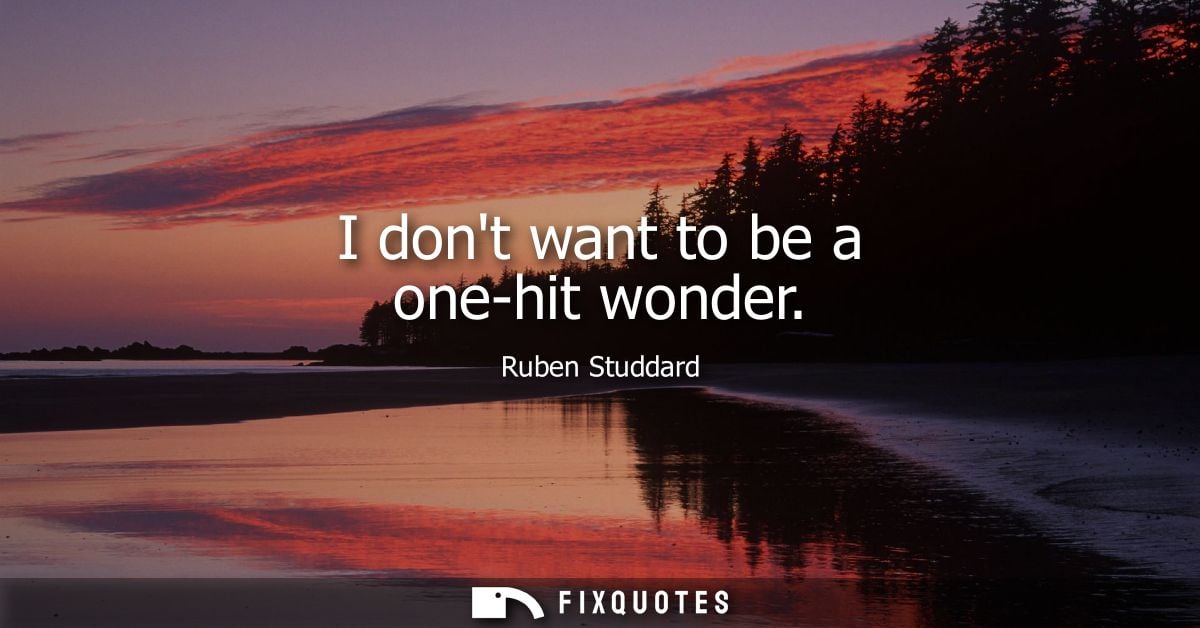
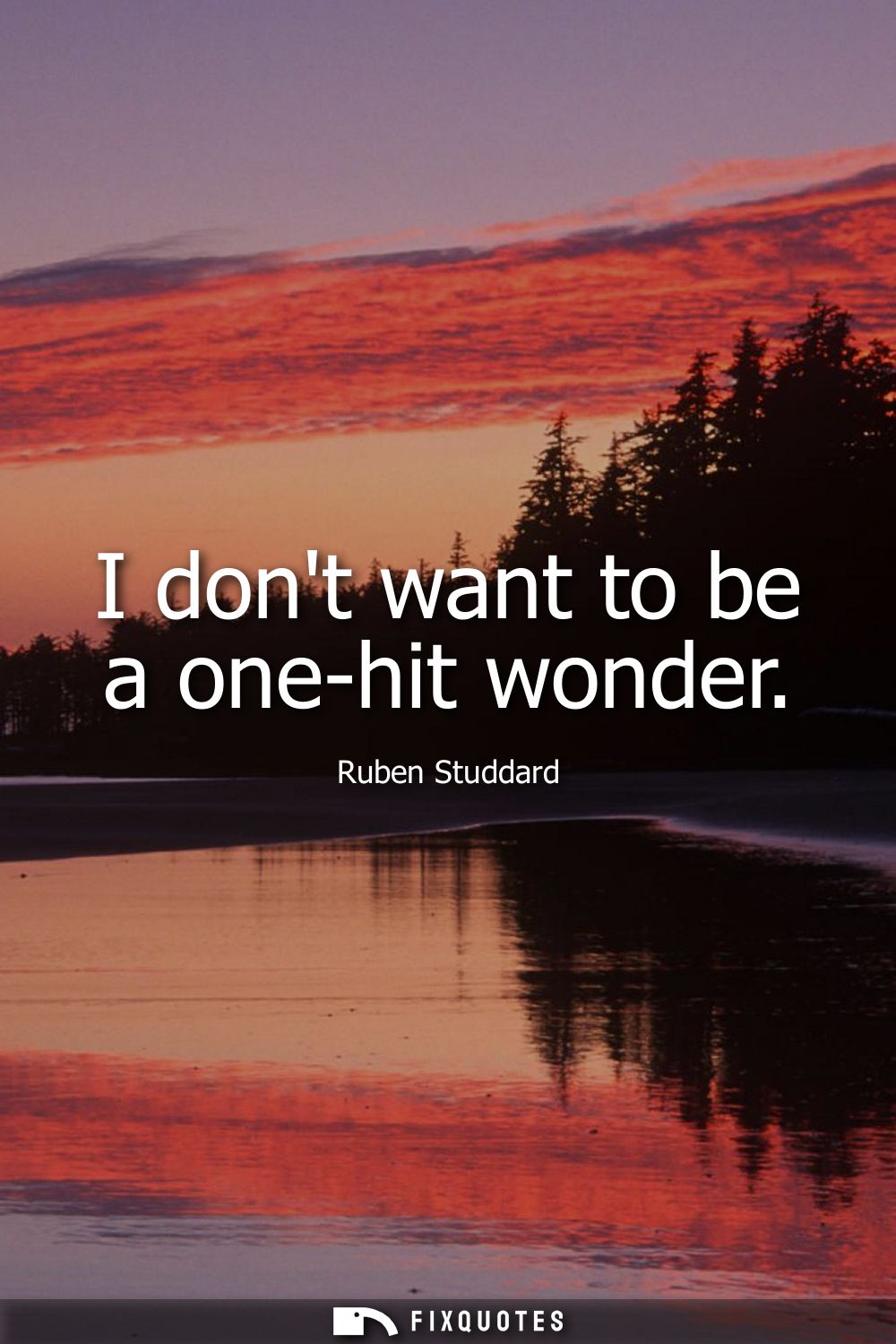
"I don't want to be a one-hit wonder"
About this Quote
A one-hit wonder is less a career category than a cautionary tale: you got the spotlight once, and now the spotlight owns you. Ruben Studdard's line lands because it’s both modest and quietly defiant. He’s not bragging about inevitable greatness; he’s admitting the brutal math of pop culture, where a breakout moment can harden into a trap. Say it out loud and you can hear the fear underneath: being remembered for a single song is another way of being forgotten.
The subtext is about agency. After a televised launchpad like American Idol, success arrives prepackaged: a narrative, a sound, a marketable persona. The industry loves the clean arc of a star being "discovered", then it moves on to the next season. Studdard’s refusal pushes back against that churn. He’s signaling he wants authorship over the long game - to be treated as a musician with a catalog, not a contestant with a peak.
Context matters: early-2000s pop was a factory line of radio singles, and Idol winners were often judged less on artistry than on whether they could deliver the required follow-up hit. Studdard’s quote reads like a behind-the-scenes aside made public, a reminder that fame isn’t just attention; it’s a deadline. Its power is its plainness: a simple sentence that names the industry’s most polite insult and refuses to accept it as destiny.
The subtext is about agency. After a televised launchpad like American Idol, success arrives prepackaged: a narrative, a sound, a marketable persona. The industry loves the clean arc of a star being "discovered", then it moves on to the next season. Studdard’s refusal pushes back against that churn. He’s signaling he wants authorship over the long game - to be treated as a musician with a catalog, not a contestant with a peak.
Context matters: early-2000s pop was a factory line of radio singles, and Idol winners were often judged less on artistry than on whether they could deliver the required follow-up hit. Studdard’s quote reads like a behind-the-scenes aside made public, a reminder that fame isn’t just attention; it’s a deadline. Its power is its plainness: a simple sentence that names the industry’s most polite insult and refuses to accept it as destiny.
Quote Details
| Topic | Career |
|---|---|
| Source | Help us find the source |
| Cite |
Citation Formats
APA Style (7th ed.)
Studdard, Ruben. (2026, January 16). I don't want to be a one-hit wonder. FixQuotes. https://fixquotes.com/quotes/i-dont-want-to-be-a-one-hit-wonder-123535/
Chicago Style
Studdard, Ruben. "I don't want to be a one-hit wonder." FixQuotes. January 16, 2026. https://fixquotes.com/quotes/i-dont-want-to-be-a-one-hit-wonder-123535/.
MLA Style (9th ed.)
"I don't want to be a one-hit wonder." FixQuotes, 16 Jan. 2026, https://fixquotes.com/quotes/i-dont-want-to-be-a-one-hit-wonder-123535/. Accessed 24 Mar. 2026.
More Quotes by Ruben
Add to List