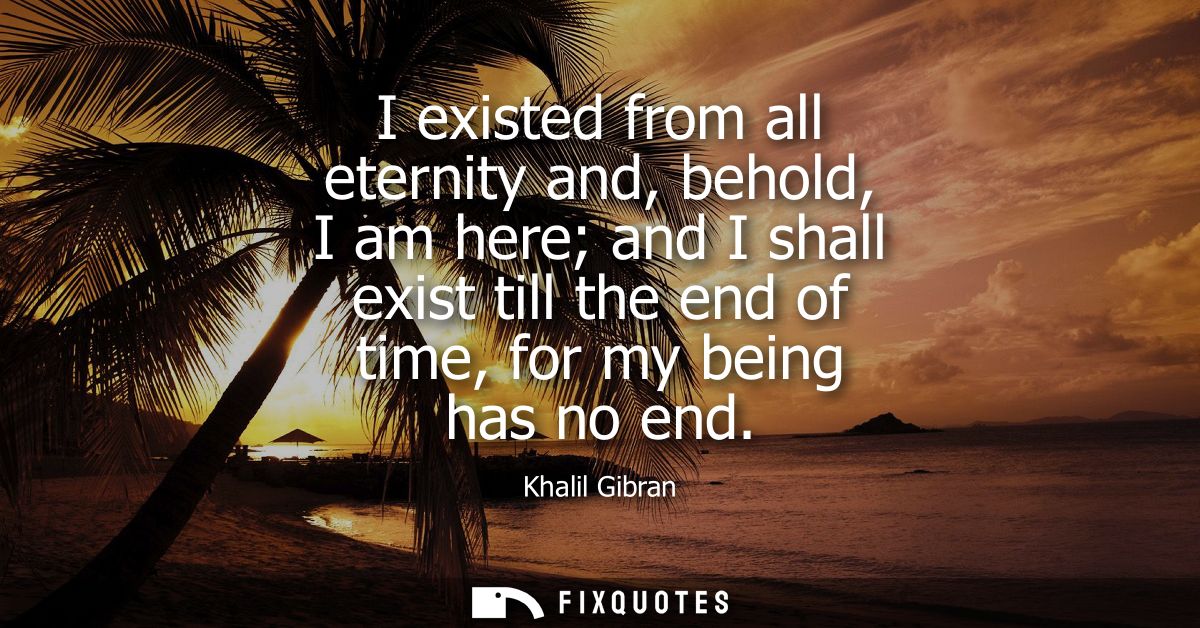
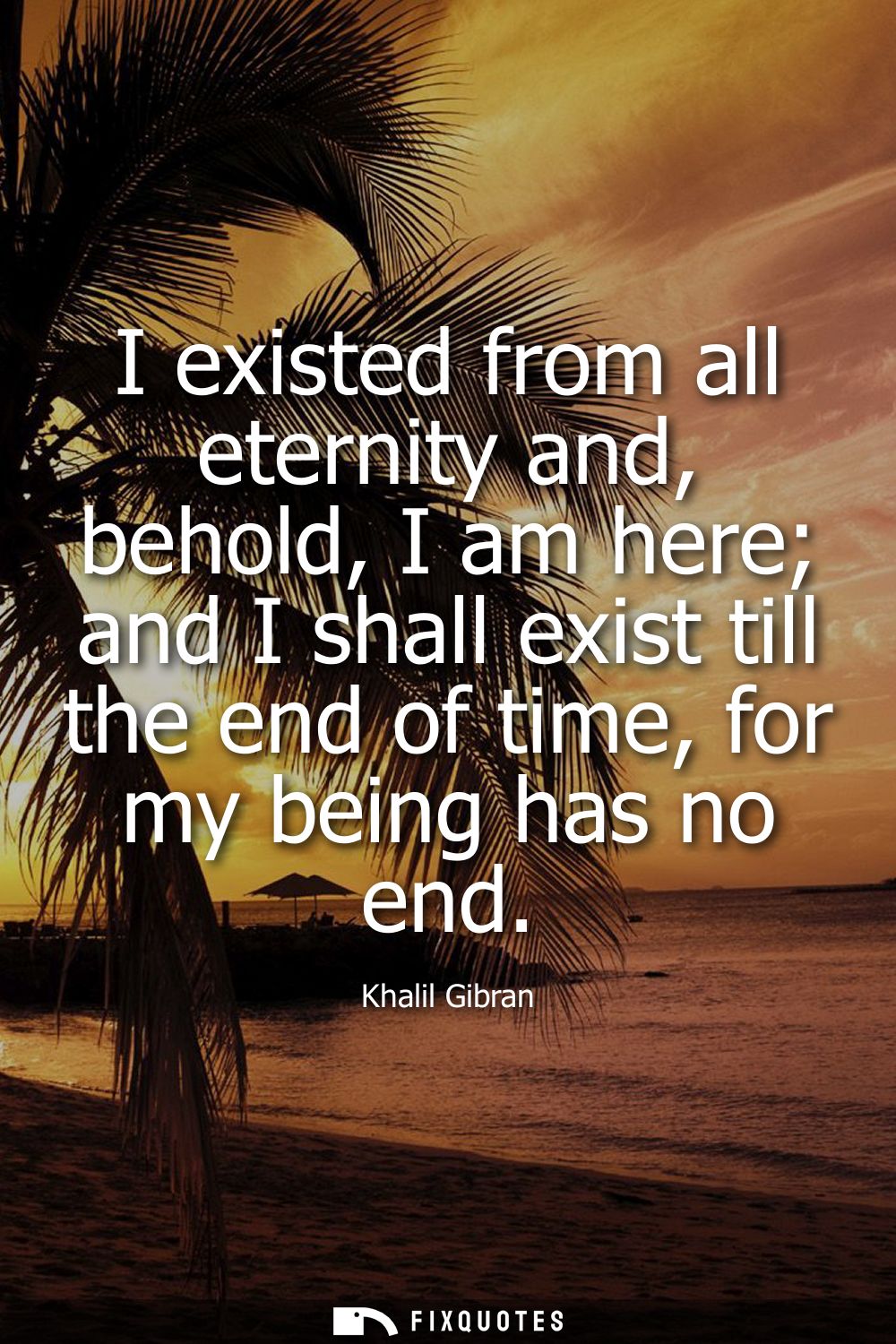
"I existed from all eternity and behold, I am here; and I shall exist till the end of time, for my being has no end"
About this Quote
The intent is devotional and defiant at once: to loosen the grip of fear (death, exile, insignificance) by presenting the self as something older than circumstance. Gibran, a Lebanese immigrant writing in an early 20th-century world obsessed with modernity, nationalism, and the new sciences of the psyche, repeatedly pushes against the era’s shrinking definitions of what a person is: citizen, worker, body. This line inflates the self back into a spiritual vastness.
The subtext is where it gets interesting. “My being has no end” sounds like individual ego until you remember Gibran’s favorite move: dissolving the individual into a larger, almost mystical continuity. The “I” can read as the soul, yes, but also as the human spirit, the creative force, the part of us that outlives biography through art, memory, and the shared hunger for meaning. The syntax mimics scripture - “behold” does heavy lifting - borrowing authority from sacred language to make a personal claim feel like revealed truth.
It works because it dares you to inhabit a bigger self, if only for a sentence, and makes finitude feel like a misunderstanding.
Quote Details
| Topic | Time |
|---|---|
| Source | Help us find the source |
| Cite |
Citation Formats
APA Style (7th ed.)
Gibran, Kahlil. (2026, February 16). I existed from all eternity and behold, I am here; and I shall exist till the end of time, for my being has no end. FixQuotes. https://fixquotes.com/quotes/i-existed-from-all-eternity-and-behold-i-am-here-17069/
Chicago Style
Gibran, Kahlil. "I existed from all eternity and behold, I am here; and I shall exist till the end of time, for my being has no end." FixQuotes. February 16, 2026. https://fixquotes.com/quotes/i-existed-from-all-eternity-and-behold-i-am-here-17069/.
MLA Style (9th ed.)
"I existed from all eternity and behold, I am here; and I shall exist till the end of time, for my being has no end." FixQuotes, 16 Feb. 2026, https://fixquotes.com/quotes/i-existed-from-all-eternity-and-behold-i-am-here-17069/. Accessed 2 Apr. 2026.