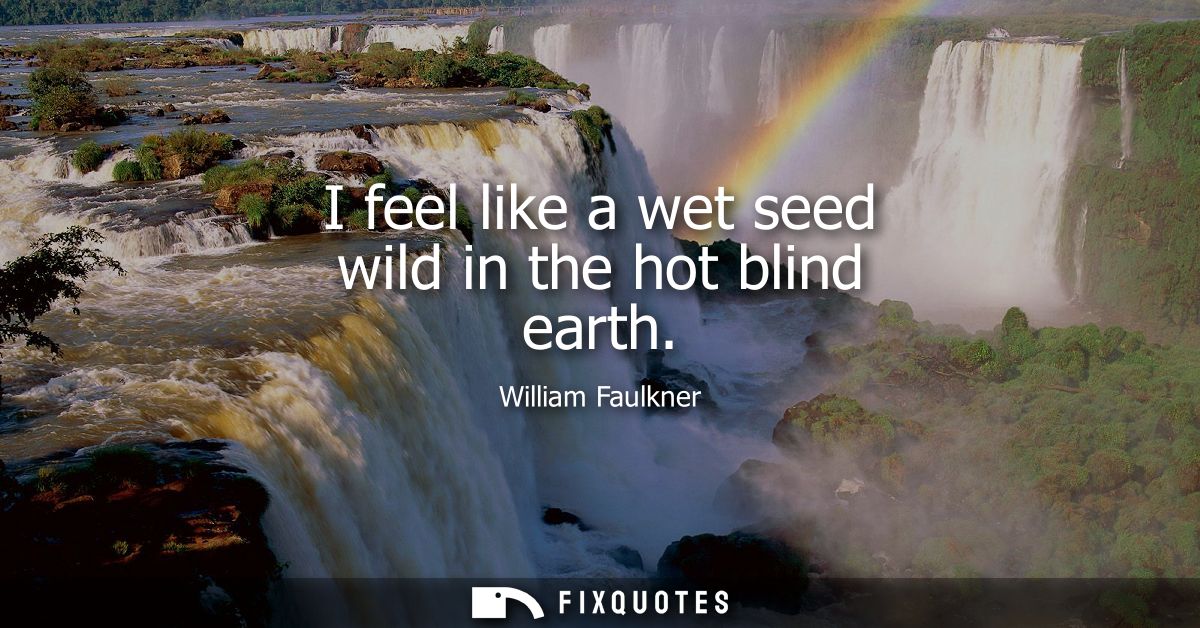
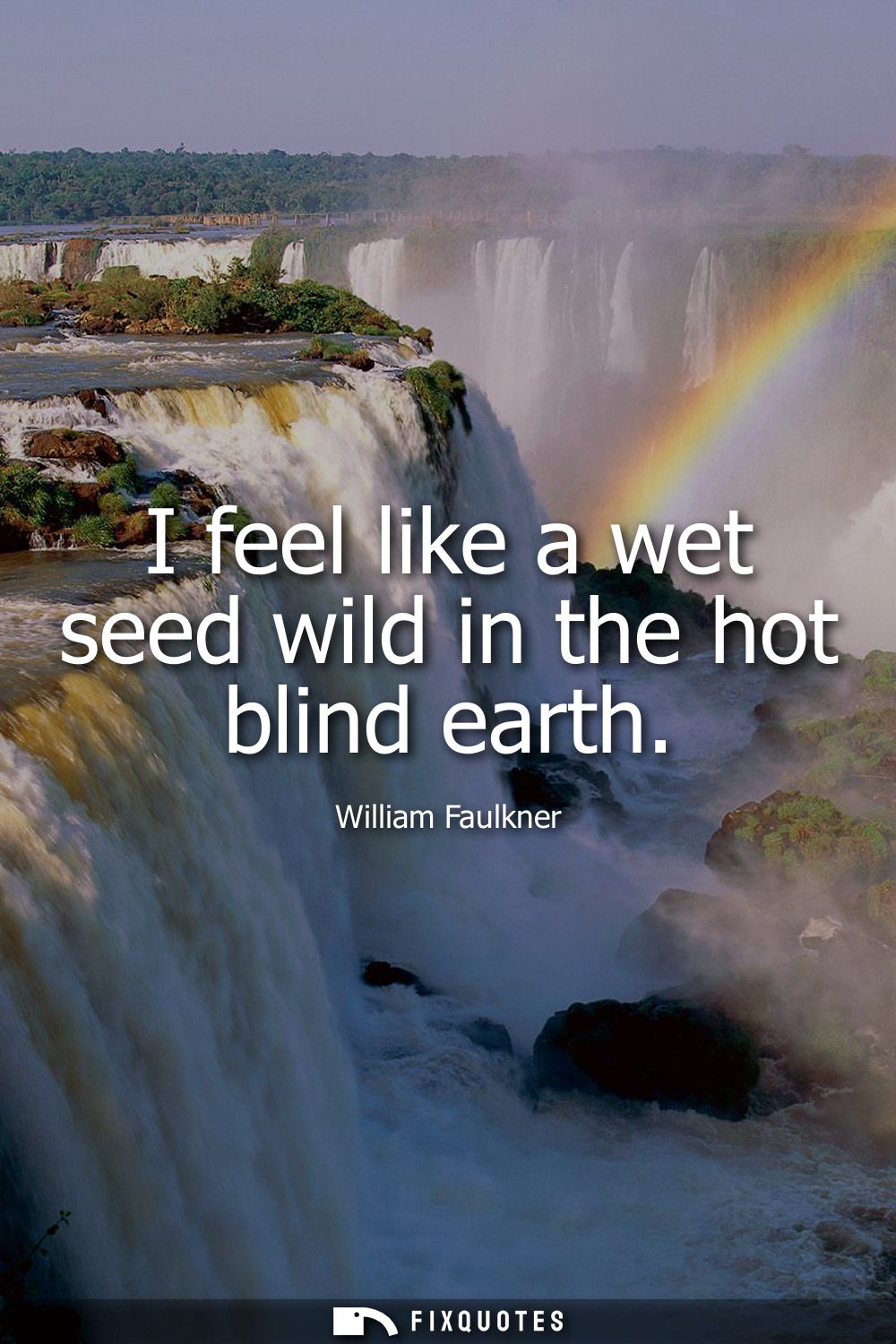
"I feel like a wet seed, wild in the hot blind earth"
About this Quote
A Faulkner line like this doesn’t pose a feeling; it stages one. “Wet seed” is a compact metaphor for potential that hasn’t earned its shape yet: alive, charged, but still anonymous, still at the mercy of whatever soil it’s been thrown into. The seed is “wet,” freshly split open, vulnerable in a way that suggests both sex and injury. You can hear Faulkner’s favorite pressure point: the body as the first prison, history as the second.
“Wild” is the pivot. Seeds aren’t supposed to be wild; they’re supposed to be planted, named, tended, folded into someone’s plan. Wildness here reads as unwanted vitality, a life-force that refuses domestication even as it’s buried. That tension is Faulkner’s South in miniature: desire and violence, fertility and rot, all jammed into the same ground.
Then there’s the environment: “hot blind earth.” Not just heat but suffocation; not just darkness but indifference. “Blind” makes the earth feel less like a maternal cradle than a brute element, incapable of mercy or recognition. The line’s sonic weight (wet, wild, hot, blind) lands like fists in dirt, turning the sentence into a kind of claustrophobic prayer.
Contextually, it fits Faulkner’s recurring interiors: characters trapped beneath family legacies, racial orders, and private shame, sensing possibility but unable to see the way out. The intent isn’t hope. It’s the raw, humiliating fact of being alive before you have a story to justify it.
“Wild” is the pivot. Seeds aren’t supposed to be wild; they’re supposed to be planted, named, tended, folded into someone’s plan. Wildness here reads as unwanted vitality, a life-force that refuses domestication even as it’s buried. That tension is Faulkner’s South in miniature: desire and violence, fertility and rot, all jammed into the same ground.
Then there’s the environment: “hot blind earth.” Not just heat but suffocation; not just darkness but indifference. “Blind” makes the earth feel less like a maternal cradle than a brute element, incapable of mercy or recognition. The line’s sonic weight (wet, wild, hot, blind) lands like fists in dirt, turning the sentence into a kind of claustrophobic prayer.
Contextually, it fits Faulkner’s recurring interiors: characters trapped beneath family legacies, racial orders, and private shame, sensing possibility but unable to see the way out. The intent isn’t hope. It’s the raw, humiliating fact of being alive before you have a story to justify it.
Quote Details
| Topic | Poetry |
|---|---|
| Source | Help us find the source |
| Cite |
Citation Formats
APA Style (7th ed.)
Faulkner, William. (2026, February 20). I feel like a wet seed, wild in the hot blind earth. FixQuotes. https://fixquotes.com/quotes/i-feel-like-a-wet-seed-wild-in-the-hot-blind-earth-2426/
Chicago Style
Faulkner, William. "I feel like a wet seed, wild in the hot blind earth." FixQuotes. February 20, 2026. https://fixquotes.com/quotes/i-feel-like-a-wet-seed-wild-in-the-hot-blind-earth-2426/.
MLA Style (9th ed.)
"I feel like a wet seed, wild in the hot blind earth." FixQuotes, 20 Feb. 2026, https://fixquotes.com/quotes/i-feel-like-a-wet-seed-wild-in-the-hot-blind-earth-2426/. Accessed 5 Apr. 2026.
More Quotes by William
Add to List