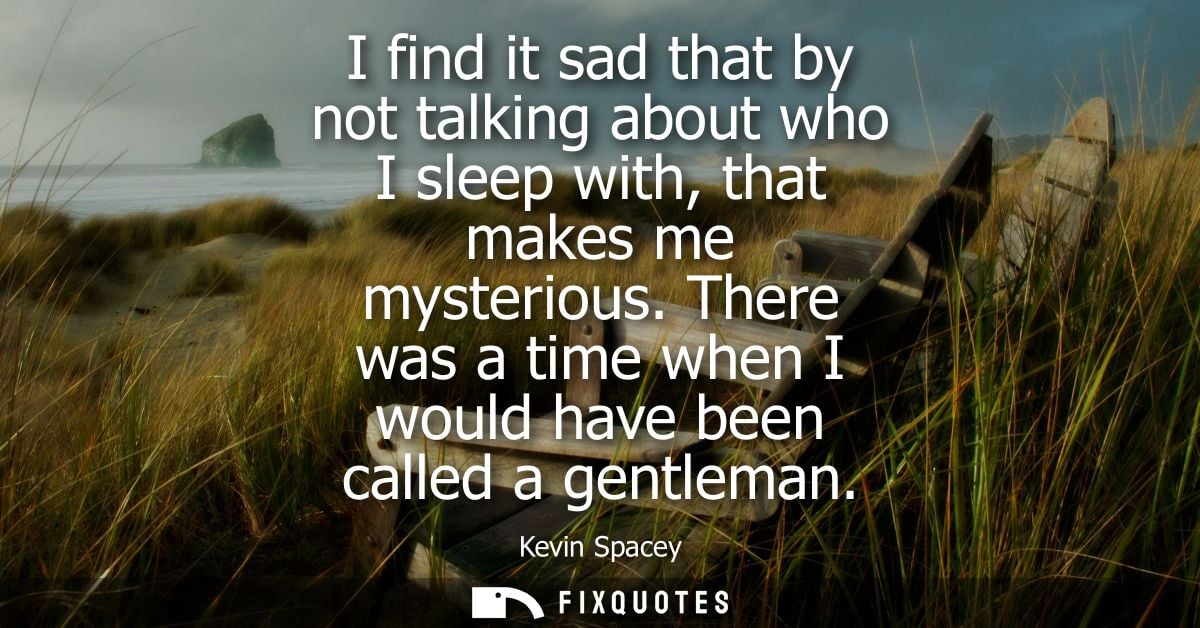
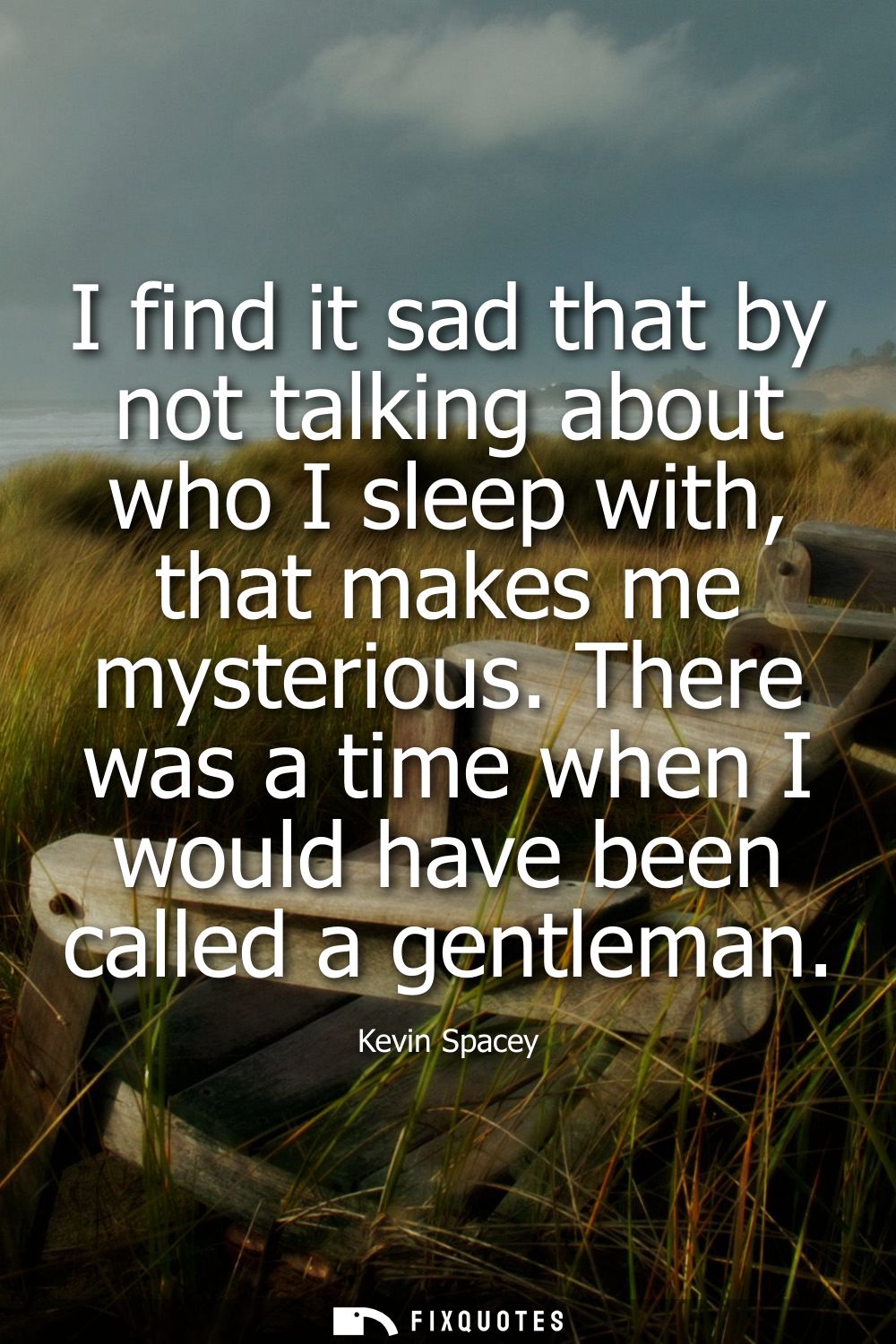
"I find it sad that by not talking about who I sleep with, that makes me mysterious. There was a time when I would have been called a gentleman"
About this Quote
Spacey frames silence as virtue and spins the public’s hunger for disclosure into a moral failing: if privacy reads as “mysterious,” the culture must be broken. It’s a slick rhetorical pivot, because it recasts a basic fact of celebrity life (people want details) as an indictment of the audience’s prurience. The line is engineered to make restraint look like nobility, and scrutiny look like vulgarity.
The subtext is more transactional. “Who I sleep with” isn’t just gossip; it’s code for sexuality and the career calculus around it, especially in an era when “leading man” branding still carried an old-school straightness tax. By invoking “gentleman,” Spacey reaches for an older social contract: don’t ask, don’t tell, and everyone gets to keep their illusions. He’s not merely defending a boundary; he’s mourning a time when ambiguity could be packaged as sophistication rather than interpreted as secrecy.
Context matters because the quote sits at the intersection of changing norms: early-2000s tabloid culture, the slow thaw of public attitudes toward LGBTQ identities, and Hollywood’s long habit of treating sexuality as a market risk to be managed. It works as cultural critique because it’s half-true: the demand for access can be invasive. It also works as self-mythmaking, turning “I won’t confirm” into a character trait. The sting is that “gentleman” here doesn’t just mean polite; it implies entitlement to opacity, as if discretion is something the famous are owed, rather than negotiated.
The subtext is more transactional. “Who I sleep with” isn’t just gossip; it’s code for sexuality and the career calculus around it, especially in an era when “leading man” branding still carried an old-school straightness tax. By invoking “gentleman,” Spacey reaches for an older social contract: don’t ask, don’t tell, and everyone gets to keep their illusions. He’s not merely defending a boundary; he’s mourning a time when ambiguity could be packaged as sophistication rather than interpreted as secrecy.
Context matters because the quote sits at the intersection of changing norms: early-2000s tabloid culture, the slow thaw of public attitudes toward LGBTQ identities, and Hollywood’s long habit of treating sexuality as a market risk to be managed. It works as cultural critique because it’s half-true: the demand for access can be invasive. It also works as self-mythmaking, turning “I won’t confirm” into a character trait. The sting is that “gentleman” here doesn’t just mean polite; it implies entitlement to opacity, as if discretion is something the famous are owed, rather than negotiated.
Quote Details
| Topic | Respect |
|---|
More Quotes by Kevin
Add to List