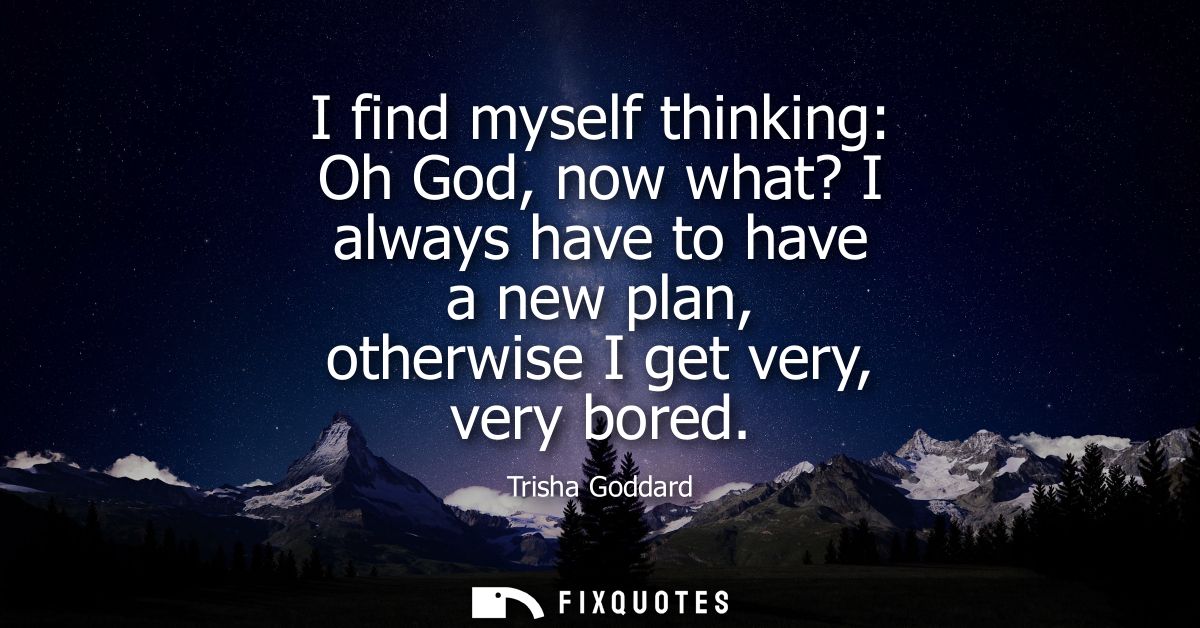
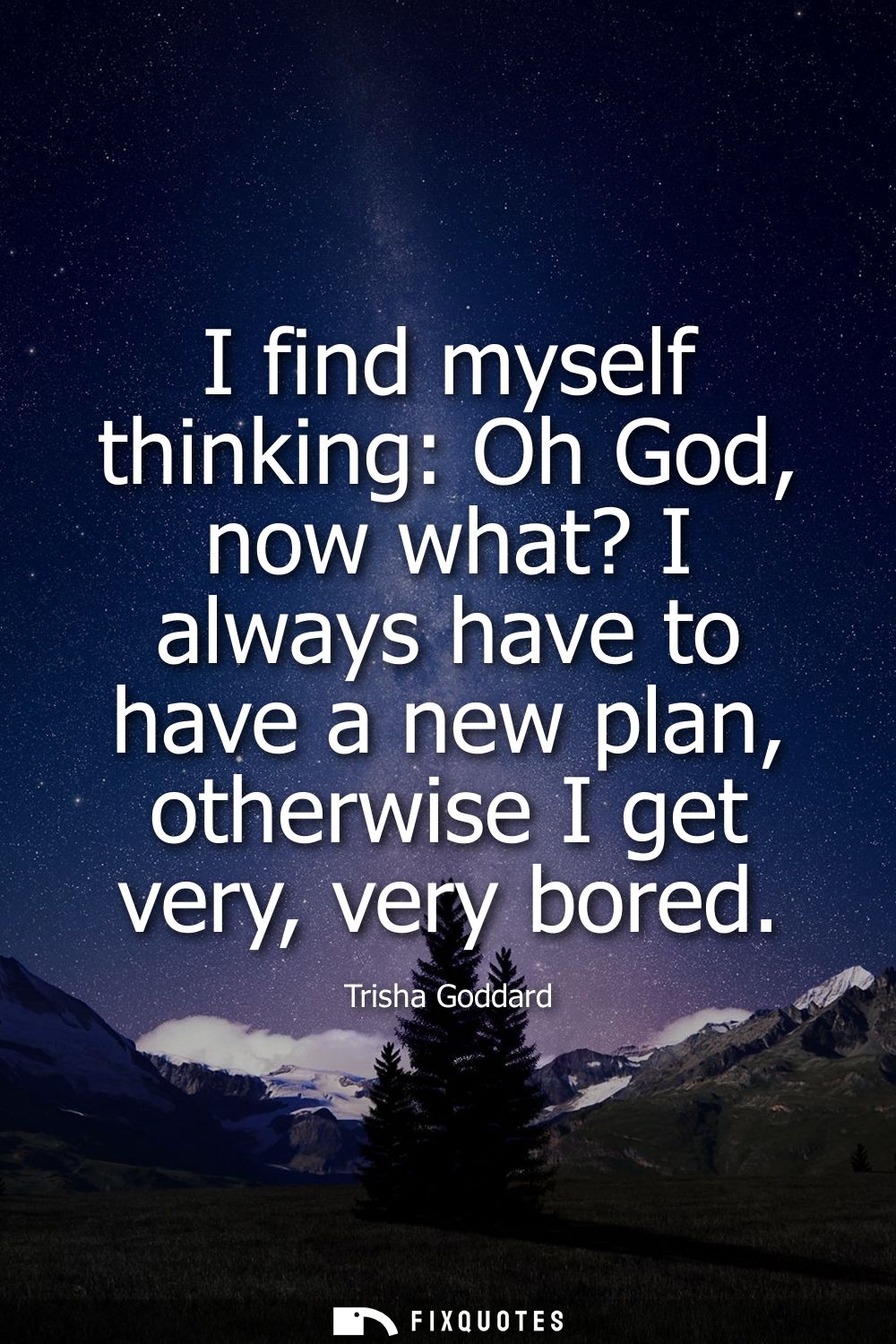
"I find myself thinking: Oh God, now what? I always have to have a new plan, otherwise I get very, very bored"
About this Quote
The key word is “have.” This isn’t curiosity; it’s compulsion. She’s not saying she likes plans, she’s saying plans keep her from something worse: boredom as emotional free fall. In entertainment culture, boredom isn’t quaint idleness - it’s irrelevance. The industry rewards people who can keep generating “the next” version of themselves, so the subtext is a kind of negotiated truce with pressure: if she’s always plotting, she’s always safe.
There’s also a sly self-awareness in the escalation to “very, very bored.” The repetition signals that she knows how melodramatic it sounds, but also how real it is. That’s why it works: it turns what could be read as ambition into a recognizably human itch, the modern condition of living on deadlines, cycles, and reinventions - with the uneasy suspicion that stopping would mean disappearing.
Quote Details
| Topic | Reinvention |
|---|---|
| Source | Help us find the source |
| Cite |
Citation Formats
APA Style (7th ed.)
Goddard, Trisha. (2026, January 16). I find myself thinking: Oh God, now what? I always have to have a new plan, otherwise I get very, very bored. FixQuotes. https://fixquotes.com/quotes/i-find-myself-thinking-oh-god-now-what-i-always-134849/
Chicago Style
Goddard, Trisha. "I find myself thinking: Oh God, now what? I always have to have a new plan, otherwise I get very, very bored." FixQuotes. January 16, 2026. https://fixquotes.com/quotes/i-find-myself-thinking-oh-god-now-what-i-always-134849/.
MLA Style (9th ed.)
"I find myself thinking: Oh God, now what? I always have to have a new plan, otherwise I get very, very bored." FixQuotes, 16 Jan. 2026, https://fixquotes.com/quotes/i-find-myself-thinking-oh-god-now-what-i-always-134849/. Accessed 4 Apr. 2026.