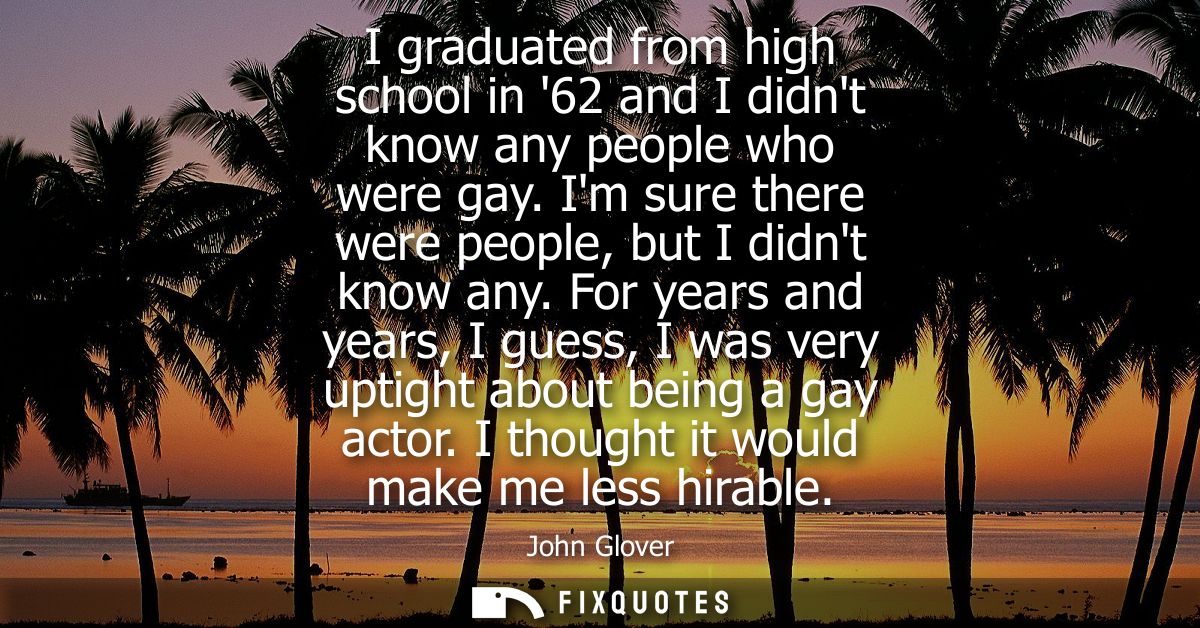
"I graduated from high school in '62 and I didn't know any people who were gay. I'm sure there were people, but I didn't know any. For years and years, I guess, I was very uptight about being a gay actor. I thought it would make me less hirable"
About this Quote
Then he pivots to the specific fear that stalked generations of performers: employability. “Uptight” is doing heavy lifting. It’s a modest word for a constant, career-long vigilance - the calculation of how you hold your voice, your gestures, your dating life, your press. In acting, where “type” and marketability are currency, being openly gay wasn’t just a personal disclosure; it was a professional liability, a label that casting offices could treat like a contagious risk. “Less hirable” is corporate euphemism masking a harsher truth: the industry’s gatekeepers routinely equated queerness with audience discomfort and box-office loss.
The subtext is that the closet isn’t merely private shame; it’s workplace policy without paperwork. Glover’s generational framing matters, too. By anchoring the memory in a specific year, he reminds you progress didn’t arrive as enlightenment - it arrived as shifting incentives, slow cultural thaw, and people deciding the fear was no longer worth the role.
Quote Details
| Topic | Equality |
|---|---|
| Source | Help us find the source |
| Cite |
Citation Formats
APA Style (7th ed.)
Glover, John. (2026, January 15). I graduated from high school in '62 and I didn't know any people who were gay. I'm sure there were people, but I didn't know any. For years and years, I guess, I was very uptight about being a gay actor. I thought it would make me less hirable. FixQuotes. https://fixquotes.com/quotes/i-graduated-from-high-school-in-62-and-i-didnt-147166/
Chicago Style
Glover, John. "I graduated from high school in '62 and I didn't know any people who were gay. I'm sure there were people, but I didn't know any. For years and years, I guess, I was very uptight about being a gay actor. I thought it would make me less hirable." FixQuotes. January 15, 2026. https://fixquotes.com/quotes/i-graduated-from-high-school-in-62-and-i-didnt-147166/.
MLA Style (9th ed.)
"I graduated from high school in '62 and I didn't know any people who were gay. I'm sure there were people, but I didn't know any. For years and years, I guess, I was very uptight about being a gay actor. I thought it would make me less hirable." FixQuotes, 15 Jan. 2026, https://fixquotes.com/quotes/i-graduated-from-high-school-in-62-and-i-didnt-147166/. Accessed 16 Feb. 2026.