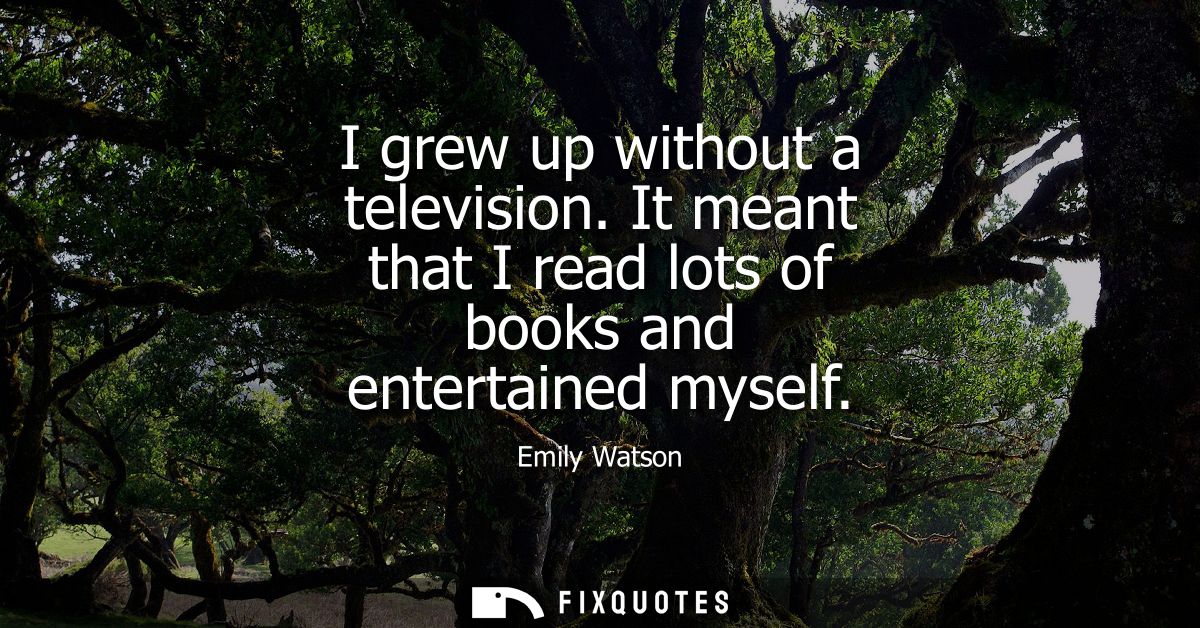
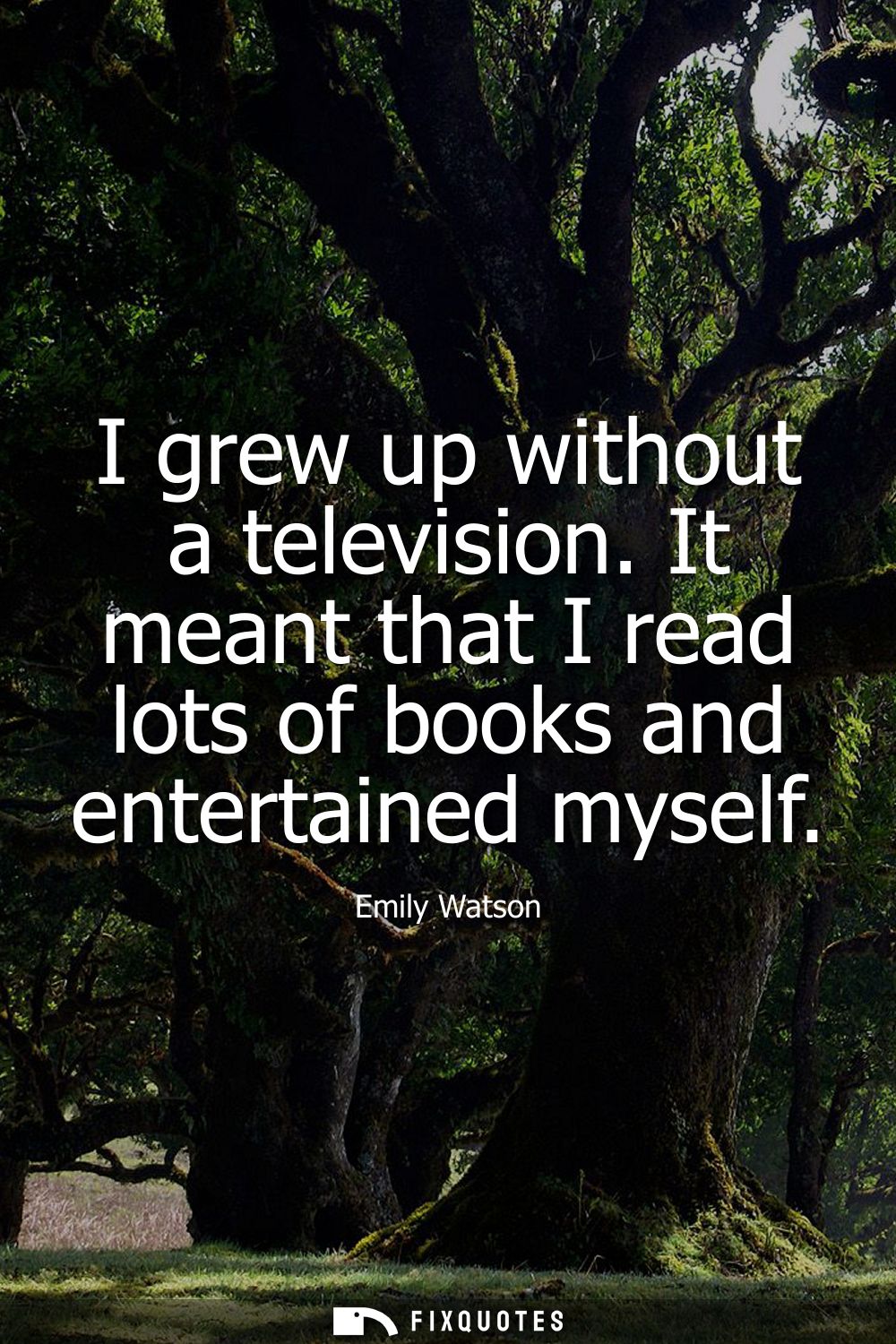
"I grew up without a television. It meant that I read lots of books and entertained myself"
About this Quote
The subtext is a rebuttal to the assumption that creativity comes from access - to content, to gadgets, to constant stimulation. Watson implies the opposite: imagination strengthens when it has to pull its own weight. For an actress, that matters. Acting is a profession built on attention, interiority, and the ability to inhabit other lives. “Read lots of books” signals early training in empathy and narrative structure; “entertained myself” signals a capacity for solitude, for making meaning without an audience.
Culturally, the line lands as a soft critique of contemporary childhood, where boredom has been engineered out by design. It’s not a scold; it’s an alternative model. Watson’s nostalgia isn’t for the “good old days” but for the psychological space that scarcity can create: long stretches of time where the mind has to generate its own weather. That’s a surprisingly modern lesson from a pre-streaming childhood.
Quote Details
| Topic | Book |
|---|---|
| Source | Help us find the source |
| Cite |
Citation Formats
APA Style (7th ed.)
Watson, Emily. (2026, January 17). I grew up without a television. It meant that I read lots of books and entertained myself. FixQuotes. https://fixquotes.com/quotes/i-grew-up-without-a-television-it-meant-that-i-57347/
Chicago Style
Watson, Emily. "I grew up without a television. It meant that I read lots of books and entertained myself." FixQuotes. January 17, 2026. https://fixquotes.com/quotes/i-grew-up-without-a-television-it-meant-that-i-57347/.
MLA Style (9th ed.)
"I grew up without a television. It meant that I read lots of books and entertained myself." FixQuotes, 17 Jan. 2026, https://fixquotes.com/quotes/i-grew-up-without-a-television-it-meant-that-i-57347/. Accessed 13 Feb. 2026.