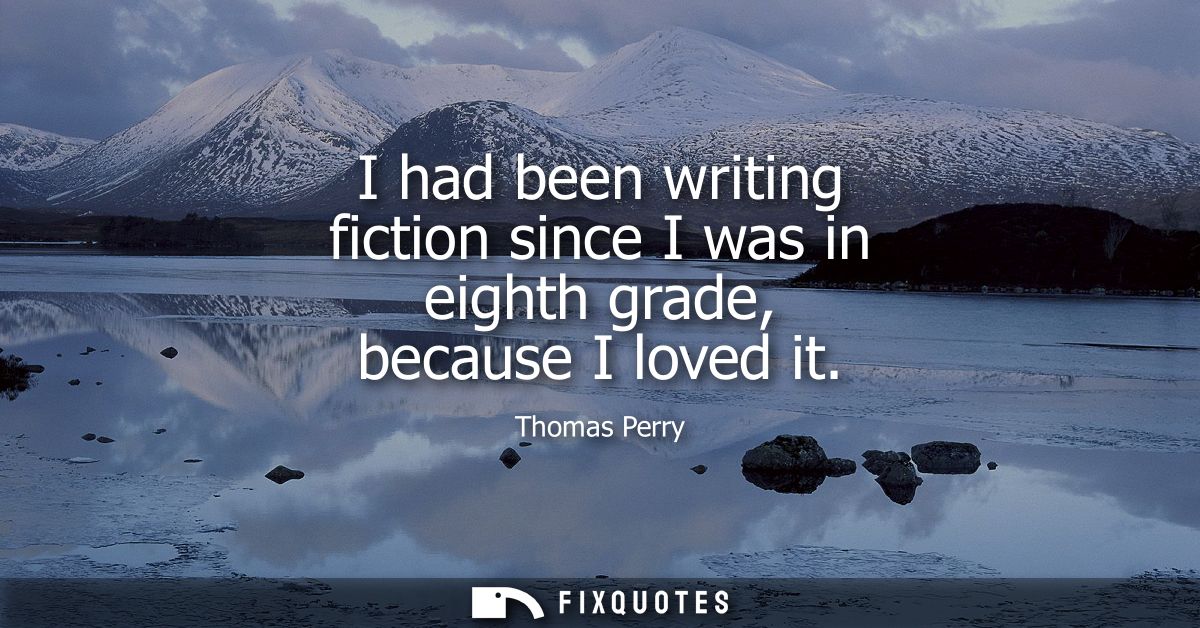
"I had been writing fiction since I was in eighth grade, because I loved it"
About this Quote
There is something almost disarming about how unglamorous this origin story is: eighth grade, fiction, love. Thomas Perry’s line refuses the usual mythmaking around artistry, the kind that leans on destiny or torment. Instead, it frames creativity as a habit formed early, like learning a chord shape because it feels good in your hands. That plainness is the point. By grounding his beginning in adolescence, he quietly argues that “real” art often starts as play before it becomes ambition.
The subtext is a defense of pleasure in a culture that treats enjoyment as suspicious unless it’s monetized or validated by struggle. “Because I loved it” is both explanation and rebuttal: he’s pushing back against the expectation that art must be justified by trauma, genius, or hustle. It also slips in a claim about authenticity. If you’ve been doing something since eighth grade, you’re not chasing a trend; you’re continuing a private conversation you started before anyone was watching.
Coming from a musician, the fiction detail matters. It hints that songwriting isn’t only about melody; it’s about narrative instincts, character, pacing, the emotional turn. Perry is positioning himself less as a performer who happens to write, and more as a storyteller who’s found multiple instruments for the same impulse. The intent feels quietly strategic: to make his work legible as craft, not branding, and to invite listeners to hear his music as literature with a backbeat.
The subtext is a defense of pleasure in a culture that treats enjoyment as suspicious unless it’s monetized or validated by struggle. “Because I loved it” is both explanation and rebuttal: he’s pushing back against the expectation that art must be justified by trauma, genius, or hustle. It also slips in a claim about authenticity. If you’ve been doing something since eighth grade, you’re not chasing a trend; you’re continuing a private conversation you started before anyone was watching.
Coming from a musician, the fiction detail matters. It hints that songwriting isn’t only about melody; it’s about narrative instincts, character, pacing, the emotional turn. Perry is positioning himself less as a performer who happens to write, and more as a storyteller who’s found multiple instruments for the same impulse. The intent feels quietly strategic: to make his work legible as craft, not branding, and to invite listeners to hear his music as literature with a backbeat.
Quote Details
| Topic | Writing |
|---|
More Quotes by Thomas
Add to List