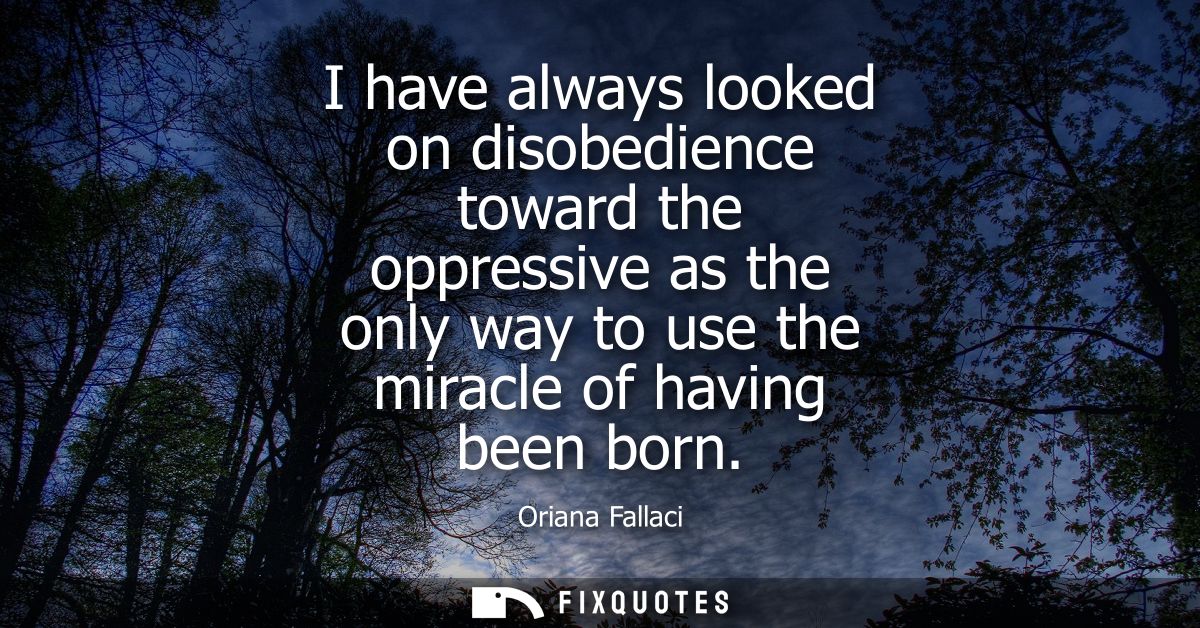
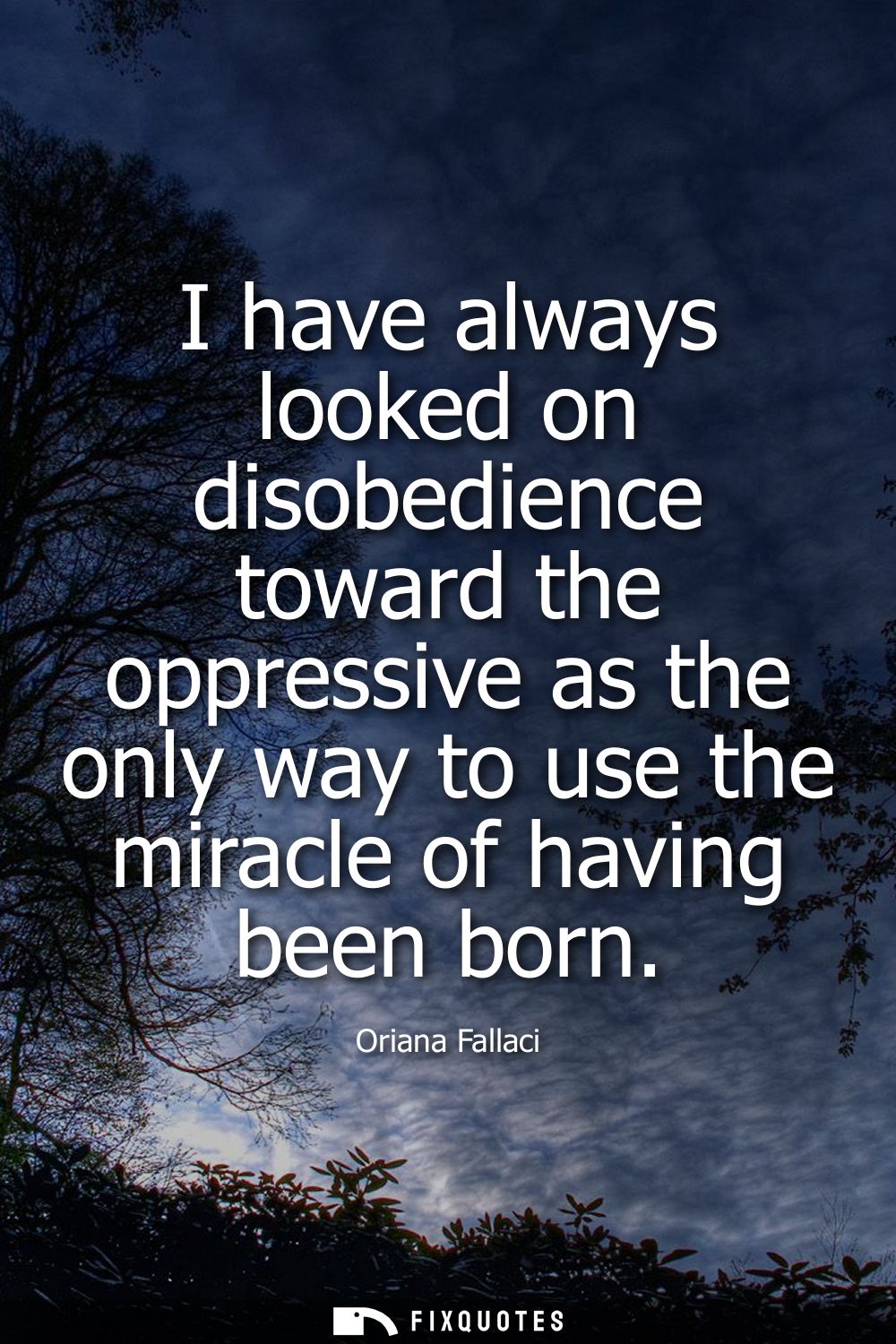
"I have always looked on disobedience toward the oppressive as the only way to use the miracle of having been born"
About this Quote
The line works because it compresses biography into philosophy. Fallaci reported from wars, interrogated heads of state, and built a public persona around confrontation. She understood oppression not as an abstract system but as a daily, intimate pressure: uniforms, censorship, patriarchal condescension, the state’s demand that you keep your voice “reasonable.” By pairing “oppressive” with “miracle,” she implies that tyranny is the default gravity of human affairs; what’s miraculous is the brief chance to push back.
There’s also a journalist’s subtext: neutrality is complicity when the subject is domination. “Toward the oppressive” matters - she’s not romanticizing lawlessness in general, but making disobedience directional and ethical. It’s aimed upward, not outward. The sentence carries an implicit rebuke to comfort politics, the kind that treats dissent as bad manners and calls obedience “stability.”
Read in context of Fallaci’s combative career, the quote is less self-help mantra than declaration of method: if you’re alive and paying attention, you don’t get to be domesticated. The point isn’t purity. It’s refusal.
Quote Details
| Topic | Freedom |
|---|---|
| Source | Help us find the source |
| Cite |
Citation Formats
APA Style (7th ed.)
Fallaci, Oriana. (2026, January 16). I have always looked on disobedience toward the oppressive as the only way to use the miracle of having been born. FixQuotes. https://fixquotes.com/quotes/i-have-always-looked-on-disobedience-toward-the-100715/
Chicago Style
Fallaci, Oriana. "I have always looked on disobedience toward the oppressive as the only way to use the miracle of having been born." FixQuotes. January 16, 2026. https://fixquotes.com/quotes/i-have-always-looked-on-disobedience-toward-the-100715/.
MLA Style (9th ed.)
"I have always looked on disobedience toward the oppressive as the only way to use the miracle of having been born." FixQuotes, 16 Jan. 2026, https://fixquotes.com/quotes/i-have-always-looked-on-disobedience-toward-the-100715/. Accessed 2 Mar. 2026.