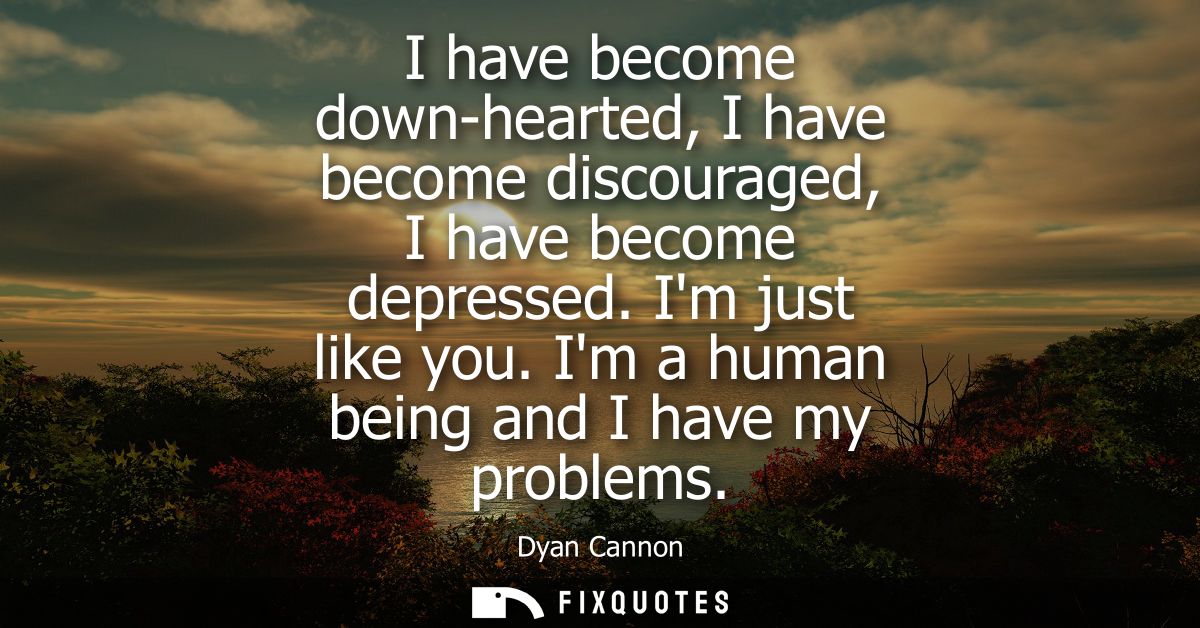
"I have become down-hearted, I have become discouraged, I have become depressed. I'm just like you. I'm a human being and I have my problems"
About this Quote
The power here is how unglamorous it sounds. Dyan Cannon doesn’t reach for poetic suffering or inspirational gloss; she stacks plainspoken admissions like weights: “down-hearted,” “discouraged,” “depressed.” The repetition isn’t literary flourish so much as a pressure test. Each clause lowers the emotional ceiling until there’s nowhere left to hide but the truth.
As an actress, Cannon is trained in illusion: the controlled face, the camera-ready composure, the public narrative that says you’re either “doing great” or “making a comeback.” This quote pushes against that machinery. “I’m just like you” is a risky line in celebrity culture because it can read as performative empathy. Cannon neutralizes that risk by putting the messy feelings first. The order matters: she earns the identification by confessing what the audience is usually asked to project onto stars but never hear them name.
The subtext is less “feel sorry for me” than “stop demanding invulnerability.” It’s a small rebellion against the entertainment economy’s bargain: you can have fame, but only if you stay decorative about your pain. By ending on “I’m a human being and I have my problems,” she shrinks the distance between icon and audience to something almost stubbornly ordinary. The intent is relatability, yes, but also permission: if someone publicly associated with glamour can admit depression without turning it into a brand, then the rest of us can drop the performance too.
As an actress, Cannon is trained in illusion: the controlled face, the camera-ready composure, the public narrative that says you’re either “doing great” or “making a comeback.” This quote pushes against that machinery. “I’m just like you” is a risky line in celebrity culture because it can read as performative empathy. Cannon neutralizes that risk by putting the messy feelings first. The order matters: she earns the identification by confessing what the audience is usually asked to project onto stars but never hear them name.
The subtext is less “feel sorry for me” than “stop demanding invulnerability.” It’s a small rebellion against the entertainment economy’s bargain: you can have fame, but only if you stay decorative about your pain. By ending on “I’m a human being and I have my problems,” she shrinks the distance between icon and audience to something almost stubbornly ordinary. The intent is relatability, yes, but also permission: if someone publicly associated with glamour can admit depression without turning it into a brand, then the rest of us can drop the performance too.
Quote Details
| Topic | Sadness |
|---|---|
| Source | Help us find the source |
More Quotes by Dyan
Add to List