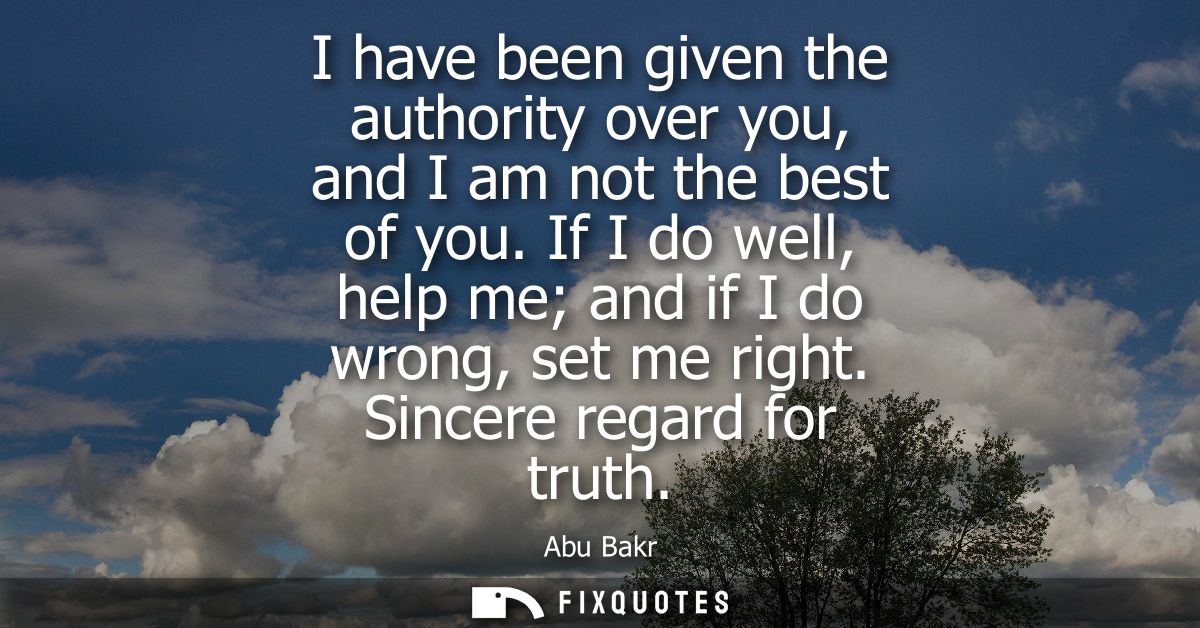
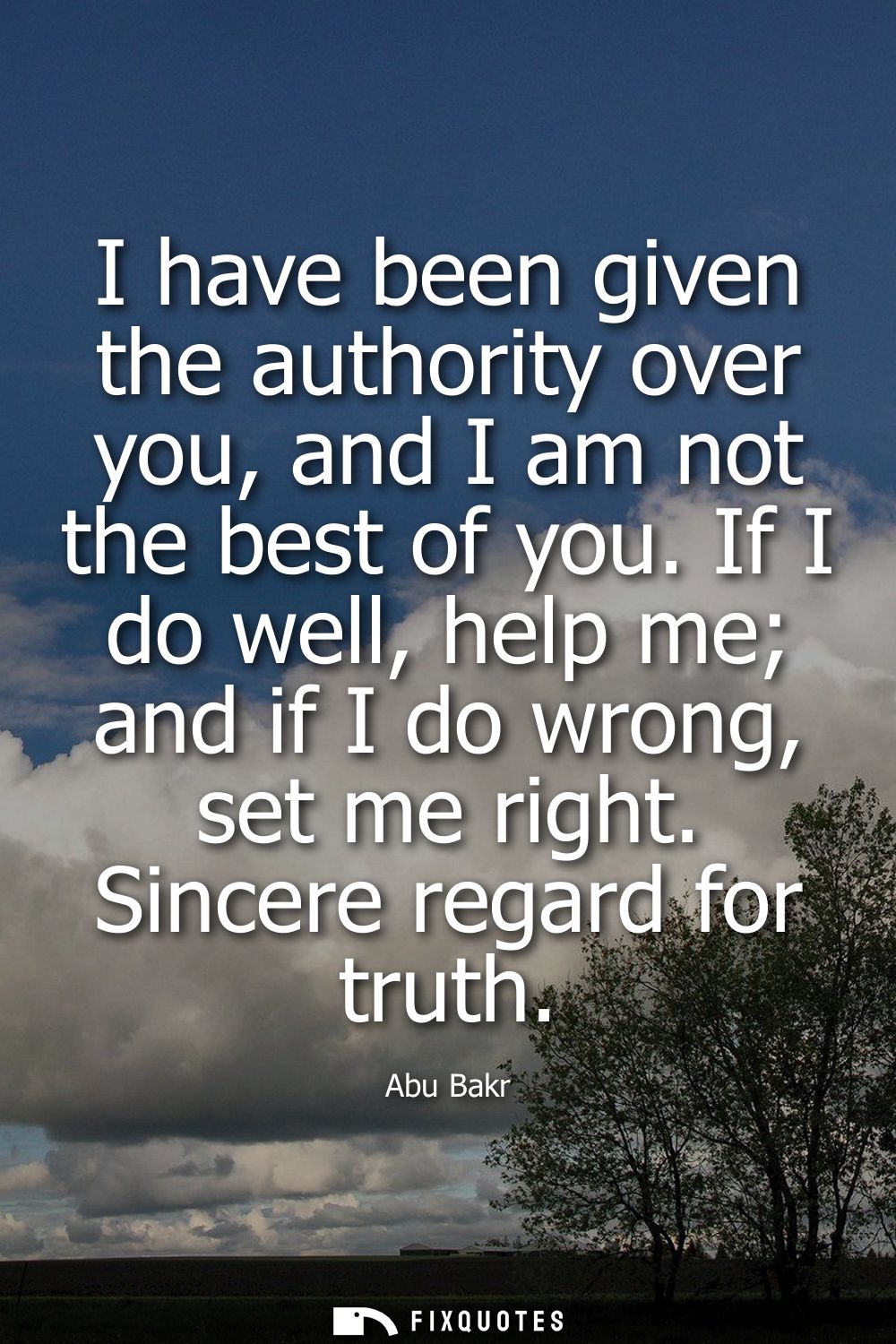
"I have been given the authority over you, and I am not the best of you. If I do well, help me; and if I do wrong, set me right. Sincere regard for truth"
About this Quote
"If I do well, help me" frames governance as collaborative labor rather than a ruler's private project. The subtext is pragmatic: a leader cannot keep the polity intact by command alone, especially in a young, coalition-based community. He needs buy-in, enforcement, and counsel. Then comes the sharper edge: "if I do wrong, set me right". That's an invitation that doubles as a boundary. He is asking for correction, but also signaling that correction should be principled and public - not whispered conspiracy, not factional revenge. Dissent is being domesticated into a civic duty.
"Sincere regard for truth" functions like a constitutional preamble in miniature. It places an ethical ceiling over politics: truth is the standard by which both ruler and ruled are measured. The rhetoric is spare because the aim is not to inspire awe; it's to prevent the dangerous kind of awe that turns authority into sanctity.
Quote Details
| Topic | Servant Leadership |
|---|---|
| Source | Help us find the source |
| Cite |
Citation Formats
APA Style (7th ed.)
Bakr, Abu. (2026, January 15). I have been given the authority over you, and I am not the best of you. If I do well, help me; and if I do wrong, set me right. Sincere regard for truth. FixQuotes. https://fixquotes.com/quotes/i-have-been-given-the-authority-over-you-and-i-am-37672/
Chicago Style
Bakr, Abu. "I have been given the authority over you, and I am not the best of you. If I do well, help me; and if I do wrong, set me right. Sincere regard for truth." FixQuotes. January 15, 2026. https://fixquotes.com/quotes/i-have-been-given-the-authority-over-you-and-i-am-37672/.
MLA Style (9th ed.)
"I have been given the authority over you, and I am not the best of you. If I do well, help me; and if I do wrong, set me right. Sincere regard for truth." FixQuotes, 15 Jan. 2026, https://fixquotes.com/quotes/i-have-been-given-the-authority-over-you-and-i-am-37672/. Accessed 6 Mar. 2026.