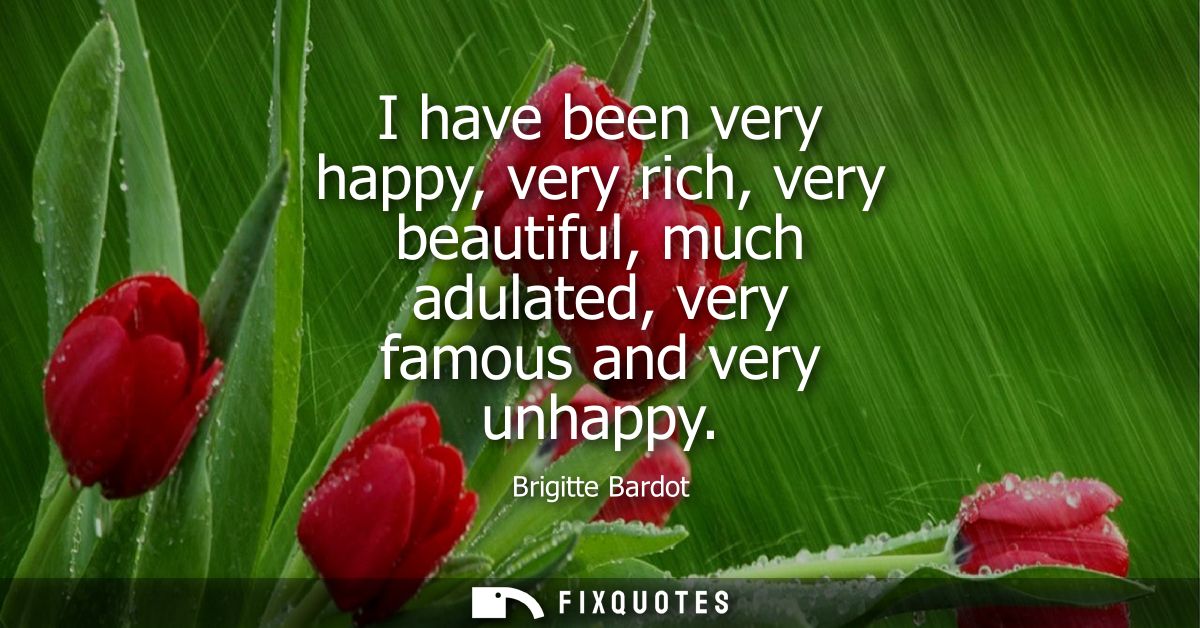
"I have been very happy, very rich, very beautiful, much adulated, very famous and very unhappy"
About this Quote
The subtext is sharper than self-pity. Bardot’s fame was never just about acting; it was about becoming an idea of liberated European femininity that millions consumed. “Adulated” is the tell: it’s worship, not love, and worship is impersonal. She’s naming a life where desire is constant but intimacy is rare, where beauty is both currency and cage. Even “happy” appears first, as if it’s supposed to be guaranteed by the rest, only to be revoked at the end.
Context matters because Bardot’s career sat at the collision point of postwar modernity, mass media, and the sexual politics that made her iconic and disposable in the same breath. Read now, the line plays like an early, brutal version of the influencer-era admission: the algorithm of admiration can deliver everything except a self that feels intact. The sentence doesn’t ask for sympathy so much as it dares the audience to stop confusing spectacle with a livable life.
Quote Details
| Topic | Happiness |
|---|---|
| Source | Help us find the source |
| Cite |
Citation Formats
APA Style (7th ed.)
Bardot, Brigitte. (2026, January 15). I have been very happy, very rich, very beautiful, much adulated, very famous and very unhappy. FixQuotes. https://fixquotes.com/quotes/i-have-been-very-happy-very-rich-very-beautiful-44121/
Chicago Style
Bardot, Brigitte. "I have been very happy, very rich, very beautiful, much adulated, very famous and very unhappy." FixQuotes. January 15, 2026. https://fixquotes.com/quotes/i-have-been-very-happy-very-rich-very-beautiful-44121/.
MLA Style (9th ed.)
"I have been very happy, very rich, very beautiful, much adulated, very famous and very unhappy." FixQuotes, 15 Jan. 2026, https://fixquotes.com/quotes/i-have-been-very-happy-very-rich-very-beautiful-44121/. Accessed 12 Feb. 2026.