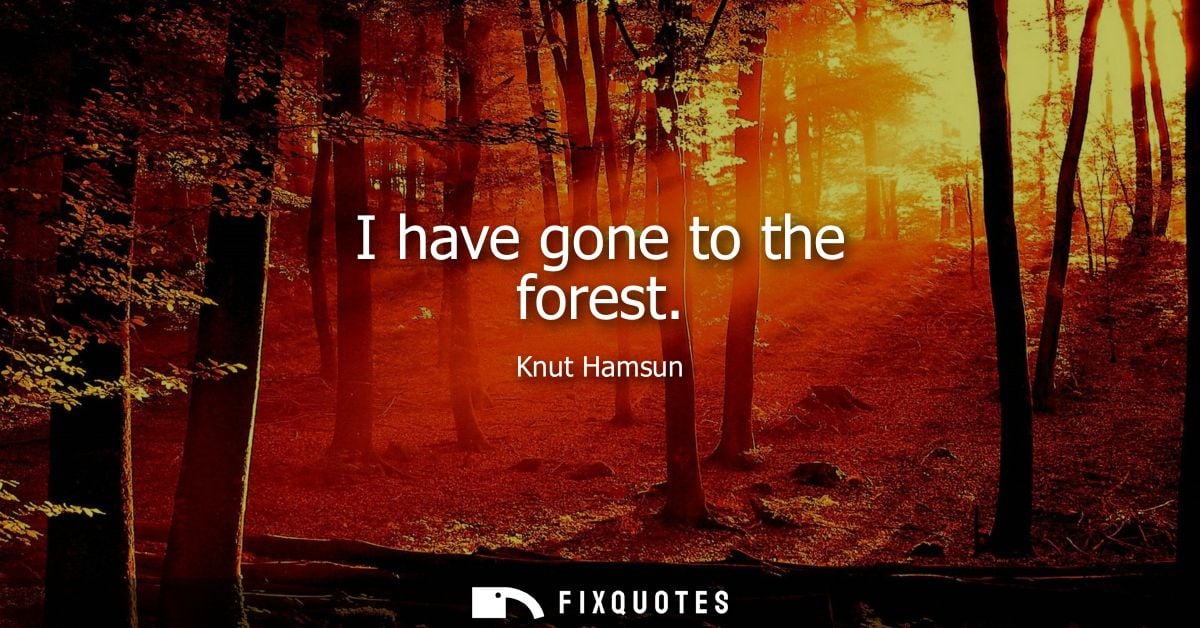
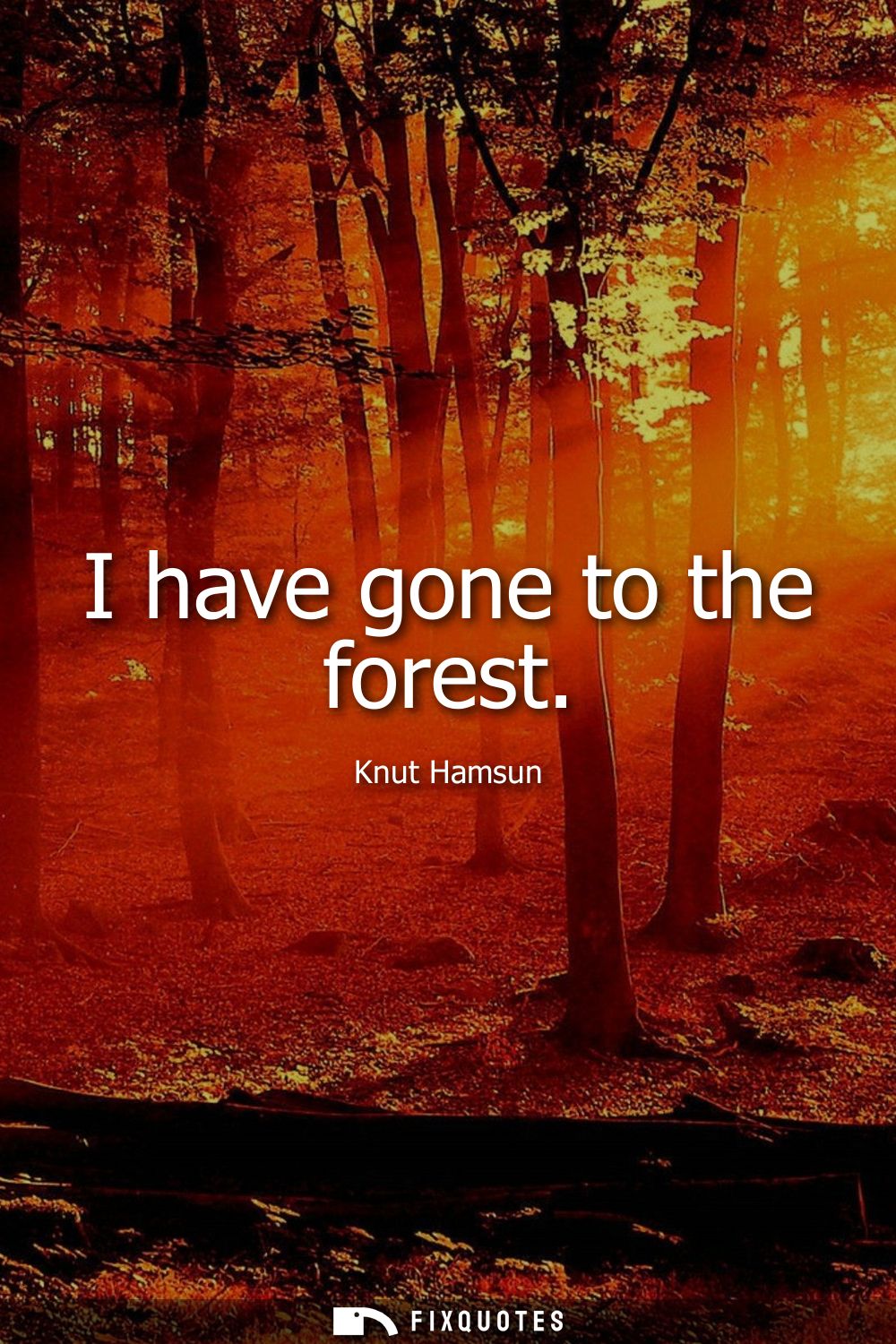
"I have gone to the forest"
About this Quote
A sentence this bare is a dare: follow me, and do not expect a map. Hamsun’s “I have gone to the forest” reads like a simple stage direction, but it carries the whole psychological weather system that made him scandalously modern. The grammar matters. Not “I am going” (a plan) but “I have gone” (a done deed), a quiet severing from society that arrives without debate, like a compulsion. The forest isn’t scenery; it’s an alternative jurisdiction, a place where social language thins out and the self can get strange again.
In Hamsun’s world, the move away from town life isn’t pastoral escapism so much as a refusal of its moral bookkeeping. The forest implies hunger, solitude, animal alertness, the humbling fact of the body. It’s also a rebuke to the late-19th-century faith that progress and rationality would tidy human experience. Hamsun helped turn fiction inward, away from grand social problems and toward nervous systems: impulse, shame, pride, drifting desire. This line is a minimalist portal into that project.
Culturally, “the forest” carries Nordic weight: folklore, darkness, survival, the edge of the cultivated. It suggests not just nature, but the pre-social, the pre-explained. Hamsun’s intent is to dramatize withdrawal as both freedom and risk: you can escape the crowd’s scripts, but you also lose its protections. The subtext is that modern life makes the forest feel necessary.
In Hamsun’s world, the move away from town life isn’t pastoral escapism so much as a refusal of its moral bookkeeping. The forest implies hunger, solitude, animal alertness, the humbling fact of the body. It’s also a rebuke to the late-19th-century faith that progress and rationality would tidy human experience. Hamsun helped turn fiction inward, away from grand social problems and toward nervous systems: impulse, shame, pride, drifting desire. This line is a minimalist portal into that project.
Culturally, “the forest” carries Nordic weight: folklore, darkness, survival, the edge of the cultivated. It suggests not just nature, but the pre-social, the pre-explained. Hamsun’s intent is to dramatize withdrawal as both freedom and risk: you can escape the crowd’s scripts, but you also lose its protections. The subtext is that modern life makes the forest feel necessary.
Quote Details
| Topic | Nature |
|---|---|
| Source | Help us find the source |
| Cite |
Citation Formats
APA Style (7th ed.)
Hamsun, Knut. (2026, January 15). I have gone to the forest. FixQuotes. https://fixquotes.com/quotes/i-have-gone-to-the-forest-32795/
Chicago Style
Hamsun, Knut. "I have gone to the forest." FixQuotes. January 15, 2026. https://fixquotes.com/quotes/i-have-gone-to-the-forest-32795/.
MLA Style (9th ed.)
"I have gone to the forest." FixQuotes, 15 Jan. 2026, https://fixquotes.com/quotes/i-have-gone-to-the-forest-32795/. Accessed 26 Mar. 2026.
More Quotes by Knut
Add to List