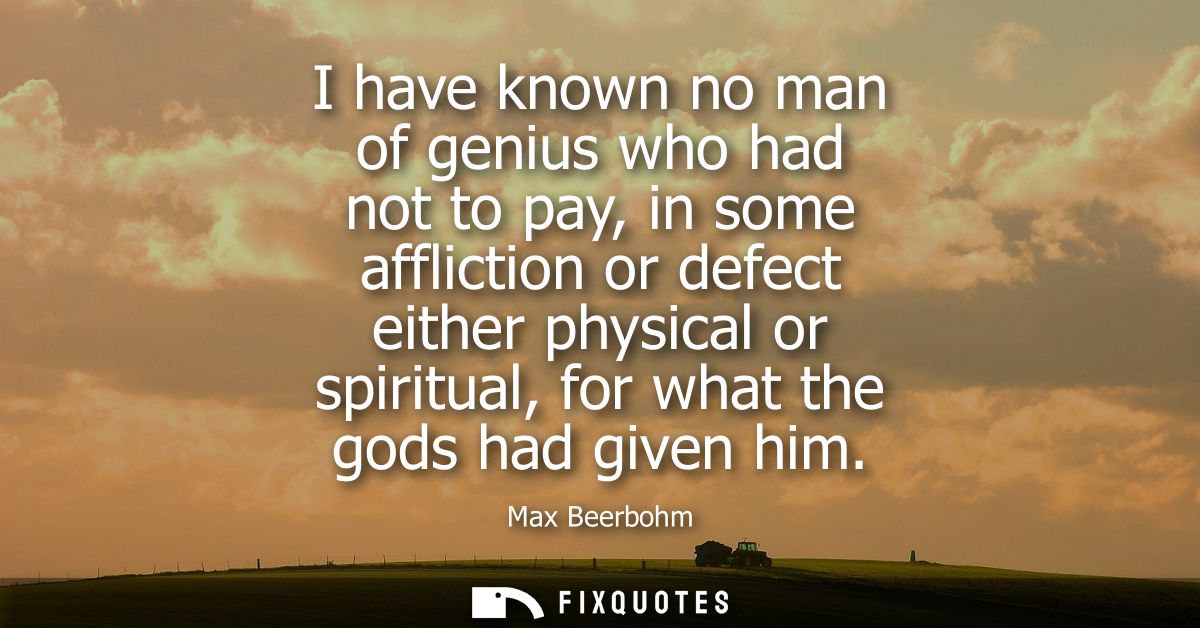
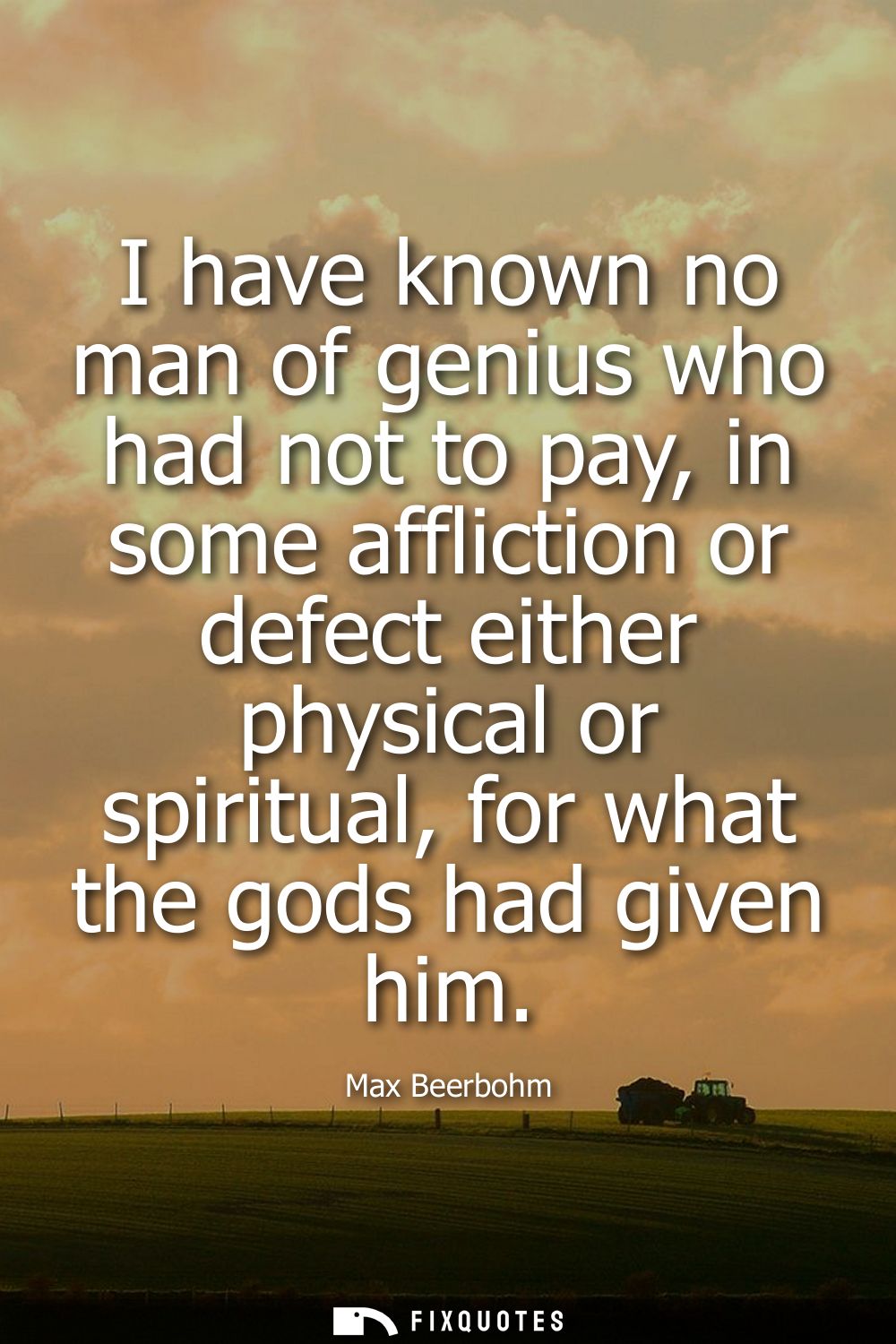
"I have known no man of genius who had not to pay, in some affliction or defect, either physical or spiritual, for what the gods had given him"
About this Quote
The subtext is social as much as psychological. Beerbohm moved through the late-Victorian and Edwardian world where "genius" was both currency and spectacle; eccentricity could be marketed, suffering could be aestheticized, and the public learned to expect the artist to be damaged in a way that made the art feel earned. His wording flatters the audience's appetite for that myth while also policing it: he isn't praising the suffering; he's pointing to the cost as a pattern, almost an occupational hazard.
Labeling Beerbohm an "actor" is a little off - he's better known as a satirist and caricaturist - but the performer’s sensibility still fits. The sentence reads like a dressing-room verdict: talent is real, but so is the toll, and anyone enamored with genius should be honest about what they are applauding.
Quote Details
| Topic | Wisdom |
|---|---|
| Source | Help us find the source |
| Cite |
Citation Formats
APA Style (7th ed.)
Beerbohm, Max. (2026, February 17). I have known no man of genius who had not to pay, in some affliction or defect, either physical or spiritual, for what the gods had given him. FixQuotes. https://fixquotes.com/quotes/i-have-known-no-man-of-genius-who-had-not-to-pay-93420/
Chicago Style
Beerbohm, Max. "I have known no man of genius who had not to pay, in some affliction or defect, either physical or spiritual, for what the gods had given him." FixQuotes. February 17, 2026. https://fixquotes.com/quotes/i-have-known-no-man-of-genius-who-had-not-to-pay-93420/.
MLA Style (9th ed.)
"I have known no man of genius who had not to pay, in some affliction or defect, either physical or spiritual, for what the gods had given him." FixQuotes, 17 Feb. 2026, https://fixquotes.com/quotes/i-have-known-no-man-of-genius-who-had-not-to-pay-93420/. Accessed 6 Apr. 2026.