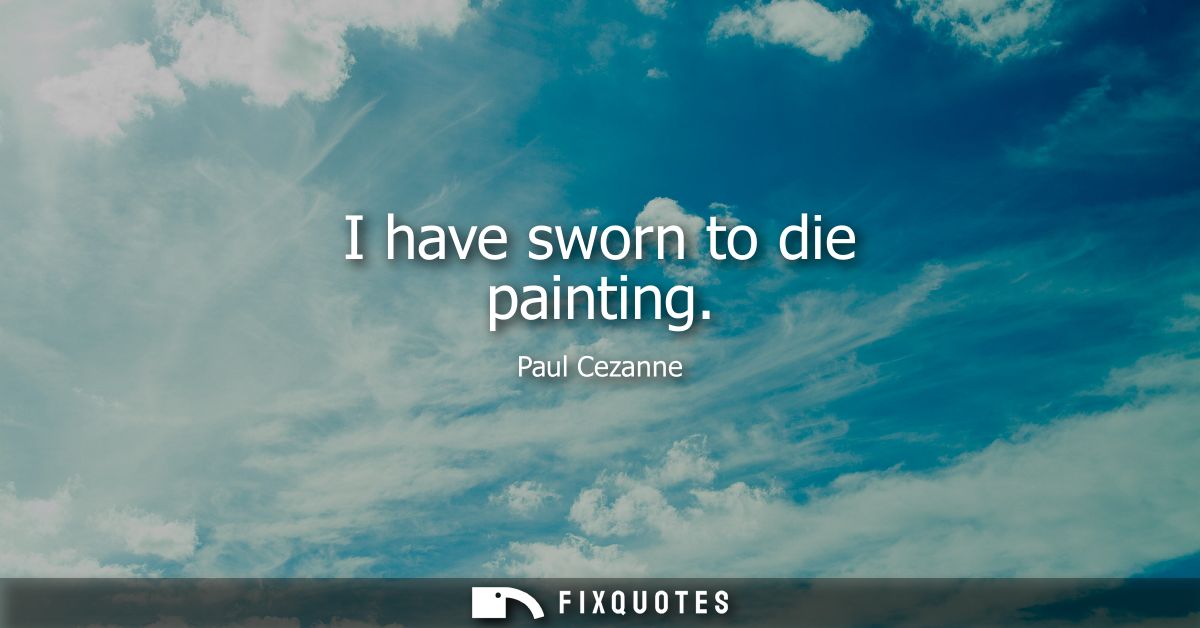
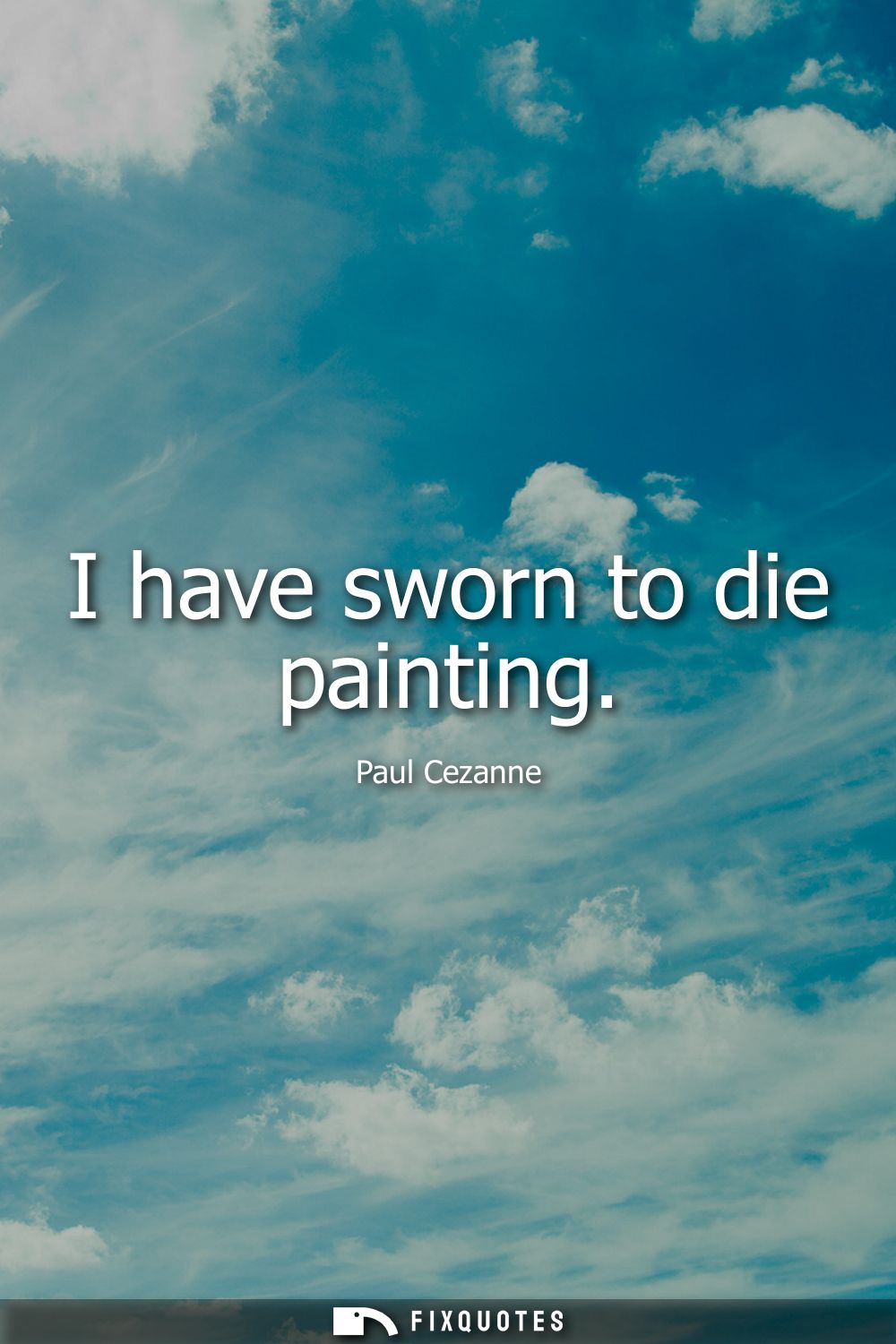
"I have sworn to die painting"
About this Quote
A vow like "I have sworn to die painting" sounds romantic until you hear the grind underneath it: Cezanne isn’t promising an elegant end at the easel, he’s declaring a refusal to stop working even when work stops loving you back. The verb "sworn" matters. This isn’t inspiration; it’s discipline dressed as fate, a self-imposed contract against distraction, doubt, and the social theater of being an Artist. He’s not chasing bohemian myth so much as trying to outlast his own impatience.
The line lands harder in Cezanne’s context because his career was built on stubborn recalibration. He didn’t win quickly. He argued with Paris, with critics, with his own eye. Painting for him wasn’t a personality trait; it was an engineering problem with spiritual stakes. That’s why "die painting" reads less like melodrama and more like method: keep returning to the motif until it yields its structure. Apples, mountains, bathers - not as subjects, but as test sites where perception can be rebuilt.
The subtext is almost defiant: if the world won’t grant you certainty, you manufacture it through repetition. Cezanne’s legacy - the bridge from Impressionism to modernism - makes the oath feel prophetic, but its real power is humbler. It insists that meaning comes from the daily decision to stay in the room, to keep looking, and to accept that the work will always be unfinished, right up to the last brushstroke.
The line lands harder in Cezanne’s context because his career was built on stubborn recalibration. He didn’t win quickly. He argued with Paris, with critics, with his own eye. Painting for him wasn’t a personality trait; it was an engineering problem with spiritual stakes. That’s why "die painting" reads less like melodrama and more like method: keep returning to the motif until it yields its structure. Apples, mountains, bathers - not as subjects, but as test sites where perception can be rebuilt.
The subtext is almost defiant: if the world won’t grant you certainty, you manufacture it through repetition. Cezanne’s legacy - the bridge from Impressionism to modernism - makes the oath feel prophetic, but its real power is humbler. It insists that meaning comes from the daily decision to stay in the room, to keep looking, and to accept that the work will always be unfinished, right up to the last brushstroke.
Quote Details
| Topic | Art |
|---|---|
| Source | Help us find the source |
| Cite |
Citation Formats
APA Style (7th ed.)
Cezanne, Paul. (2026, January 16). I have sworn to die painting. FixQuotes. https://fixquotes.com/quotes/i-have-sworn-to-die-painting-85592/
Chicago Style
Cezanne, Paul. "I have sworn to die painting." FixQuotes. January 16, 2026. https://fixquotes.com/quotes/i-have-sworn-to-die-painting-85592/.
MLA Style (9th ed.)
"I have sworn to die painting." FixQuotes, 16 Jan. 2026, https://fixquotes.com/quotes/i-have-sworn-to-die-painting-85592/. Accessed 28 Mar. 2026.
More Quotes by Paul
Add to List