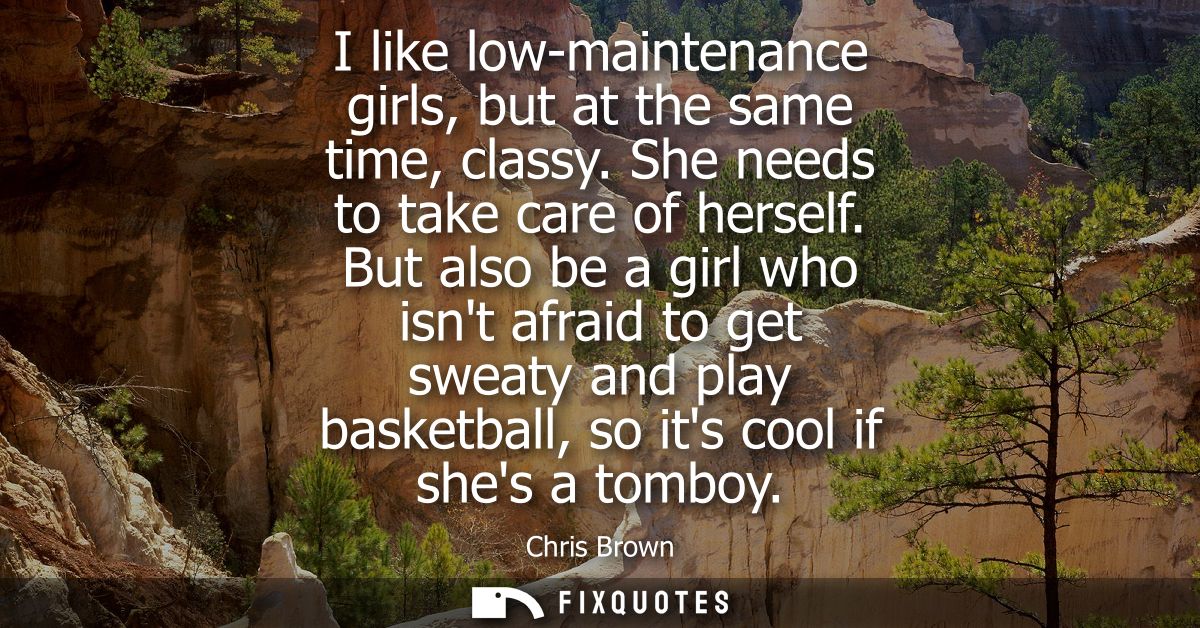
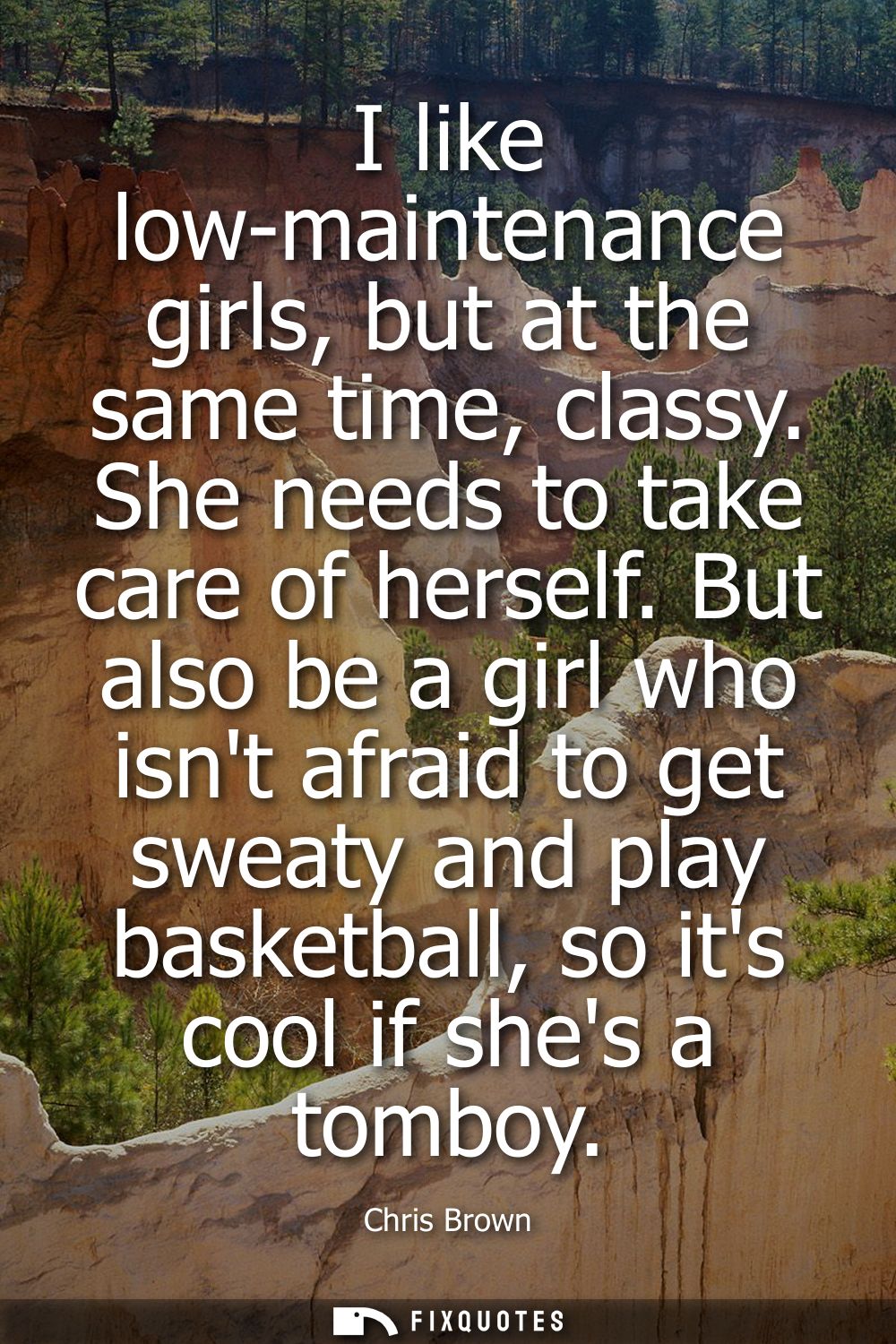
"I like low-maintenance girls, but at the same time, classy. She needs to take care of herself. But also be a girl who isn't afraid to get sweaty and play basketball, so it's cool if she's a tomboy"
About this Quote
Then comes “classy,” that slippery cultural code word that usually means “legible to polite society” without ever naming the rules. Paired with “She needs to take care of herself,” it shifts from vibe to surveillance: self-care becomes obligation, and the body becomes part of the relationship contract. The contradiction is the point. He wants a woman who performs high femininity with the invisibility of effort, the kind of beauty that pretends it happened naturally.
The tomboy add-on (“cool if she’s a tomboy”) tries to soften the controlling edge by signaling openness: she can be athletic, she can sweat, she can be “one of the guys” sometimes. But even that freedom is curated. Basketball is acceptable tomboyness because it’s fun, sexy-coded, and still camera-friendly; it’s not the messier kind of nonconformity that challenges gender expectations or power dynamics.
In pop culture context, this is the classic male-celebrity desire for a partner who’s both accessory and teammate: red-carpet ready, emotionally undemanding, and game to hang. It sells an ideal that feels modern and “chill,” while reinforcing old rules about women managing themselves so men don’t have to.
Quote Details
| Topic | Romantic |
|---|---|
| Source | Help us find the source |
| Cite |
Citation Formats
APA Style (7th ed.)
Brown, Chris. (2026, January 15). I like low-maintenance girls, but at the same time, classy. She needs to take care of herself. But also be a girl who isn't afraid to get sweaty and play basketball, so it's cool if she's a tomboy. FixQuotes. https://fixquotes.com/quotes/i-like-low-maintenance-girls-but-at-the-same-time-16799/
Chicago Style
Brown, Chris. "I like low-maintenance girls, but at the same time, classy. She needs to take care of herself. But also be a girl who isn't afraid to get sweaty and play basketball, so it's cool if she's a tomboy." FixQuotes. January 15, 2026. https://fixquotes.com/quotes/i-like-low-maintenance-girls-but-at-the-same-time-16799/.
MLA Style (9th ed.)
"I like low-maintenance girls, but at the same time, classy. She needs to take care of herself. But also be a girl who isn't afraid to get sweaty and play basketball, so it's cool if she's a tomboy." FixQuotes, 15 Jan. 2026, https://fixquotes.com/quotes/i-like-low-maintenance-girls-but-at-the-same-time-16799/. Accessed 2 Apr. 2026.