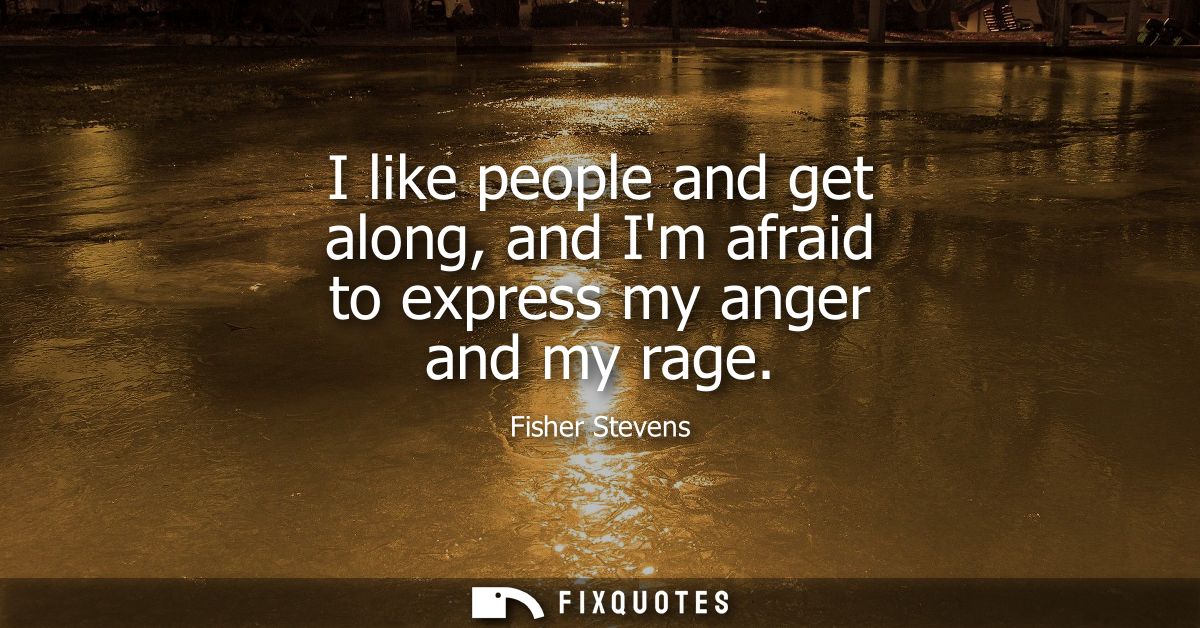
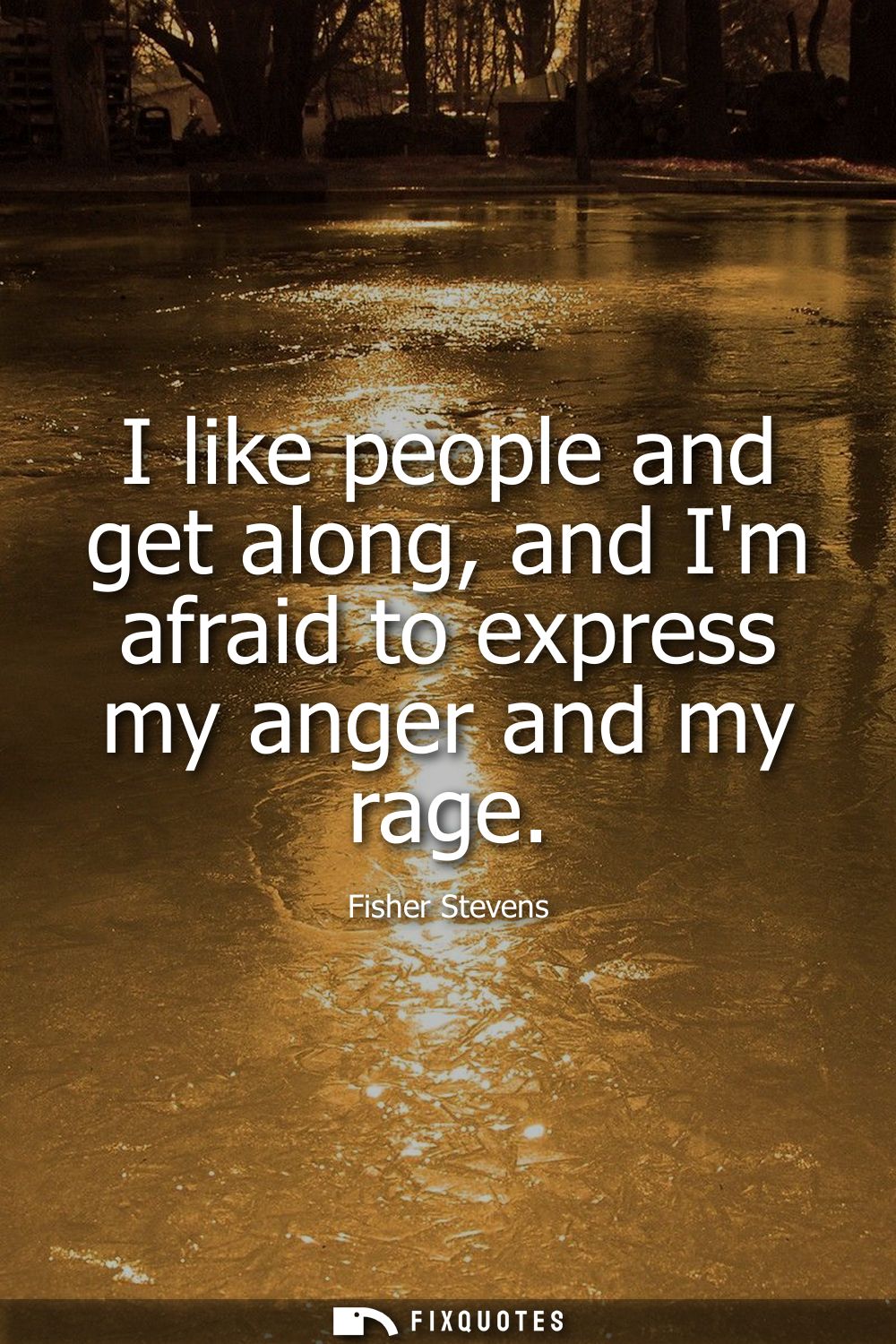
"I like people and get along, and I'm afraid to express my anger and my rage"
About this Quote
The line works because it refuses the usual redemption arc. He doesn’t say he’s learning to communicate better or “working on it.” He names a contradiction: warmth and suppression in the same breath. That juxtaposition feels especially actor-specific. An actor’s job is to manage impression, to read the room, to deliver emotion on cue. Off-camera, that training can curdle into over-accommodation: staying pleasant, staying employable, staying wanted. Rage becomes something you perform safely in a scene, not something you’re allowed to own in your own life.
There’s also a generational subtext: a certain 20th-century masculine etiquette where anger is either weaponized or swallowed, but rarely articulated with precision. Stevens is pointing to the third option he can’t access yet: anger as information. The “I like people” isn’t just a virtue statement; it’s the reason the anger feels dangerous. If connection is the identity, conflict reads like annihilation.
Quote Details
| Topic | Anger |
|---|---|
| Source | Help us find the source |
| Cite |
Citation Formats
APA Style (7th ed.)
Stevens, Fisher. (2026, January 17). I like people and get along, and I'm afraid to express my anger and my rage. FixQuotes. https://fixquotes.com/quotes/i-like-people-and-get-along-and-im-afraid-to-56702/
Chicago Style
Stevens, Fisher. "I like people and get along, and I'm afraid to express my anger and my rage." FixQuotes. January 17, 2026. https://fixquotes.com/quotes/i-like-people-and-get-along-and-im-afraid-to-56702/.
MLA Style (9th ed.)
"I like people and get along, and I'm afraid to express my anger and my rage." FixQuotes, 17 Jan. 2026, https://fixquotes.com/quotes/i-like-people-and-get-along-and-im-afraid-to-56702/. Accessed 22 Mar. 2026.