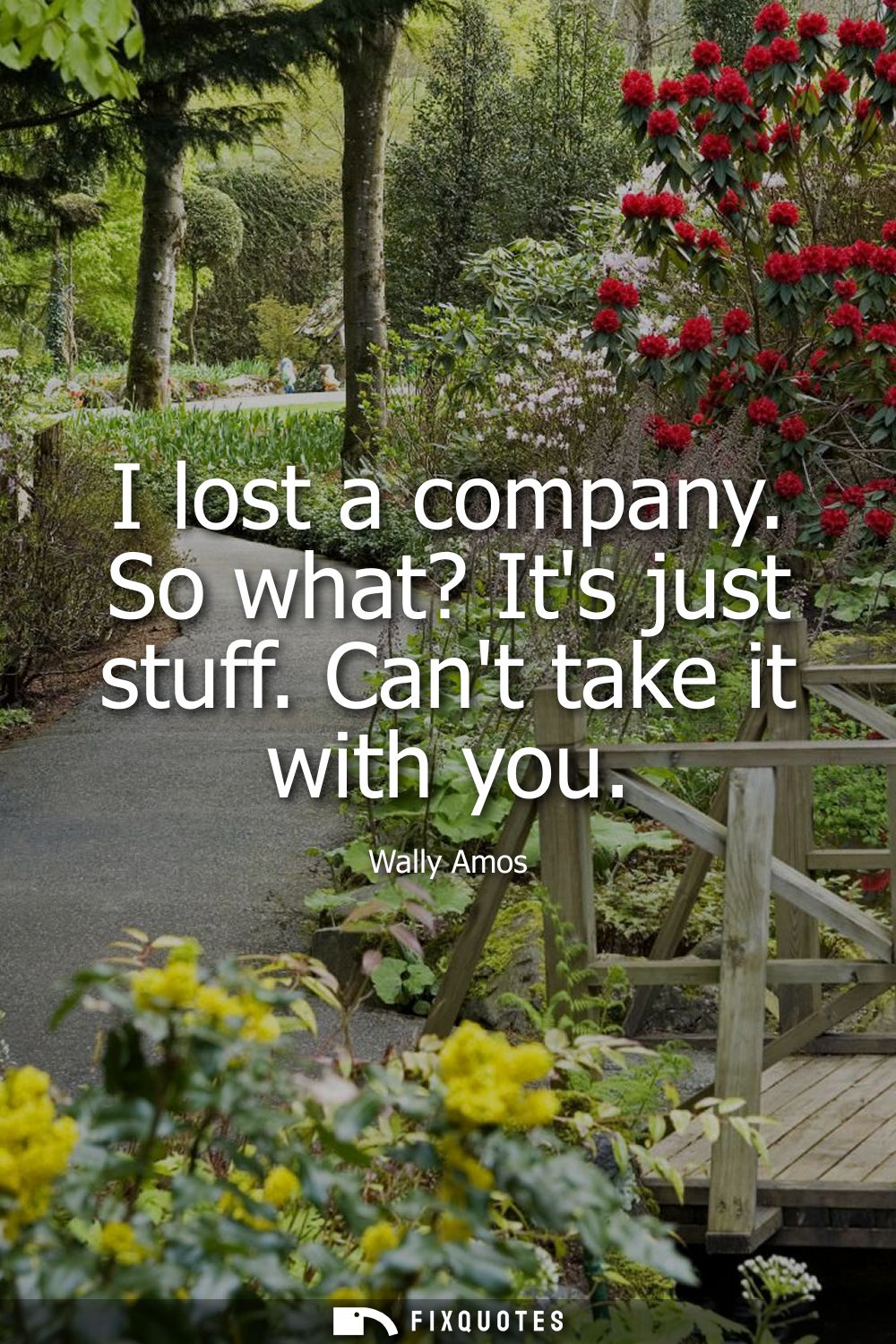
"I lost a company. So what? It's just stuff. Can't take it with you"
About this Quote
Dropping “I lost a company” with the breezy shrug of “So what?” is a deliberate refusal to perform the culturally expected grief. Wally Amos isn’t denying the hit; he’s depriving it of the power to define him. The short, punchy phrasing reads like a self-interruption: the mind starts down the familiar track of status, blame, and humiliation, then yanks the wheel toward perspective.
The subtext is both personal and strategic. Amos, whose name became inseparable from Famous Amos cookies, lived the modern entrepreneur’s most American cautionary tale: invent something beloved, scale fast, then watch control slip away through deals, debt, and corporate ownership. In that light, “just stuff” is not naive minimalism; it’s self-defense against a system that treats founders as inspirational mascots until the cap table says otherwise. He’s reframing loss as an event, not an identity.
“Can’t take it with you” lands as a vernacular memento mori, but it also carries a businessman’s realism: companies are structures, not souls. The line quietly rejects the myth that ownership equals worth, a myth that chews up entrepreneurs and spits them out when the market turns. Coming from Amos, it reads less like spiritual platitude and more like hard-won emotional discipline: if you’re going to keep creating after you’ve been publicly unmade, you need a philosophy that outlasts the brand.
The subtext is both personal and strategic. Amos, whose name became inseparable from Famous Amos cookies, lived the modern entrepreneur’s most American cautionary tale: invent something beloved, scale fast, then watch control slip away through deals, debt, and corporate ownership. In that light, “just stuff” is not naive minimalism; it’s self-defense against a system that treats founders as inspirational mascots until the cap table says otherwise. He’s reframing loss as an event, not an identity.
“Can’t take it with you” lands as a vernacular memento mori, but it also carries a businessman’s realism: companies are structures, not souls. The line quietly rejects the myth that ownership equals worth, a myth that chews up entrepreneurs and spits them out when the market turns. Coming from Amos, it reads less like spiritual platitude and more like hard-won emotional discipline: if you’re going to keep creating after you’ve been publicly unmade, you need a philosophy that outlasts the brand.
Quote Details
| Topic | Letting Go |
|---|---|
| Source | Help us find the source |
| Cite |
Citation Formats
APA Style (7th ed.)
Amos, Wally. (2026, January 17). I lost a company. So what? It's just stuff. Can't take it with you. FixQuotes. https://fixquotes.com/quotes/i-lost-a-company-so-what-its-just-stuff-cant-take-78889/
Chicago Style
Amos, Wally. "I lost a company. So what? It's just stuff. Can't take it with you." FixQuotes. January 17, 2026. https://fixquotes.com/quotes/i-lost-a-company-so-what-its-just-stuff-cant-take-78889/.
MLA Style (9th ed.)
"I lost a company. So what? It's just stuff. Can't take it with you." FixQuotes, 17 Jan. 2026, https://fixquotes.com/quotes/i-lost-a-company-so-what-its-just-stuff-cant-take-78889/. Accessed 12 Feb. 2026.
More Quotes by Wally
Add to List