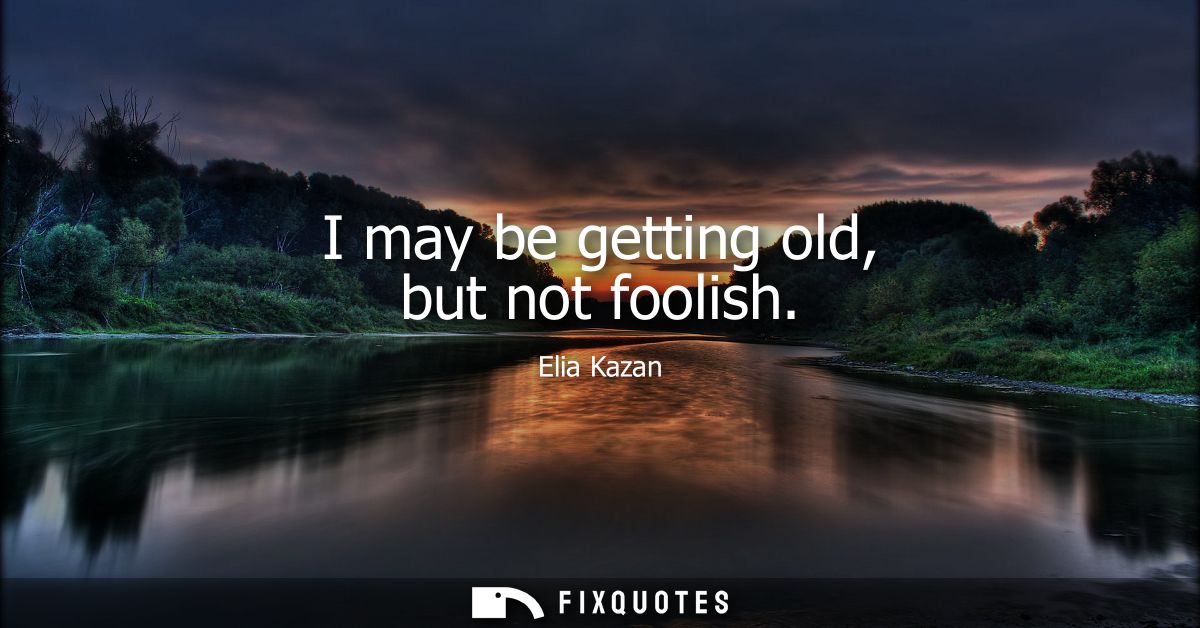
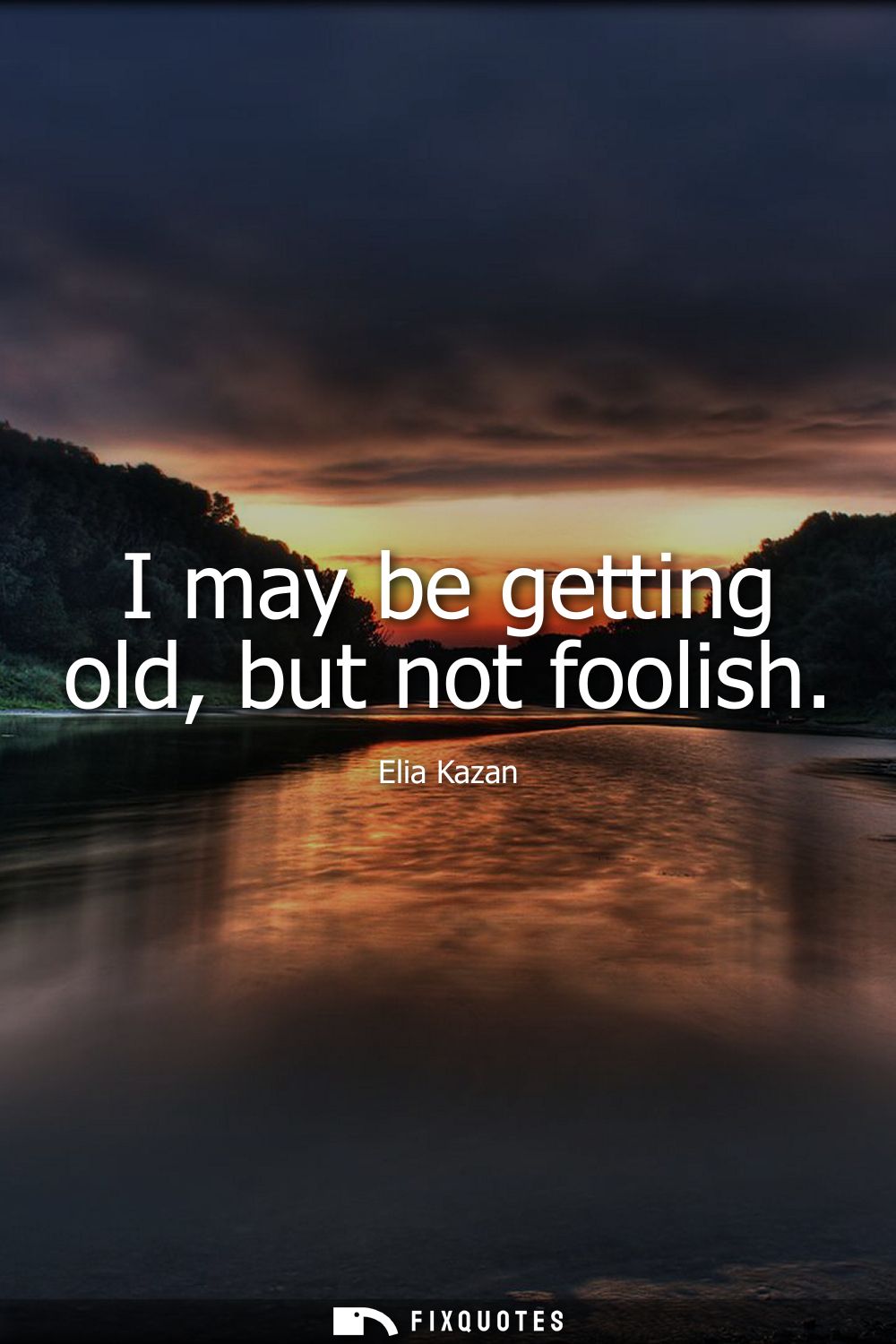
"I may be getting old, but not foolish"
About this Quote
Age is supposed to come with a soft-focus myth: you slow down, you sentimentalize, you become safely out of the way. Kazan’s line refuses that bargain. “I may be getting old, but not foolish” is a pointed distinction between decline and capitulation, a warning shot from someone who spent his life navigating rooms where charm, flattery, and moral pressure were tools of the trade.
The craft is in the syntax. “May be” concedes the obvious without giving it power; it’s a shrug, not a confession. Then the pivot: “but not foolish” lands like a gavel. He doesn’t claim wisdom, which would sound self-congratulatory. He claims something more useful: intact judgment. In a business built on packaging illusions, “not foolish” is the director’s version of final cut.
Kazan’s context sharpens the edge. This is the man who helped define American realism on screen and stage, then detonated his reputation by naming names before HUAC. Whether you read him as pragmatist, opportunist, or survivor, he understood the cost of being misread. The line plays like preemptive self-defense against patronizing reverence and moral simplification alike: don’t confuse my age with pliability; don’t mistake my legacy for innocence.
There’s also a quiet provocation aimed at the culture that likes its elders either sainted or sidelined. Kazan insists on staying dangerous: still negotiating, still calculating, still capable of saying no.
The craft is in the syntax. “May be” concedes the obvious without giving it power; it’s a shrug, not a confession. Then the pivot: “but not foolish” lands like a gavel. He doesn’t claim wisdom, which would sound self-congratulatory. He claims something more useful: intact judgment. In a business built on packaging illusions, “not foolish” is the director’s version of final cut.
Kazan’s context sharpens the edge. This is the man who helped define American realism on screen and stage, then detonated his reputation by naming names before HUAC. Whether you read him as pragmatist, opportunist, or survivor, he understood the cost of being misread. The line plays like preemptive self-defense against patronizing reverence and moral simplification alike: don’t confuse my age with pliability; don’t mistake my legacy for innocence.
There’s also a quiet provocation aimed at the culture that likes its elders either sainted or sidelined. Kazan insists on staying dangerous: still negotiating, still calculating, still capable of saying no.
Quote Details
| Topic | Witty One-Liners |
|---|---|
| Source | Help us find the source |
| Cite |
Citation Formats
APA Style (7th ed.)
Kazan, Elia. (2026, January 17). I may be getting old, but not foolish. FixQuotes. https://fixquotes.com/quotes/i-may-be-getting-old-but-not-foolish-50712/
Chicago Style
Kazan, Elia. "I may be getting old, but not foolish." FixQuotes. January 17, 2026. https://fixquotes.com/quotes/i-may-be-getting-old-but-not-foolish-50712/.
MLA Style (9th ed.)
"I may be getting old, but not foolish." FixQuotes, 17 Jan. 2026, https://fixquotes.com/quotes/i-may-be-getting-old-but-not-foolish-50712/. Accessed 31 Mar. 2026.
More Quotes by Elia
Add to List