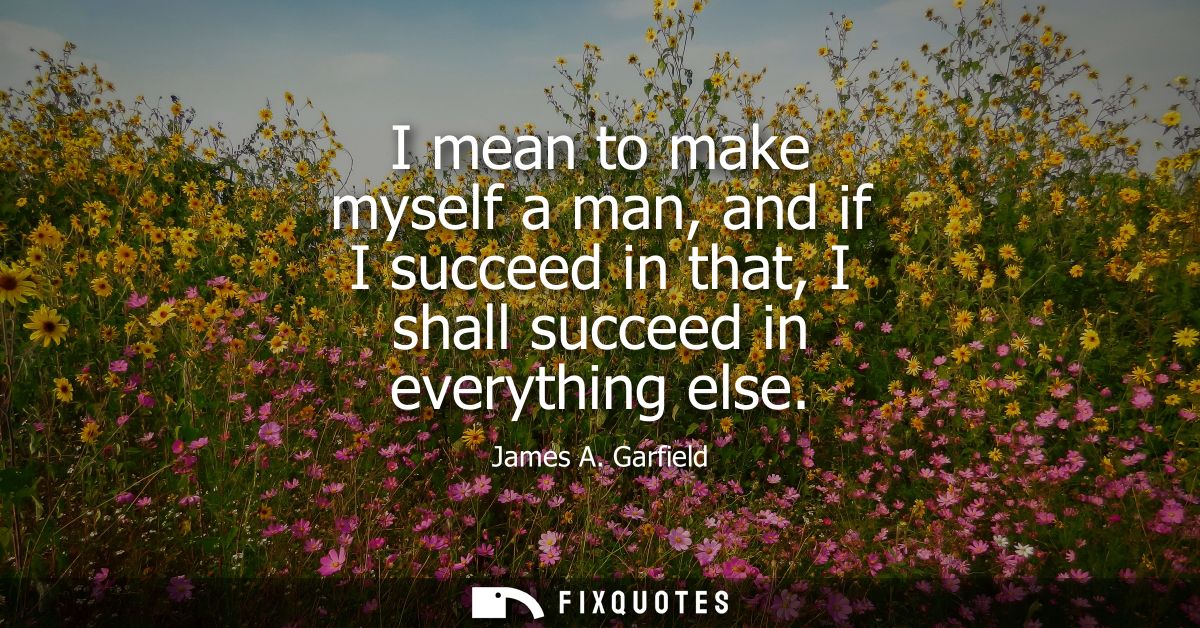
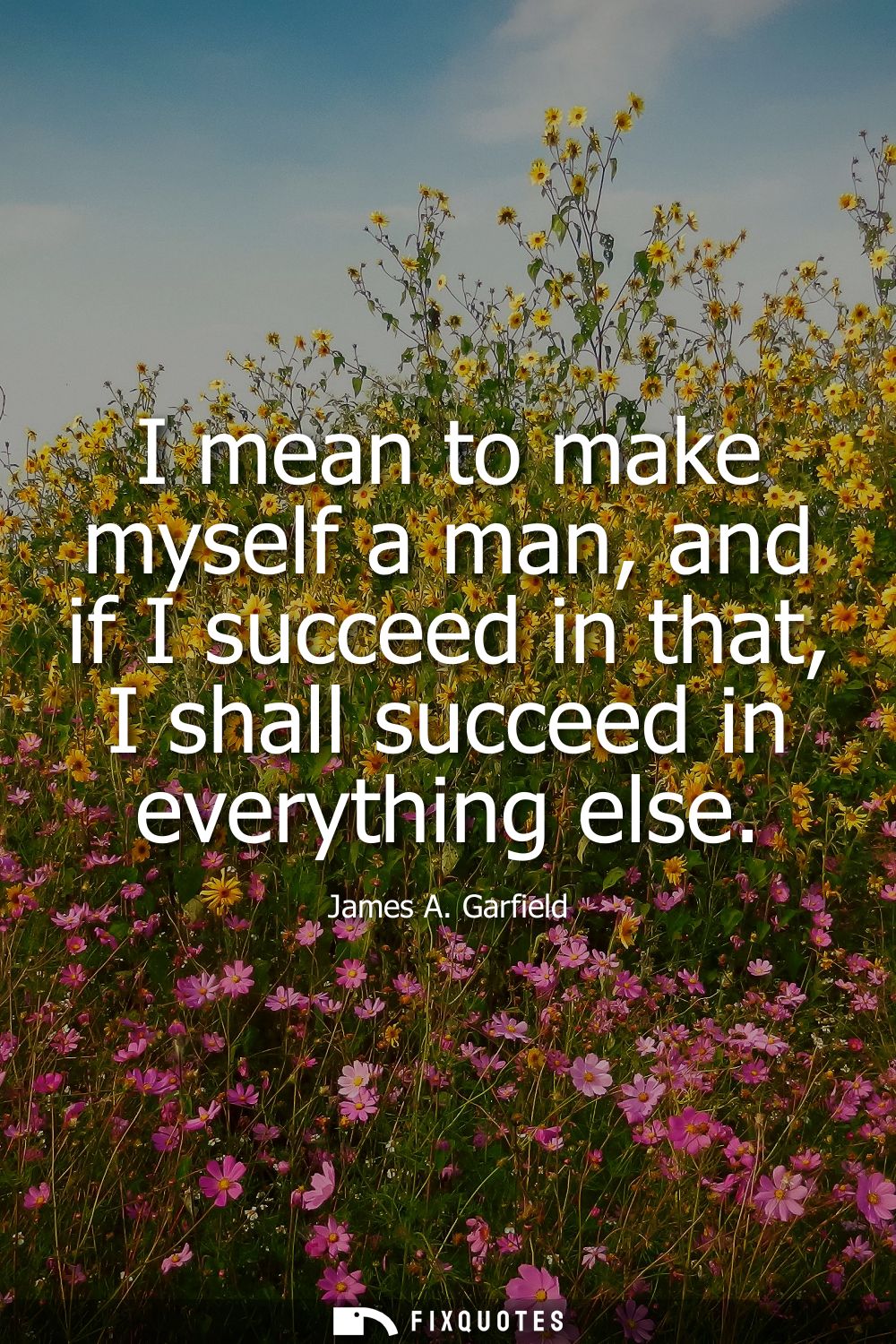
"I mean to make myself a man, and if I succeed in that, I shall succeed in everything else"
About this Quote
The subtext is a rebuke to status as destiny. He’s rejecting the idea that success is a matter of pedigree, patronage, or luck; if he can forge the inner instrument, the outer achievements will follow. That’s also why the second clause is so absolute. “Everything else” works rhetorically because it sounds almost naive, but it’s actually a hierarchy: identity over outcome, formation over trophies. The confidence isn’t that life will be easy; it’s that a formed person can metabolize whatever life throws.
As a presidential sentiment, it reads like a preemptive defense against the corruptions of power. Garfield implies the only reliable antidote to politics is personal integrity built earlier, offstage. That’s the quiet sting: in public life, competence can be borrowed, alliances can be traded, reputation can be managed. Character can’t be outsourced.
Quote Details
| Topic | Self-Improvement |
|---|---|
| Source | Help us find the source |
| Cite |
Citation Formats
APA Style (7th ed.)
Garfield, James A. (2026, January 15). I mean to make myself a man, and if I succeed in that, I shall succeed in everything else. FixQuotes. https://fixquotes.com/quotes/i-mean-to-make-myself-a-man-and-if-i-succeed-in-53531/
Chicago Style
Garfield, James A. "I mean to make myself a man, and if I succeed in that, I shall succeed in everything else." FixQuotes. January 15, 2026. https://fixquotes.com/quotes/i-mean-to-make-myself-a-man-and-if-i-succeed-in-53531/.
MLA Style (9th ed.)
"I mean to make myself a man, and if I succeed in that, I shall succeed in everything else." FixQuotes, 15 Jan. 2026, https://fixquotes.com/quotes/i-mean-to-make-myself-a-man-and-if-i-succeed-in-53531/. Accessed 16 Mar. 2026.