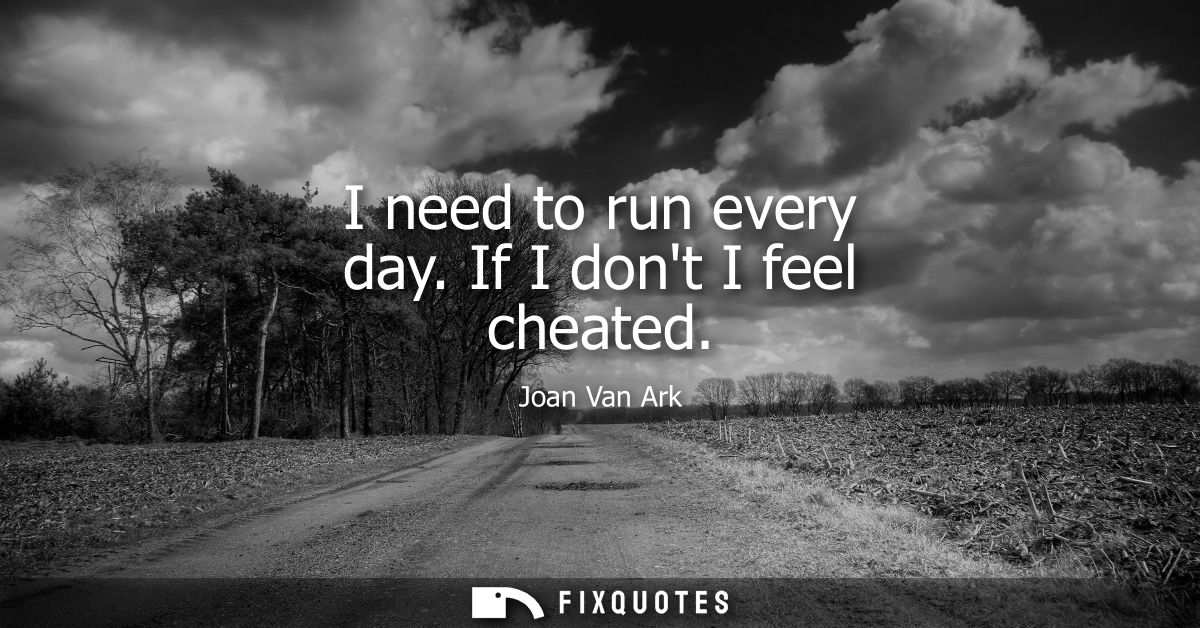
"I need to run every day. If I don't, I feel cheated"
About this Quote
There is something almost suspiciously moral about the way Joan Van Ark frames running: not as a hobby, or even a health practice, but as a daily obligation owed to herself. “If I don’t I feel cheated” flips the usual logic. Most people feel cheated by the workout; she feels cheated by the absence of it. That inversion is the point. It turns discipline into reward, and it suggests a life structured around performance where the body isn’t just lived in, it’s managed.
Coming from an actress whose career was built in an industry that audits women relentlessly, the line reads less like fitness evangelism and more like self-protection. Running becomes a portable form of agency: a ritual she can control in a profession defined by schedules, casting decisions, and constant appraisal. The word “need” is doing heavy lifting. It’s not “I like to run.” It’s necessity, bordering on compulsion, which hints at how easily “wellness” can become a socially acceptable way to talk about anxiety, control, or the fear of slipping.
“Cheated” is also tellingly emotional and transactional. It implies she’s paying into something (sanity, stamina, identity) and expects a return. The subtext isn’t simply endorphins; it’s maintenance of selfhood. In that sense, the quote captures a very modern bargain: we chase habits not because they’re virtuous, but because they keep us from feeling robbed by our own day.
Coming from an actress whose career was built in an industry that audits women relentlessly, the line reads less like fitness evangelism and more like self-protection. Running becomes a portable form of agency: a ritual she can control in a profession defined by schedules, casting decisions, and constant appraisal. The word “need” is doing heavy lifting. It’s not “I like to run.” It’s necessity, bordering on compulsion, which hints at how easily “wellness” can become a socially acceptable way to talk about anxiety, control, or the fear of slipping.
“Cheated” is also tellingly emotional and transactional. It implies she’s paying into something (sanity, stamina, identity) and expects a return. The subtext isn’t simply endorphins; it’s maintenance of selfhood. In that sense, the quote captures a very modern bargain: we chase habits not because they’re virtuous, but because they keep us from feeling robbed by our own day.
Quote Details
| Topic | Fitness |
|---|---|
| Source | Help us find the source |
| Cite |
Citation Formats
APA Style (7th ed.)
Ark, Joan Van. (2026, February 19). I need to run every day. If I don't, I feel cheated. FixQuotes. https://fixquotes.com/quotes/i-need-to-run-every-day-if-i-dont-i-feel-cheated-51579/
Chicago Style
Ark, Joan Van. "I need to run every day. If I don't, I feel cheated." FixQuotes. February 19, 2026. https://fixquotes.com/quotes/i-need-to-run-every-day-if-i-dont-i-feel-cheated-51579/.
MLA Style (9th ed.)
"I need to run every day. If I don't, I feel cheated." FixQuotes, 19 Feb. 2026, https://fixquotes.com/quotes/i-need-to-run-every-day-if-i-dont-i-feel-cheated-51579/. Accessed 7 Apr. 2026.
More Quotes by Joan
Add to List