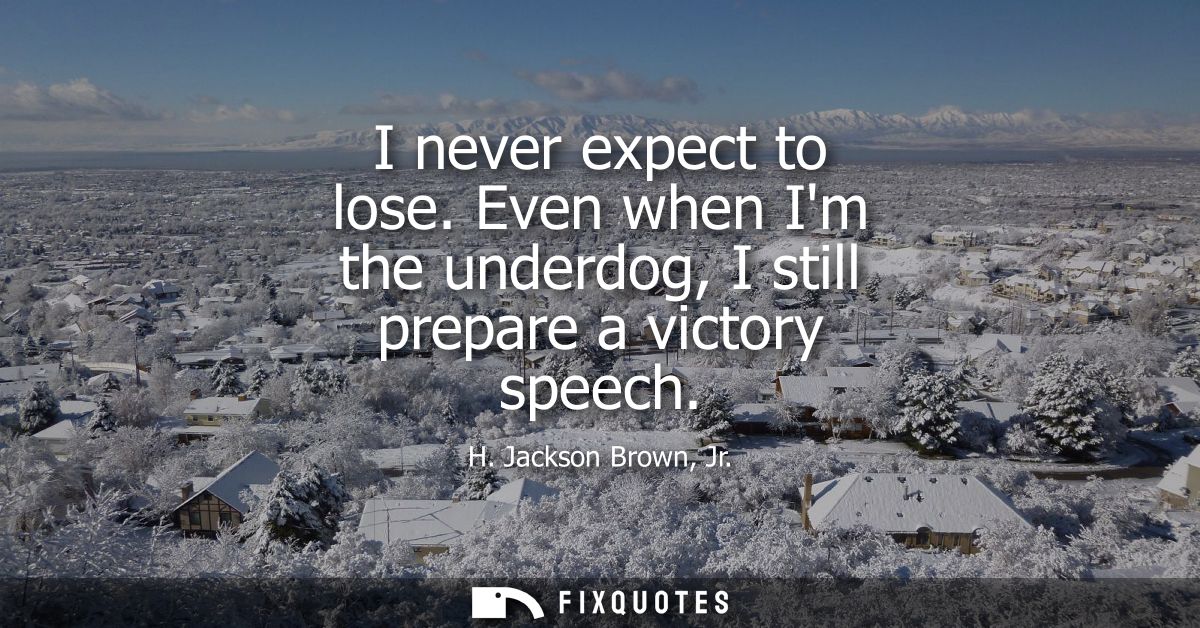
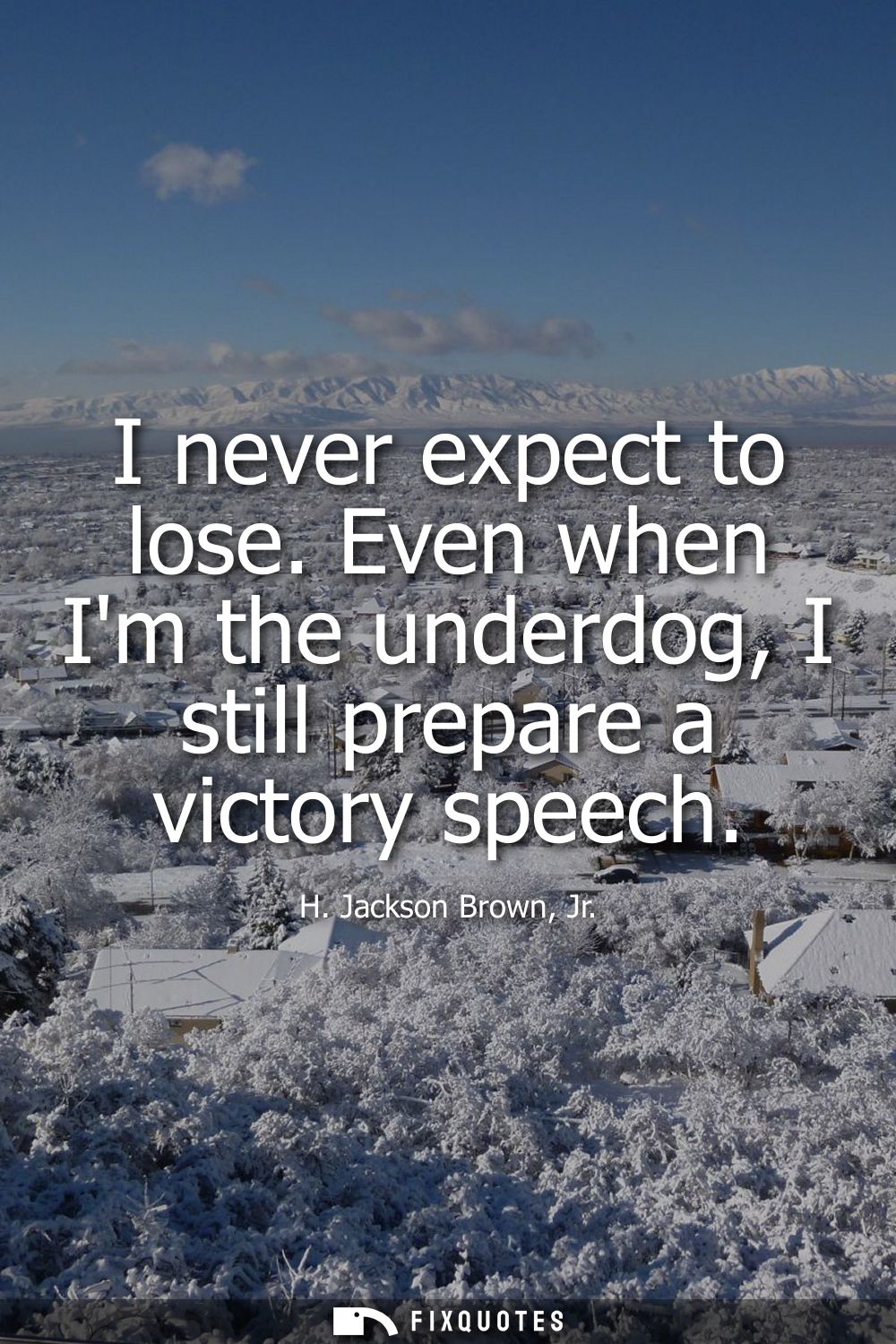
"I never expect to lose. Even when I'm the underdog, I still prepare a victory speech"
About this Quote
The underdog clause does the heavy lifting. It admits the math may be against you, then refuses to let probability govern attitude. Subtext: expectation is a tool, not a forecast. By “preparing” the speech, you’re not magically summoning success; you’re training your mind to act like someone who belongs on the podium. It’s cognitive conditioning dressed as bravado.
Context matters because Brown’s brand of wisdom tends to prize actionable optimism over existential realism. The quote fits a late-20th-century American ethos where confidence is treated as a moral virtue and doubt as self-sabotage. There’s also a quiet critique baked in: most people prepare apologies in advance, and that rehearsal becomes its own gravity.
Still, the edge is that this mindset can slip into denial. Preparing a victory speech is motivating; refusing to imagine failure can also make you brittle. Brown’s intent isn’t to erase risk - it’s to keep you from negotiating with defeat before the contest even starts.
Quote Details
| Topic | Motivational |
|---|---|
| Source | Help us find the source |
| Cite |
Citation Formats
APA Style (7th ed.)
Jr., H. Jackson Brown,. (2026, January 15). I never expect to lose. Even when I'm the underdog, I still prepare a victory speech. FixQuotes. https://fixquotes.com/quotes/i-never-expect-to-lose-even-when-im-the-underdog-146346/
Chicago Style
Jr., H. Jackson Brown,. "I never expect to lose. Even when I'm the underdog, I still prepare a victory speech." FixQuotes. January 15, 2026. https://fixquotes.com/quotes/i-never-expect-to-lose-even-when-im-the-underdog-146346/.
MLA Style (9th ed.)
"I never expect to lose. Even when I'm the underdog, I still prepare a victory speech." FixQuotes, 15 Jan. 2026, https://fixquotes.com/quotes/i-never-expect-to-lose-even-when-im-the-underdog-146346/. Accessed 12 Feb. 2026.