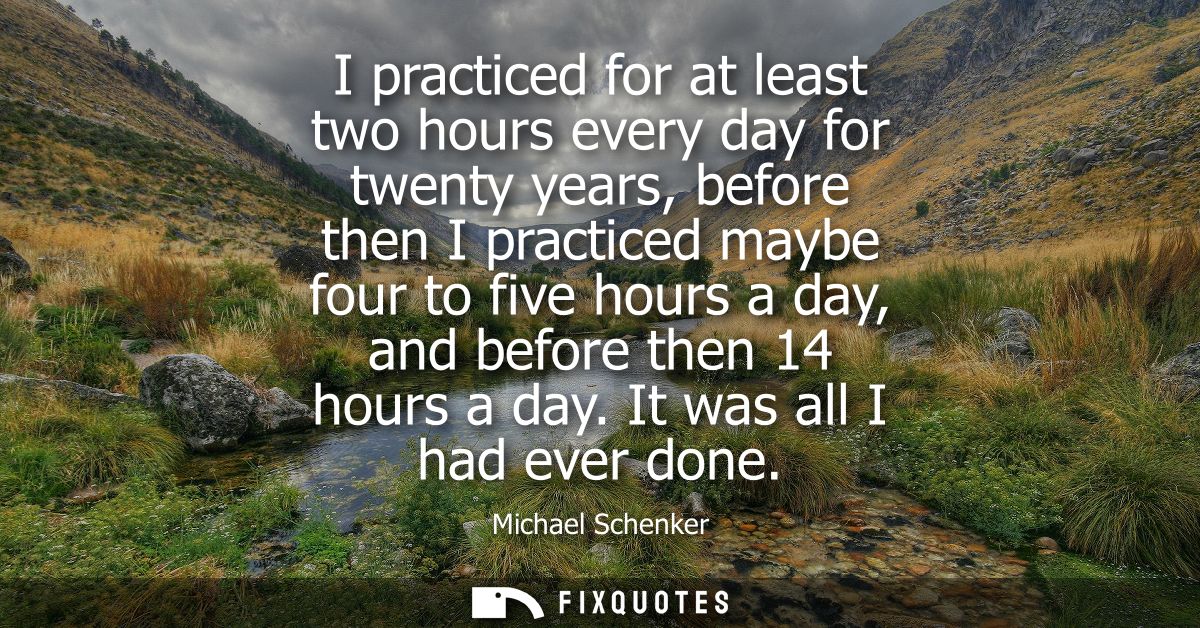
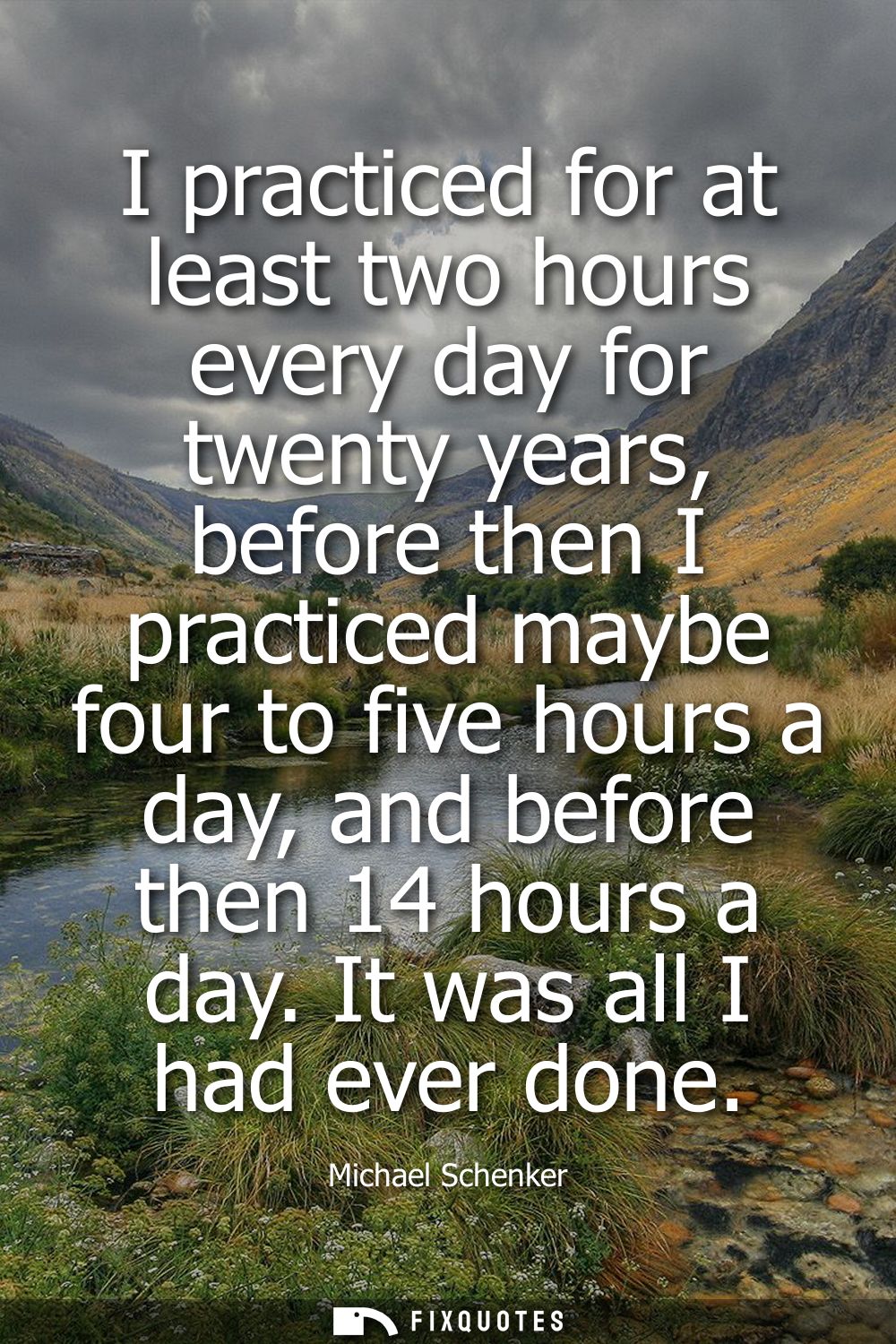
"I practiced for at least two hours every day for twenty years, before then I practiced maybe four to five hours a day, and before then 14 hours a day. It was all I had ever done"
About this Quote
The subtext is a quiet refusal of the romantic story that rock guitar greatness is just vibe, swagger, or divine inspiration. Schenker came up in a scene that worshipped spontaneity and rebellion, but his claim smuggles in an almost classical ethic of apprenticeship. "It was all I had ever done" lands like both pride and warning. It frames practice as identity, not a means to an end. When you play that much, the guitar stops being an instrument and becomes the language you think in.
Context matters: Schenker is a bridge figure between late-60s British hard rock discipline and the shred-era obsession with technical mastery. His line reads like a corrective to anyone treating musicianship as content. Underneath, it's also about scarcity: if practice was all he had, then practice was how he made a world.
Quote Details
| Topic | Work Ethic |
|---|---|
| Source | Help us find the source |
| Cite |
Citation Formats
APA Style (7th ed.)
Schenker, Michael. (2026, January 16). I practiced for at least two hours every day for twenty years, before then I practiced maybe four to five hours a day, and before then 14 hours a day. It was all I had ever done. FixQuotes. https://fixquotes.com/quotes/i-practiced-for-at-least-two-hours-every-day-for-95973/
Chicago Style
Schenker, Michael. "I practiced for at least two hours every day for twenty years, before then I practiced maybe four to five hours a day, and before then 14 hours a day. It was all I had ever done." FixQuotes. January 16, 2026. https://fixquotes.com/quotes/i-practiced-for-at-least-two-hours-every-day-for-95973/.
MLA Style (9th ed.)
"I practiced for at least two hours every day for twenty years, before then I practiced maybe four to five hours a day, and before then 14 hours a day. It was all I had ever done." FixQuotes, 16 Jan. 2026, https://fixquotes.com/quotes/i-practiced-for-at-least-two-hours-every-day-for-95973/. Accessed 27 Mar. 2026.