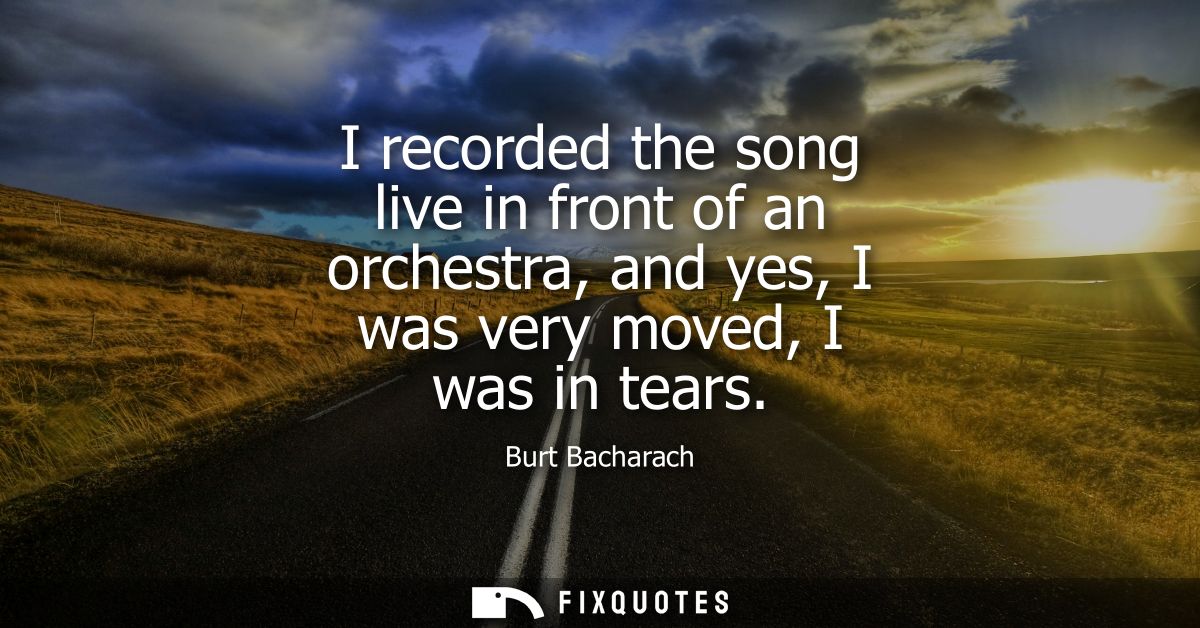
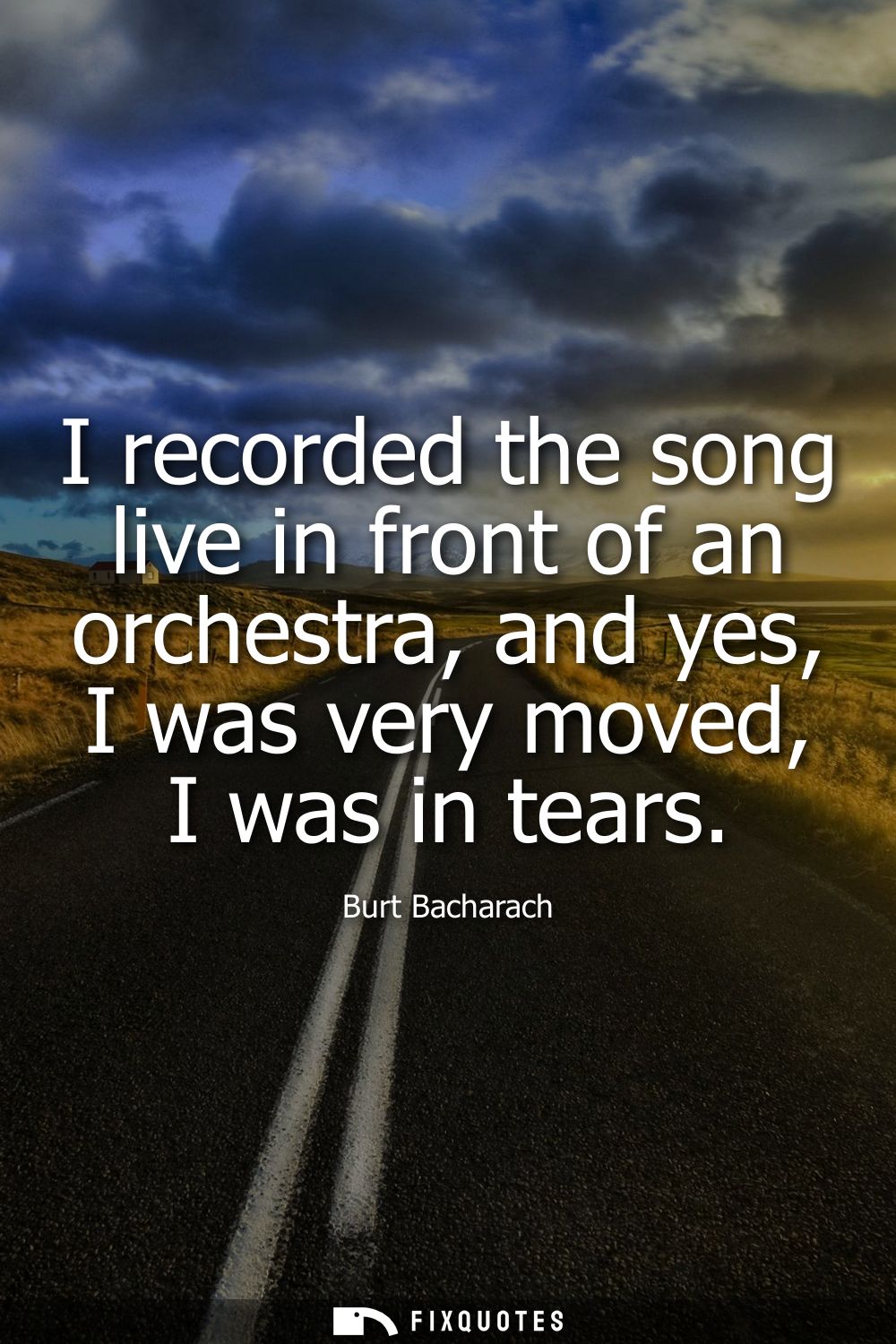
"I recorded the song live in front of an orchestra, and yes, I was very moved, I was in tears"
About this Quote
The line "and yes" matters. It answers an implied skepticism about sentimentality, as if a composer of his polish is expected to be above the mess. Bacharach anticipates the eye-roll at the idea of a veteran craftsman getting misty over his own material, then leans into it. That small concession turns emotion into evidence rather than embarrassment. The subtext: the work still has teeth, even for the person who built it.
"I was very moved, I was in tears" reads like plain confession, but it’s also an argument about authorship. A composer isn’t just an architect of melodies; he’s a witness to what arrangement, harmony, and phrasing can do when humans synchronize. An orchestra is a machine for magnifying feeling without resorting to melodrama. When it hits, it hits physically.
Contextually, Bacharach’s catalog sits at the intersection of impeccable construction and ache. This quote reframes that reputation: not cynical craftsmanship, not distant elegance, but a musician still susceptible to his own emotional engineering. The intent is simple: to say the song worked. The deeper message is that even mastery doesn’t inoculate you from being undone by the thing you made.
Quote Details
| Topic | Music |
|---|---|
| Source | Help us find the source |
| Cite |
Citation Formats
APA Style (7th ed.)
Bacharach, Burt. (2026, January 15). I recorded the song live in front of an orchestra, and yes, I was very moved, I was in tears. FixQuotes. https://fixquotes.com/quotes/i-recorded-the-song-live-in-front-of-an-orchestra-142302/
Chicago Style
Bacharach, Burt. "I recorded the song live in front of an orchestra, and yes, I was very moved, I was in tears." FixQuotes. January 15, 2026. https://fixquotes.com/quotes/i-recorded-the-song-live-in-front-of-an-orchestra-142302/.
MLA Style (9th ed.)
"I recorded the song live in front of an orchestra, and yes, I was very moved, I was in tears." FixQuotes, 15 Jan. 2026, https://fixquotes.com/quotes/i-recorded-the-song-live-in-front-of-an-orchestra-142302/. Accessed 8 Apr. 2026.