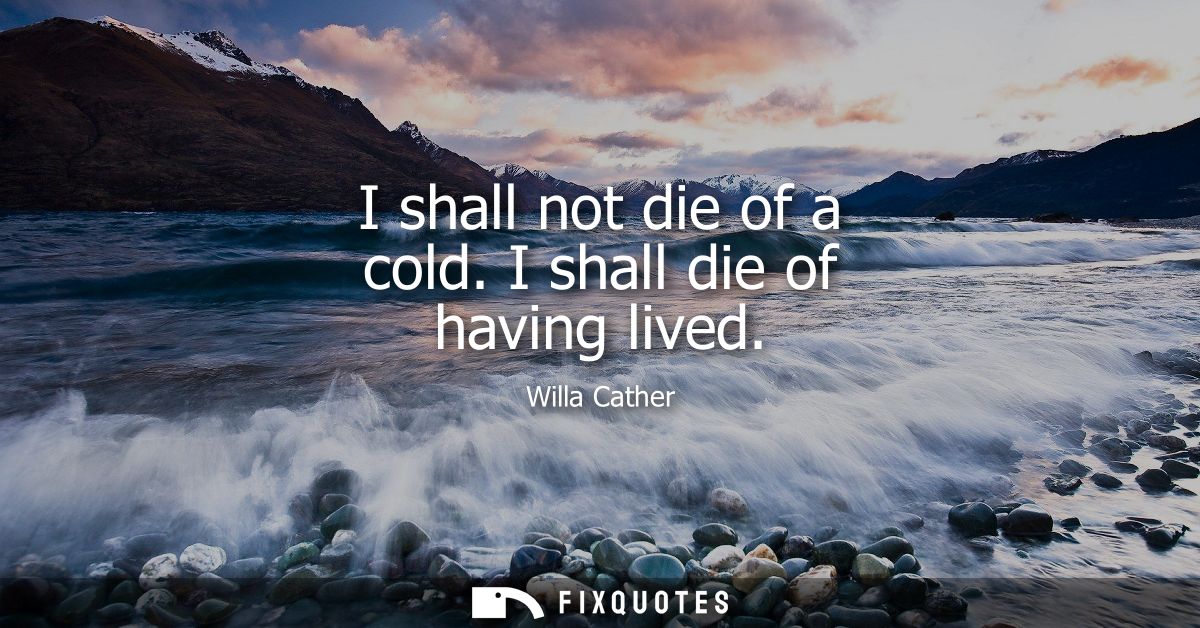
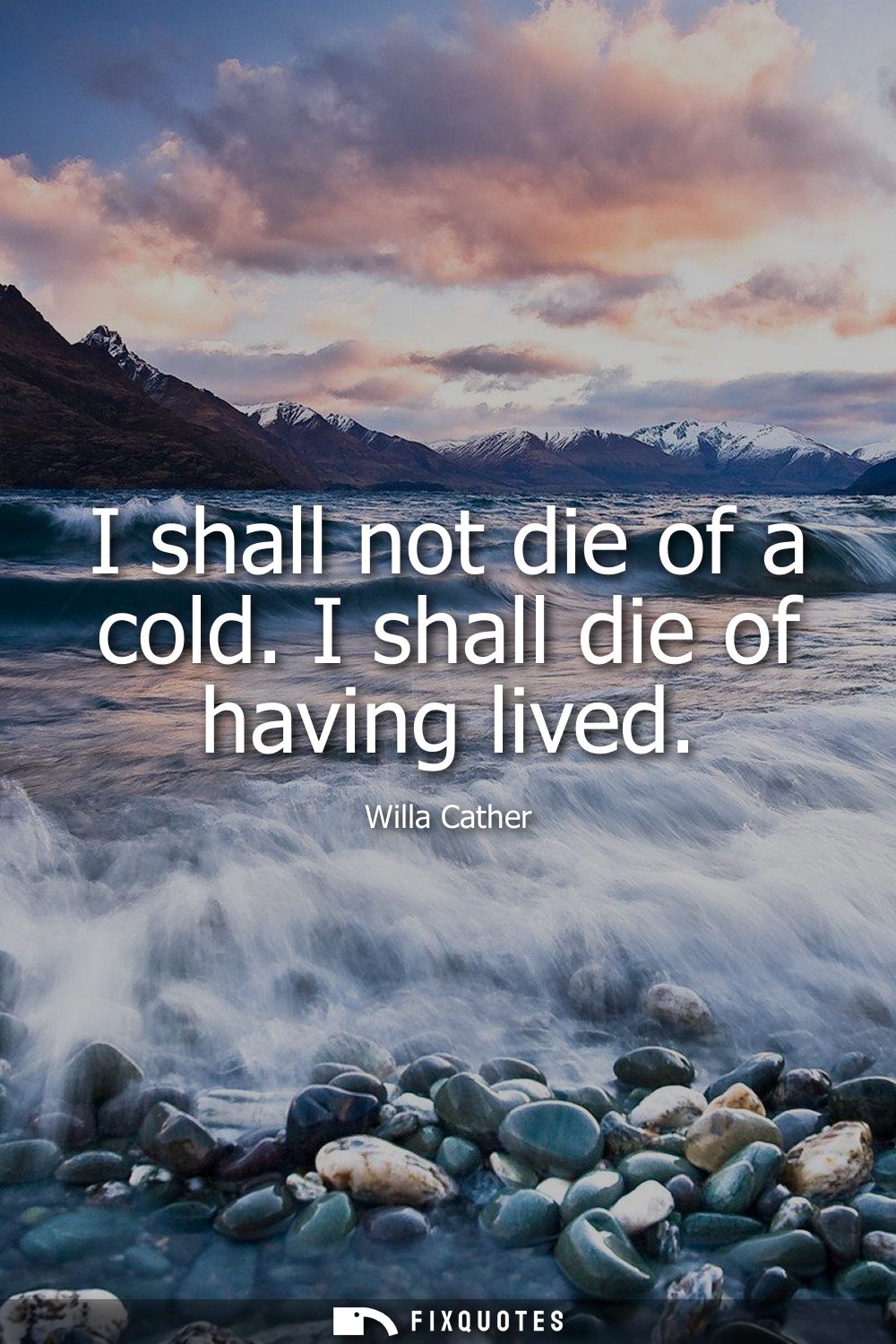
"I shall not die of a cold. I shall die of having lived"
About this Quote
A cold is the polite excuse for mortality: random, small, almost hygienic. Cather refuses that story. “I shall not die of a cold. I shall die of having lived” is less bravado than a manifesto about what counts as a life worth paying for. The sentence has the snap of a retort, built on a blunt contrast: the trivial ailment versus the total, complicated sum of experience. It’s a rejection of the Victorian fantasy that death should arrive with tidy causes and respectable timing, like an entry in a ledger.
Cather’s phrasing tilts the blame and the credit back onto living itself. “Having lived” isn’t romantic; it’s grammatical, almost bureaucratic, and that’s where the sting lands. The past participle makes life sound like a completed act, an accumulation of risks taken, places crossed, loves mishandled, ambitions pursued past comfort. She recasts death as the natural consequence of appetite, not accident. The implied target is a culture that prizes safety, composure, and good health as moral achievements.
Context matters: Cather wrote amid a modern world that had made death both more medicalized and more senseless, with pandemics, war, and industrial speedups. Her work often honors people shaped by harsh landscapes and hard choices; survival is never guaranteed, and meaning is rarely gentle. The line quietly argues that the real tragedy isn’t dying from exposure but living in a way so cautious you can claim innocence. If the bill comes due, she wants it itemized under “life,” not “weather.”
Cather’s phrasing tilts the blame and the credit back onto living itself. “Having lived” isn’t romantic; it’s grammatical, almost bureaucratic, and that’s where the sting lands. The past participle makes life sound like a completed act, an accumulation of risks taken, places crossed, loves mishandled, ambitions pursued past comfort. She recasts death as the natural consequence of appetite, not accident. The implied target is a culture that prizes safety, composure, and good health as moral achievements.
Context matters: Cather wrote amid a modern world that had made death both more medicalized and more senseless, with pandemics, war, and industrial speedups. Her work often honors people shaped by harsh landscapes and hard choices; survival is never guaranteed, and meaning is rarely gentle. The line quietly argues that the real tragedy isn’t dying from exposure but living in a way so cautious you can claim innocence. If the bill comes due, she wants it itemized under “life,” not “weather.”
Quote Details
| Topic | Mortality |
|---|---|
| Source | Help us find the source |
| Cite |
Citation Formats
APA Style (7th ed.)
Cather, Willa. (2026, January 15). I shall not die of a cold. I shall die of having lived. FixQuotes. https://fixquotes.com/quotes/i-shall-not-die-of-a-cold-i-shall-die-of-having-156263/
Chicago Style
Cather, Willa. "I shall not die of a cold. I shall die of having lived." FixQuotes. January 15, 2026. https://fixquotes.com/quotes/i-shall-not-die-of-a-cold-i-shall-die-of-having-156263/.
MLA Style (9th ed.)
"I shall not die of a cold. I shall die of having lived." FixQuotes, 15 Jan. 2026, https://fixquotes.com/quotes/i-shall-not-die-of-a-cold-i-shall-die-of-having-156263/. Accessed 22 Mar. 2026.
More Quotes by Willa
Add to List