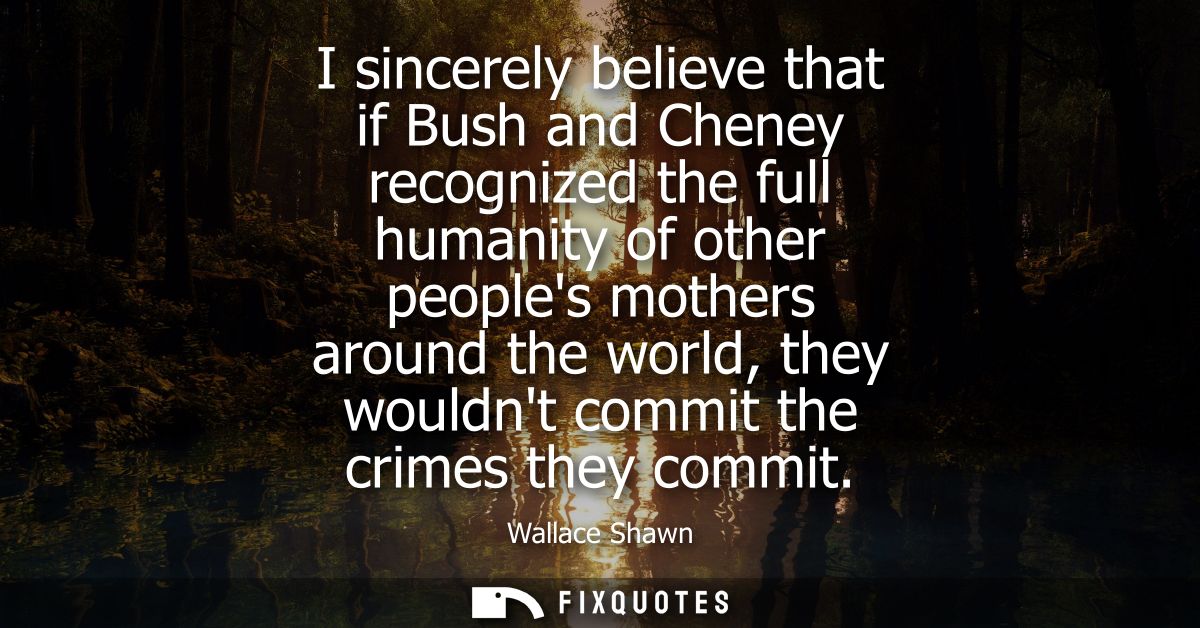
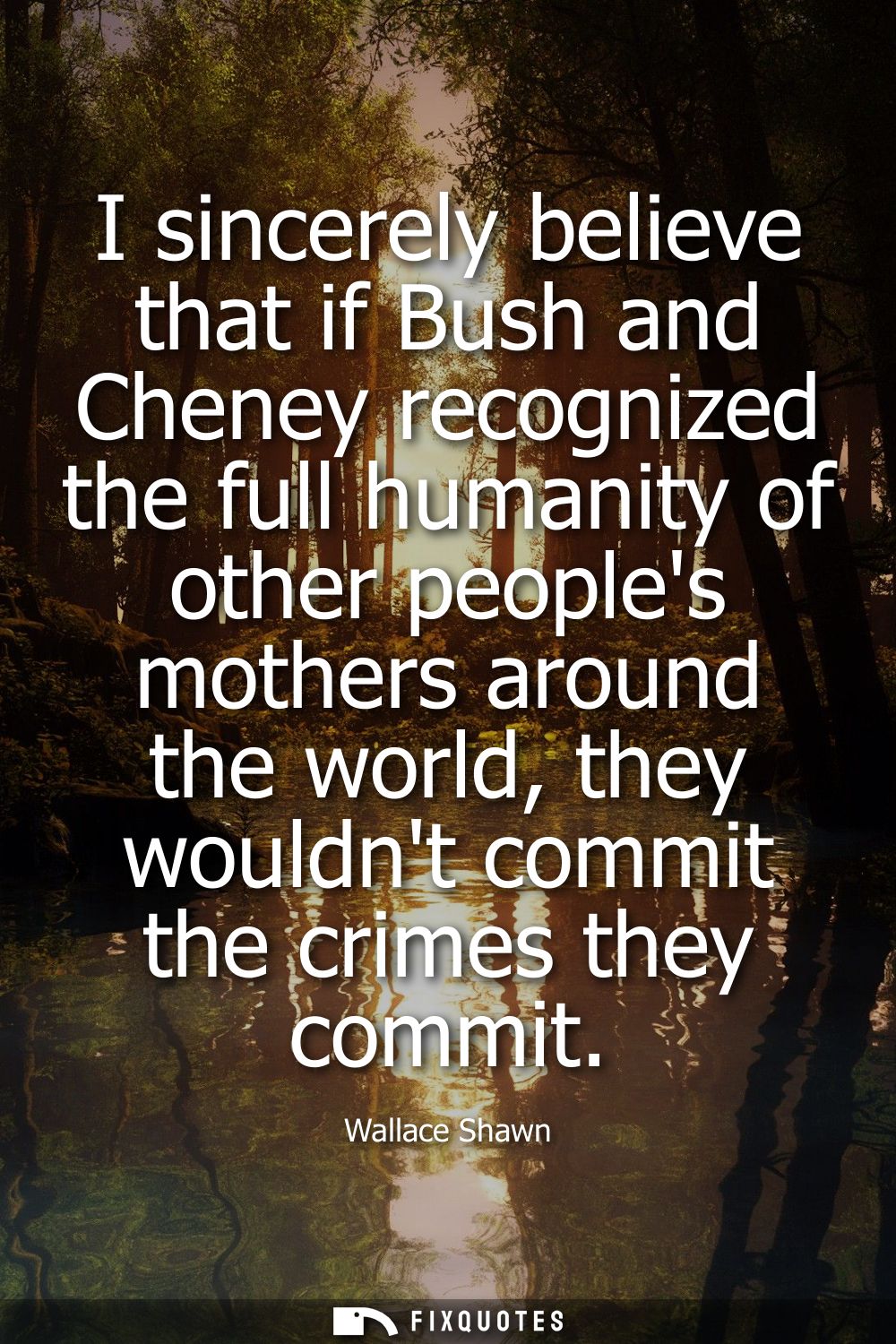
"I sincerely believe that if Bush and Cheney recognized the full humanity of other people's mothers around the world, they wouldn't commit the crimes they commit"
About this Quote
The intent is accusation, but the mechanism is reframing. Shawn presumes that atrocities aren’t only strategic choices; they’re failures of recognition. That word “humanity” isn’t abstract here. It’s theatrical empathy weaponized against executive power. He implies Bush and Cheney can’t fully see the people affected by their decisions, because seeing them would make certain acts psychologically unavailable. That’s a brutal claim: not that they miscalculated, but that they are insulated from the emotional consequences that might restrain them.
Context matters: post-9/11 America, the Iraq War, and the broader “War on Terror” era, when euphemism and fear blurred accountability. Shawn’s “I sincerely believe” reads like a preemptive defense against being dismissed as a celebrity scold; sincerity is his shield. Calling their actions “crimes” isn’t rhetorical flourish. It’s a demand to treat state violence with the same ethical vocabulary we reserve for everyone else.
Quote Details
| Topic | Peace |
|---|---|
| Source | Help us find the source |
| Cite |
Citation Formats
APA Style (7th ed.)
Shawn, Wallace. (2026, January 16). I sincerely believe that if Bush and Cheney recognized the full humanity of other people's mothers around the world, they wouldn't commit the crimes they commit. FixQuotes. https://fixquotes.com/quotes/i-sincerely-believe-that-if-bush-and-cheney-124202/
Chicago Style
Shawn, Wallace. "I sincerely believe that if Bush and Cheney recognized the full humanity of other people's mothers around the world, they wouldn't commit the crimes they commit." FixQuotes. January 16, 2026. https://fixquotes.com/quotes/i-sincerely-believe-that-if-bush-and-cheney-124202/.
MLA Style (9th ed.)
"I sincerely believe that if Bush and Cheney recognized the full humanity of other people's mothers around the world, they wouldn't commit the crimes they commit." FixQuotes, 16 Jan. 2026, https://fixquotes.com/quotes/i-sincerely-believe-that-if-bush-and-cheney-124202/. Accessed 1 Apr. 2026.