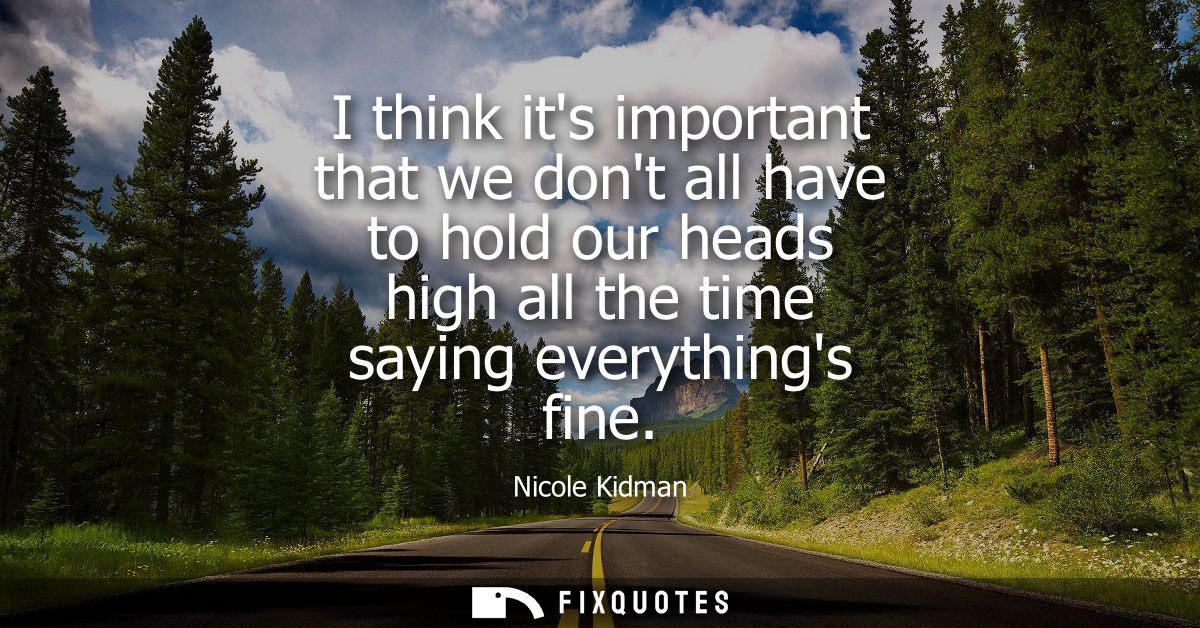
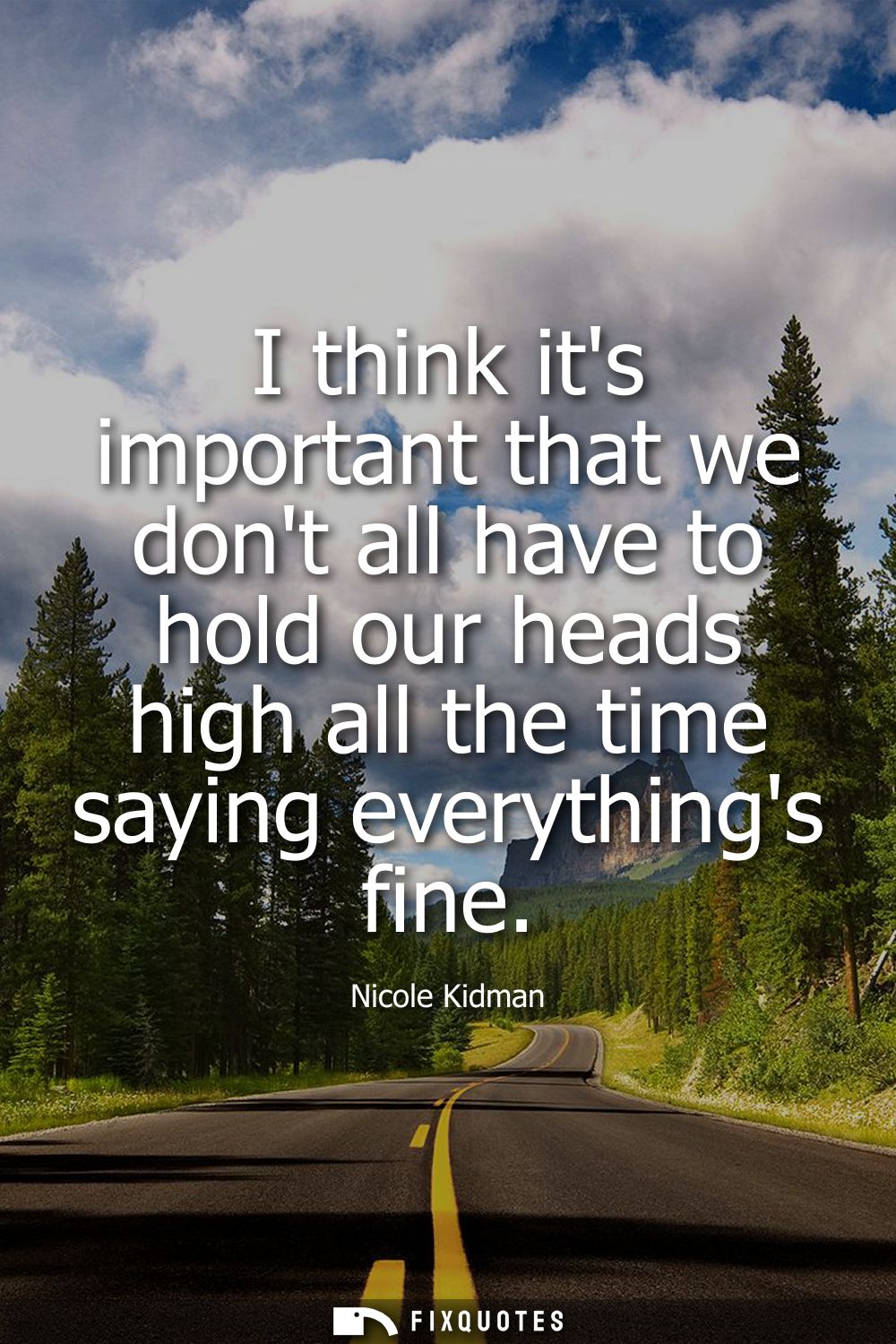
"I think it's important that we don't all have to hold our heads high all the time saying everything's fine"
About this Quote
Kidman’s line slices through the performance of “having it together” that celebrity culture both sells and demands. The phrasing is disarmingly plain - “I think it’s important” - as if she’s quietly negotiating permission rather than issuing a manifesto. That’s the point. In an industry where image is currency, even admitting strain has to arrive packaged as reasonableness. She’s not staging vulnerability as a spectacle; she’s trying to normalize it as a civic right.
The key move is the collective “we.” This isn’t a confessional flex, it’s an argument about social atmosphere: how exhausting it is when every room, every interview, every Instagram caption silently requires optimism. “Hold our heads high” evokes posture coaching, a body-level metaphor for emotional censorship. You can hear the PR voice she’s pushing back against: smile, reassure, project resilience. Her refusal of “all the time” matters because it targets the tyranny of constant positivity, not the idea of strength itself.
Contextually, it lands in a moment when mental health language has become mainstream but still policed: people are encouraged to be “open,” as long as openness stays tidy, inspirational, and doesn’t make anyone uncomfortable. Kidman’s intent is to widen the acceptable range of public emotion. The subtext: sometimes things aren’t fine, and pretending otherwise isn’t professionalism - it’s denial with better lighting.
The key move is the collective “we.” This isn’t a confessional flex, it’s an argument about social atmosphere: how exhausting it is when every room, every interview, every Instagram caption silently requires optimism. “Hold our heads high” evokes posture coaching, a body-level metaphor for emotional censorship. You can hear the PR voice she’s pushing back against: smile, reassure, project resilience. Her refusal of “all the time” matters because it targets the tyranny of constant positivity, not the idea of strength itself.
Contextually, it lands in a moment when mental health language has become mainstream but still policed: people are encouraged to be “open,” as long as openness stays tidy, inspirational, and doesn’t make anyone uncomfortable. Kidman’s intent is to widen the acceptable range of public emotion. The subtext: sometimes things aren’t fine, and pretending otherwise isn’t professionalism - it’s denial with better lighting.
Quote Details
| Topic | Mental Health |
|---|
More Quotes by Nicole
Add to List