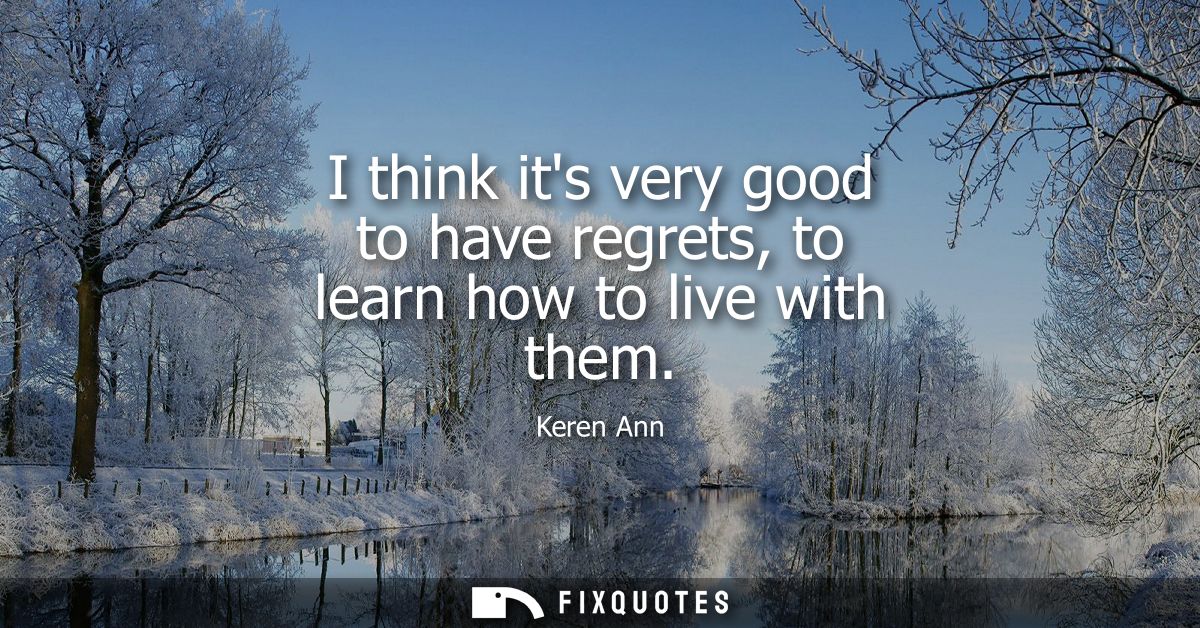
"I think it's very good to have regrets, to learn how to live with them"
About this Quote
Regret is usually treated like a stain to scrub out of the story, but Keren Ann flips it into a kind of creative raw material. The line isn’t a self-help permission slip to wallow; it’s a hard-earned endorsement of emotional residue. “Very good” lands with quiet provocation, as if she’s pushing back against the glossy modern mandate to optimize your life, curate your past, and present a clean, upgraded self. Regret, in that worldview, is a bug. For her, it’s a feature: evidence that you were awake enough to care, reckless enough to choose, human enough to misjudge.
The subtext is about permanence. You don’t “get over” regrets; you negotiate with them. “Learn how to live with them” suggests a long relationship, the slow work of making space for what can’t be fixed without letting it run the house. There’s a musician’s sensibility here: regrets as undertones, not the melody, shaping mood and meaning even when they’re not foregrounded. It’s the difference between denial and arrangement.
Context matters, too. In pop culture, confession is often commodified: pain turned into a brand, vulnerability turned into content. Ann’s phrasing stays restrained, almost classical, refusing catharsis as performance. She’s pointing toward adulthood not as closure but as integration - the ability to carry your own history without needing it to be flattering.
The subtext is about permanence. You don’t “get over” regrets; you negotiate with them. “Learn how to live with them” suggests a long relationship, the slow work of making space for what can’t be fixed without letting it run the house. There’s a musician’s sensibility here: regrets as undertones, not the melody, shaping mood and meaning even when they’re not foregrounded. It’s the difference between denial and arrangement.
Context matters, too. In pop culture, confession is often commodified: pain turned into a brand, vulnerability turned into content. Ann’s phrasing stays restrained, almost classical, refusing catharsis as performance. She’s pointing toward adulthood not as closure but as integration - the ability to carry your own history without needing it to be flattering.
Quote Details
| Topic | Learning from Mistakes |
|---|---|
| Source | Help us find the source |
| Cite |
Citation Formats
APA Style (7th ed.)
Ann, Keren. (2026, January 16). I think it's very good to have regrets, to learn how to live with them. FixQuotes. https://fixquotes.com/quotes/i-think-its-very-good-to-have-regrets-to-learn-92144/
Chicago Style
Ann, Keren. "I think it's very good to have regrets, to learn how to live with them." FixQuotes. January 16, 2026. https://fixquotes.com/quotes/i-think-its-very-good-to-have-regrets-to-learn-92144/.
MLA Style (9th ed.)
"I think it's very good to have regrets, to learn how to live with them." FixQuotes, 16 Jan. 2026, https://fixquotes.com/quotes/i-think-its-very-good-to-have-regrets-to-learn-92144/. Accessed 14 Mar. 2026.
More Quotes by Keren
Add to List