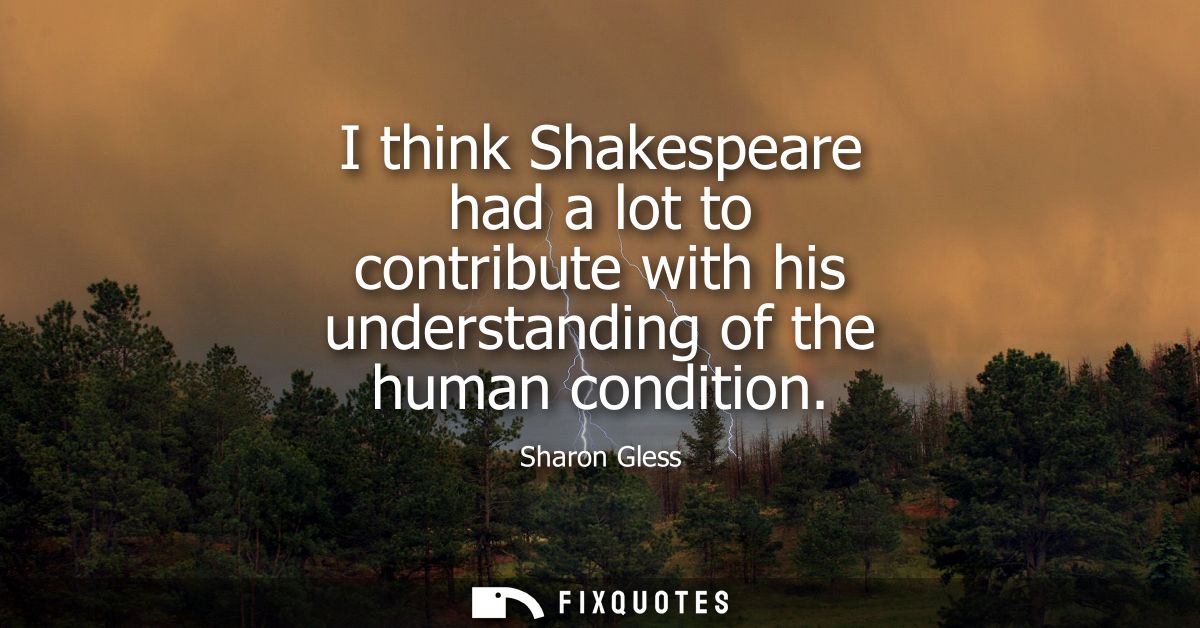
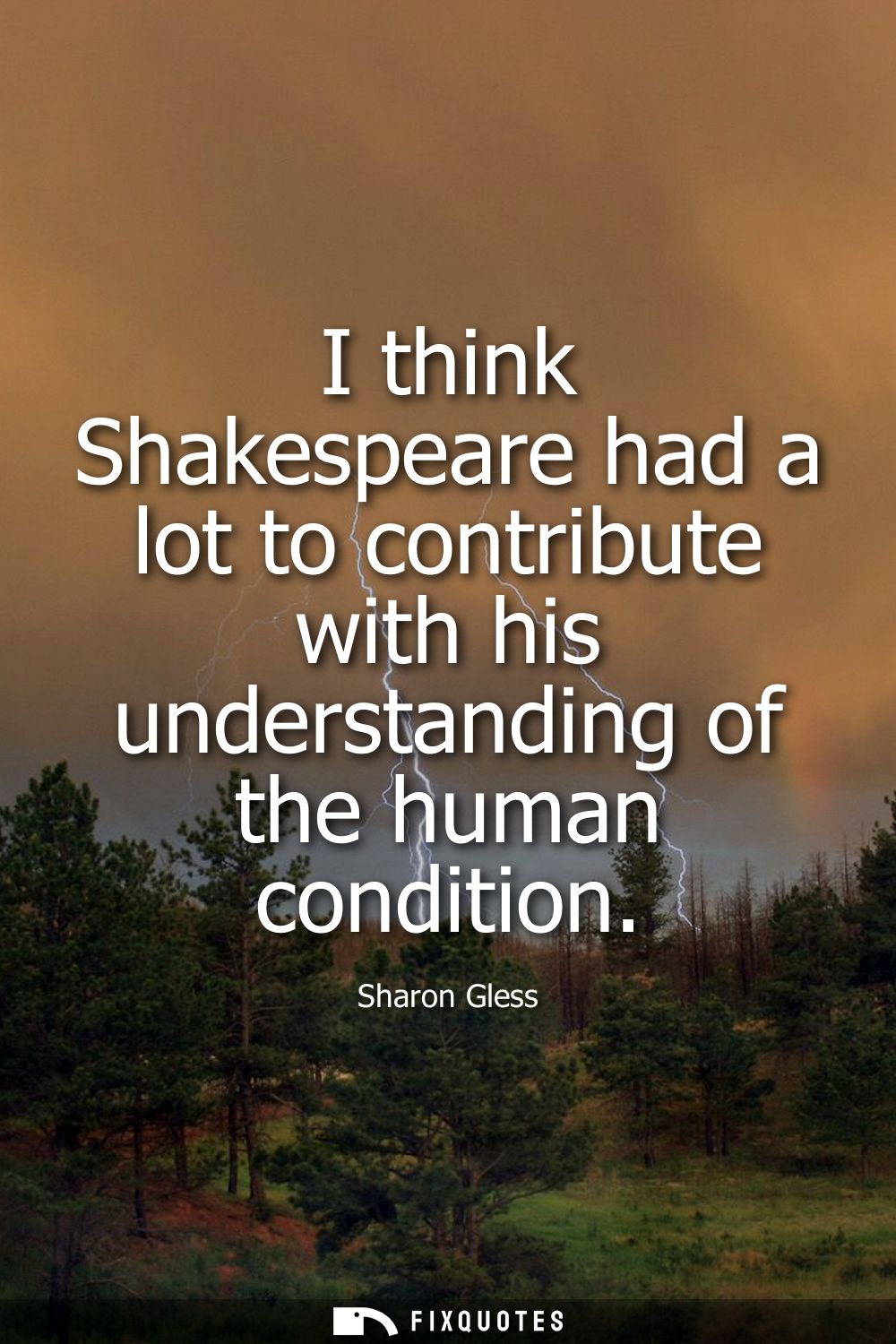
"I think Shakespeare had a lot to contribute with his understanding of the human condition"
About this Quote
The phrasing matters. "I think" signals taste and experience, not doctrine. Gless isn’t trying to win an argument in an English department; she’s testifying from the rehearsal room, where theories about humanity have to survive breath, timing, and an audience that can sense falseness. "Understanding" is the actor’s keyword here: not knowledge, not philosophy, but an ability to map motives and impulses so precisely that performers can inhabit them. Shakespeare becomes the ultimate script doctor, diagnosing jealousy, ambition, shame, desire, and grief with enough specificity to feel contemporary without being contemporary.
The cultural subtext is also defensive in a quiet way. In an entertainment economy that rewards speed, franchise familiarity, and ironic detachment, invoking Shakespeare is a claim for depth without sounding precious. Gless is asserting that craft still requires contact with big interior realities - and that the old texts remain the most efficient delivery system for them.
Quote Details
| Topic | Writing |
|---|---|
| Source | Help us find the source |
| Cite |
Citation Formats
APA Style (7th ed.)
Gless, Sharon. (2026, January 16). I think Shakespeare had a lot to contribute with his understanding of the human condition. FixQuotes. https://fixquotes.com/quotes/i-think-shakespeare-had-a-lot-to-contribute-with-94849/
Chicago Style
Gless, Sharon. "I think Shakespeare had a lot to contribute with his understanding of the human condition." FixQuotes. January 16, 2026. https://fixquotes.com/quotes/i-think-shakespeare-had-a-lot-to-contribute-with-94849/.
MLA Style (9th ed.)
"I think Shakespeare had a lot to contribute with his understanding of the human condition." FixQuotes, 16 Jan. 2026, https://fixquotes.com/quotes/i-think-shakespeare-had-a-lot-to-contribute-with-94849/. Accessed 14 Mar. 2026.