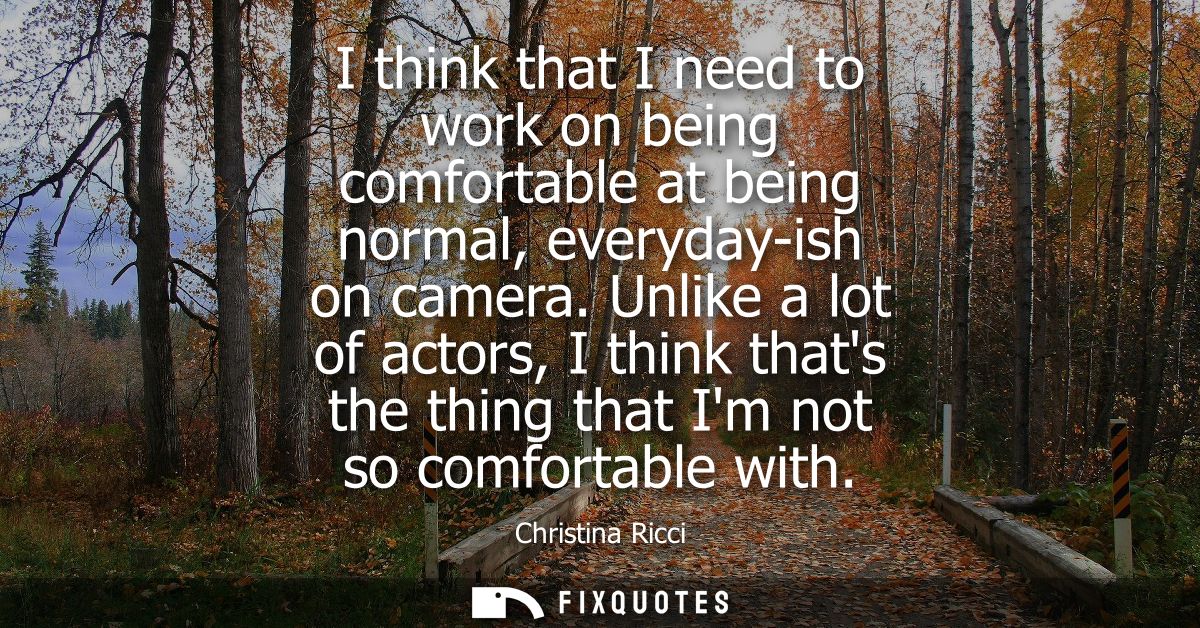
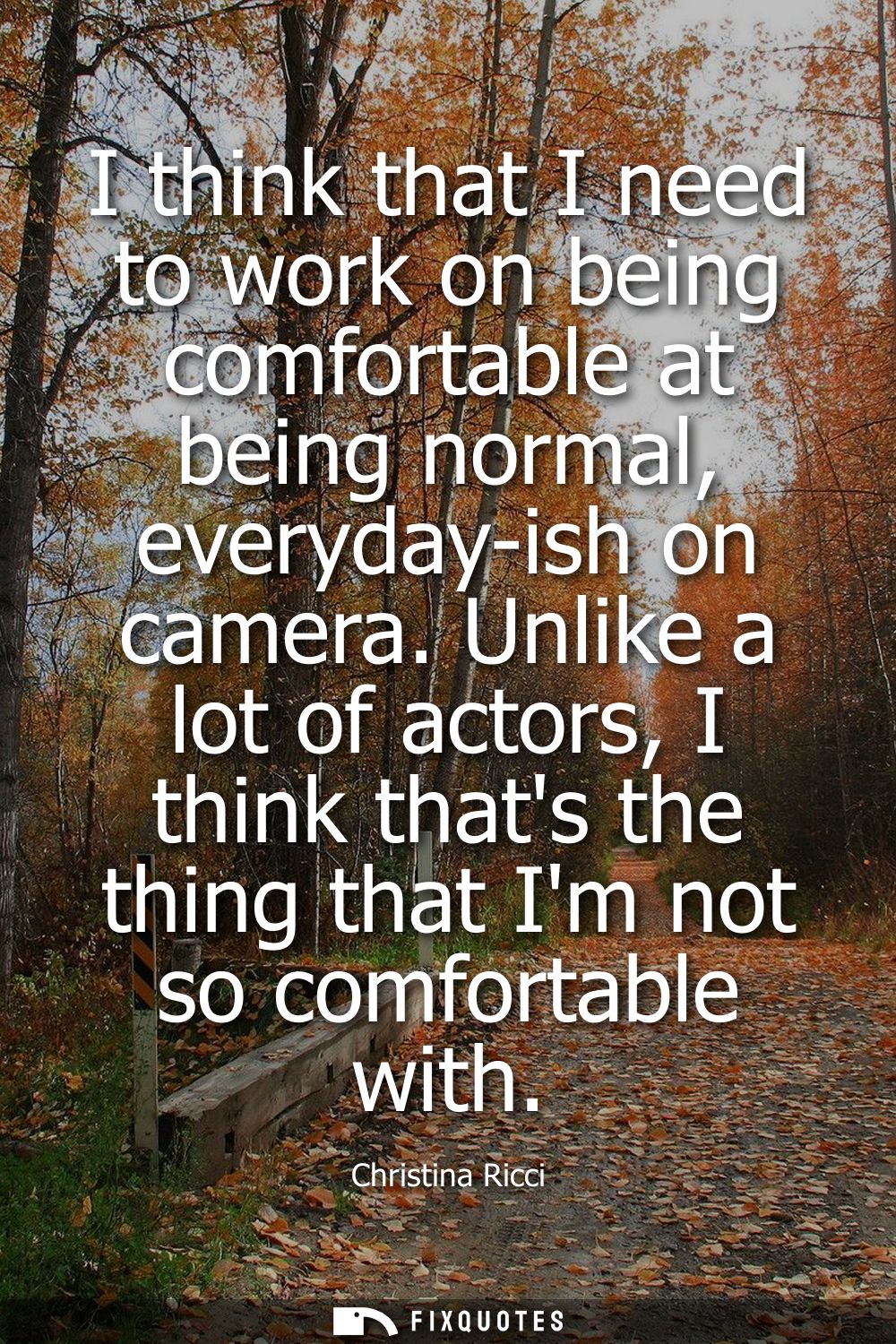
"I think that I need to work on being comfortable at being normal, everyday-ish on camera. Unlike a lot of actors, I think that's the thing that I'm not so comfortable with"
About this Quote
The phrasing is telling. “I think that I need to work on” is the language of therapy and self-improvement, a soft way to confess a hard truth: authenticity is a skill, not a default. She’s not claiming she can’t act; she’s saying she can’t always disappear. The camera asks for a particular kind of ease - the kind that reads as unforced, socially legible, non-theatrical. Ricci frames that as something “a lot of actors” can do, which both normalizes the anxiety and quietly separates her from the industry’s default mode of charm.
Contextually, this lands in an era when audiences demand “relatability” and behind-the-scenes access while still punishing women for looking too real, too rehearsed, too anything. Ricci’s candor punctures that double bind. She’s naming the uncomfortable gap between being compelling and being comfortably consumable.
Quote Details
| Topic | Confidence |
|---|---|
| Source | Help us find the source |
| Cite |
Citation Formats
APA Style (7th ed.)
Ricci, Christina. (2026, January 15). I think that I need to work on being comfortable at being normal, everyday-ish on camera. Unlike a lot of actors, I think that's the thing that I'm not so comfortable with. FixQuotes. https://fixquotes.com/quotes/i-think-that-i-need-to-work-on-being-comfortable-148628/
Chicago Style
Ricci, Christina. "I think that I need to work on being comfortable at being normal, everyday-ish on camera. Unlike a lot of actors, I think that's the thing that I'm not so comfortable with." FixQuotes. January 15, 2026. https://fixquotes.com/quotes/i-think-that-i-need-to-work-on-being-comfortable-148628/.
MLA Style (9th ed.)
"I think that I need to work on being comfortable at being normal, everyday-ish on camera. Unlike a lot of actors, I think that's the thing that I'm not so comfortable with." FixQuotes, 15 Jan. 2026, https://fixquotes.com/quotes/i-think-that-i-need-to-work-on-being-comfortable-148628/. Accessed 30 Mar. 2026.