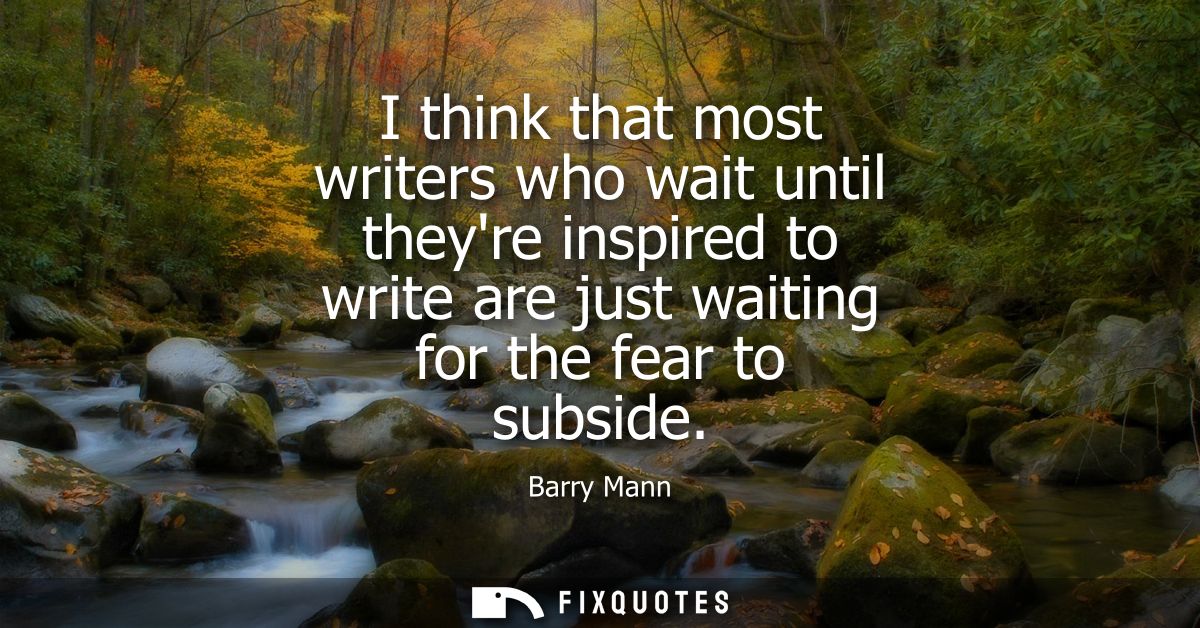
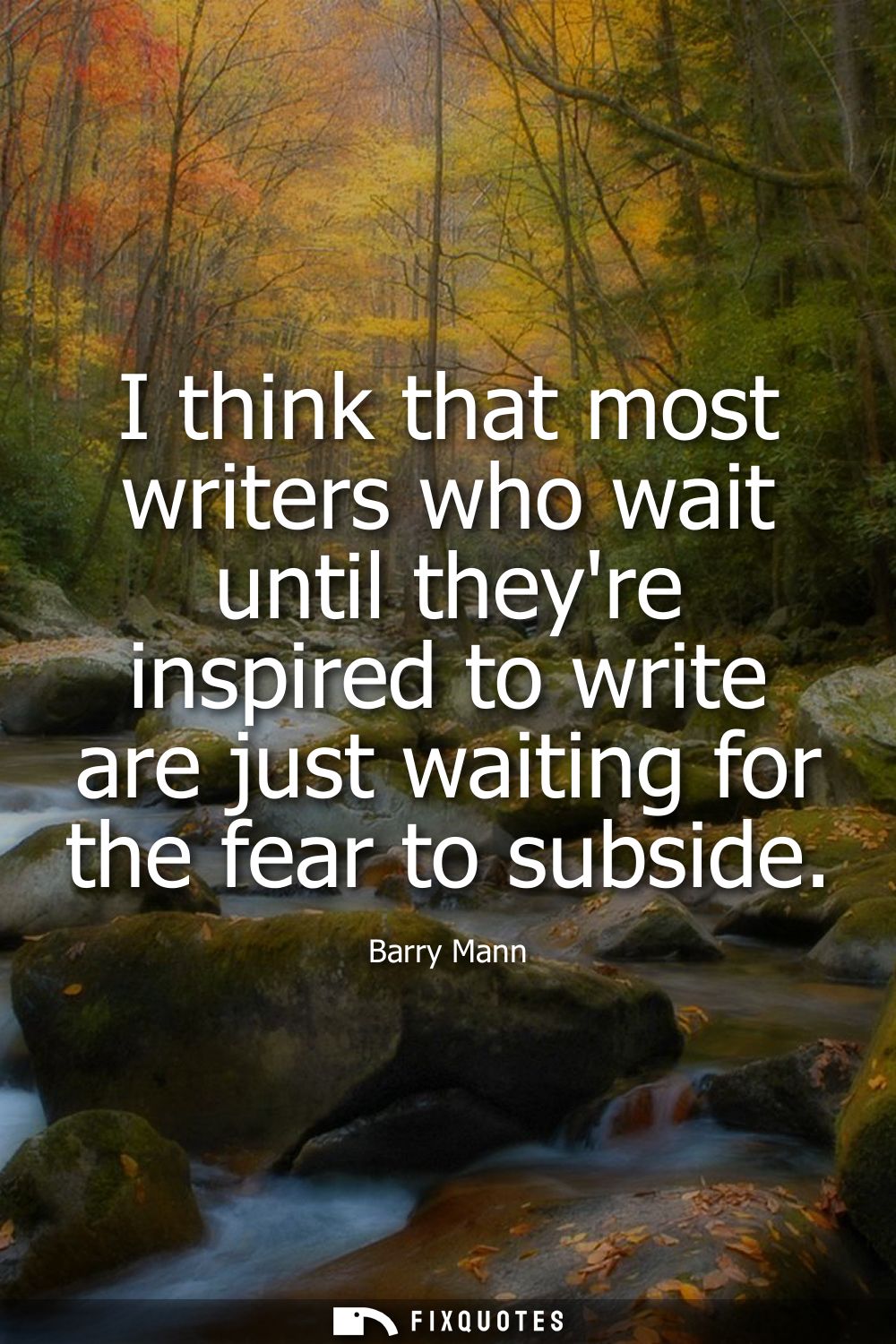
"I think that most writers who wait until they're inspired to write are just waiting for the fear to subside"
About this Quote
The intent is less motivational-poster than diagnostic. “Inspired” becomes a respectable cover story for something less flattering: fear. Fear of writing something bad. Fear of revealing what you actually sound like. Fear that the next song won’t live up to the last one, or worse, that there isn’t another one. Mann reframes procrastination as emotional self-protection, which is why the quote stings; it doesn’t attack talent, it attacks the alibi.
The subtext also challenges a certain kind of creative ego. If you only write when inspiration strikes, you get to maintain the fantasy that your best work arrives effortlessly, which protects your identity as “naturally gifted.” Mann argues the opposite: professionals don’t eliminate fear; they work through it while it’s still in the room. The quiet punchline is that inspiration often shows up after the labor starts, not before. In that sense, the quote isn’t anti-feeling. It’s pro-habit, and suspicious of the glamorous stories artists tell to avoid the page.
Quote Details
| Topic | Writing |
|---|---|
| Source | Help us find the source |
| Cite |
Citation Formats
APA Style (7th ed.)
Mann, Barry. (2026, January 17). I think that most writers who wait until they're inspired to write are just waiting for the fear to subside. FixQuotes. https://fixquotes.com/quotes/i-think-that-most-writers-who-wait-until-theyre-40746/
Chicago Style
Mann, Barry. "I think that most writers who wait until they're inspired to write are just waiting for the fear to subside." FixQuotes. January 17, 2026. https://fixquotes.com/quotes/i-think-that-most-writers-who-wait-until-theyre-40746/.
MLA Style (9th ed.)
"I think that most writers who wait until they're inspired to write are just waiting for the fear to subside." FixQuotes, 17 Jan. 2026, https://fixquotes.com/quotes/i-think-that-most-writers-who-wait-until-theyre-40746/. Accessed 31 Mar. 2026.