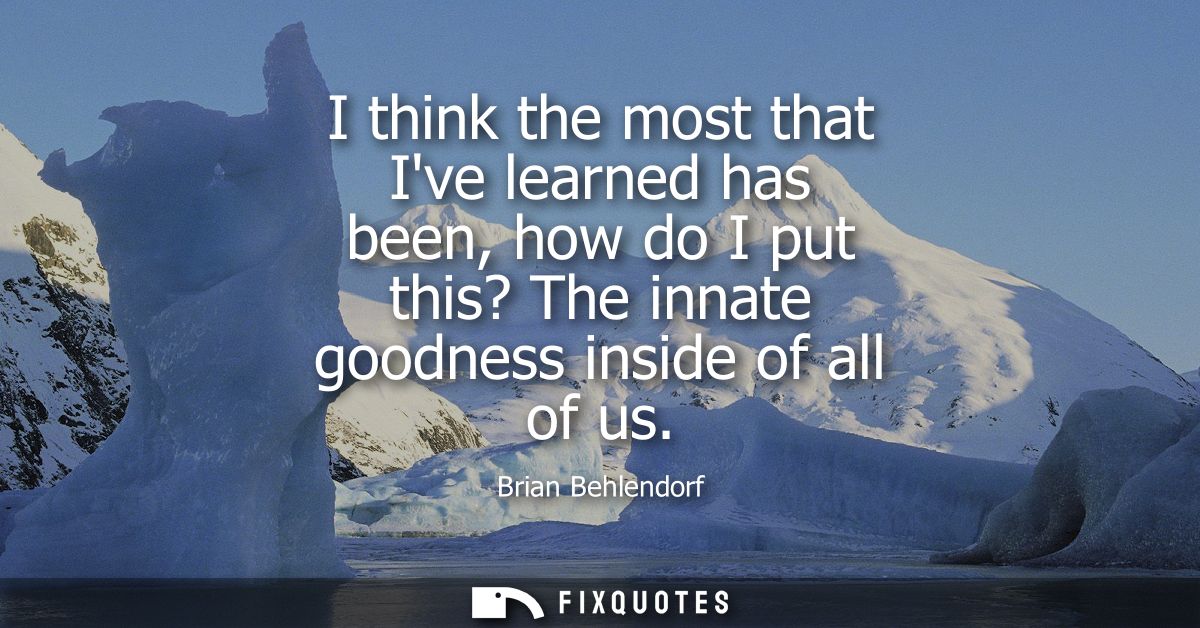
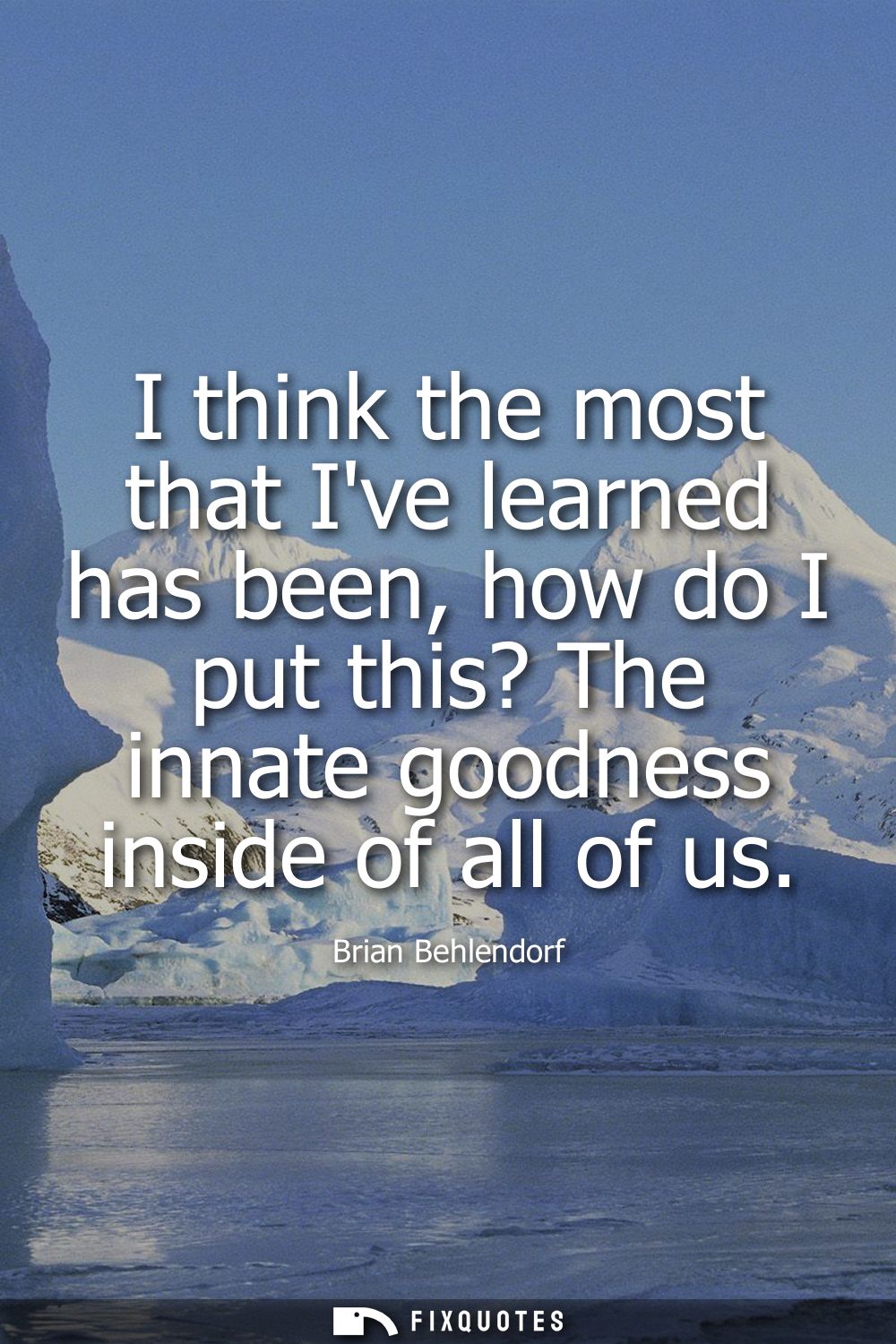
"I think the most that I've learned has been, how do I put this? The innate goodness inside of all of us"
About this Quote
The intent is quietly corrective. It pushes back on the default modern story that humans are primarily selfish actors and that cooperation is a fragile exception. “Innate” does heavy lifting: he’s not praising occasional altruism; he’s arguing for a baseline capacity that can be relied on if the environment lets it surface. The subtext is institutional as much as personal: design the right structures and you’ll see decency at scale. In other words, goodness isn’t just a trait; it’s an emergent property that shows up in communities with transparency, shared ownership, and low barriers to participation.
Contextually, the quote belongs to an era of networked collaboration where strangers build consequential things together. It’s also a rebuke to cynicism-as-sophistication. By admitting uncertainty in the delivery, Behlendorf makes the claim feel more credible: this isn’t branding. It’s a scientist noticing that, against the prevailing mood, people keep choosing to help.
Quote Details
| Topic | Kindness |
|---|---|
| Source | Later attribution: Unlock the Presence of Positive Thoughts (Mehkan Mehedi, 2021) modern compilationISBN: 9781649579317 · ID: bu4dEAAAQBAJ
Evidence:
... I think the most that I've learned has been , how do I put this ? The innate goodness inside of all of us " ~ Brian Behlendorf Aspire to get one step closer to dreams is an intrinsic human behavior shines from within . Having the ... |
| Cite |
Citation Formats
APA Style (7th ed.)
Behlendorf, Brian. (2026, March 21). I think the most that I've learned has been, how do I put this? The innate goodness inside of all of us. FixQuotes. https://fixquotes.com/quotes/i-think-the-most-that-ive-learned-has-been-how-do-38721/
Chicago Style
Behlendorf, Brian. "I think the most that I've learned has been, how do I put this? The innate goodness inside of all of us." FixQuotes. March 21, 2026. https://fixquotes.com/quotes/i-think-the-most-that-ive-learned-has-been-how-do-38721/.
MLA Style (9th ed.)
"I think the most that I've learned has been, how do I put this? The innate goodness inside of all of us." FixQuotes, 21 Mar. 2026, https://fixquotes.com/quotes/i-think-the-most-that-ive-learned-has-been-how-do-38721/. Accessed 27 Mar. 2026.