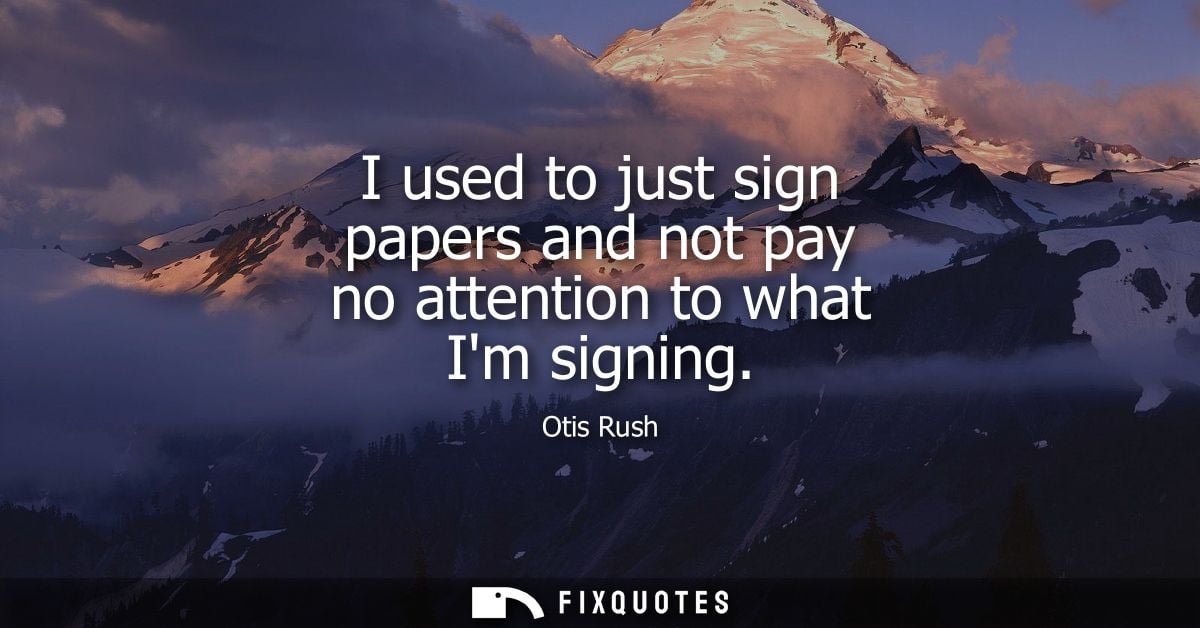
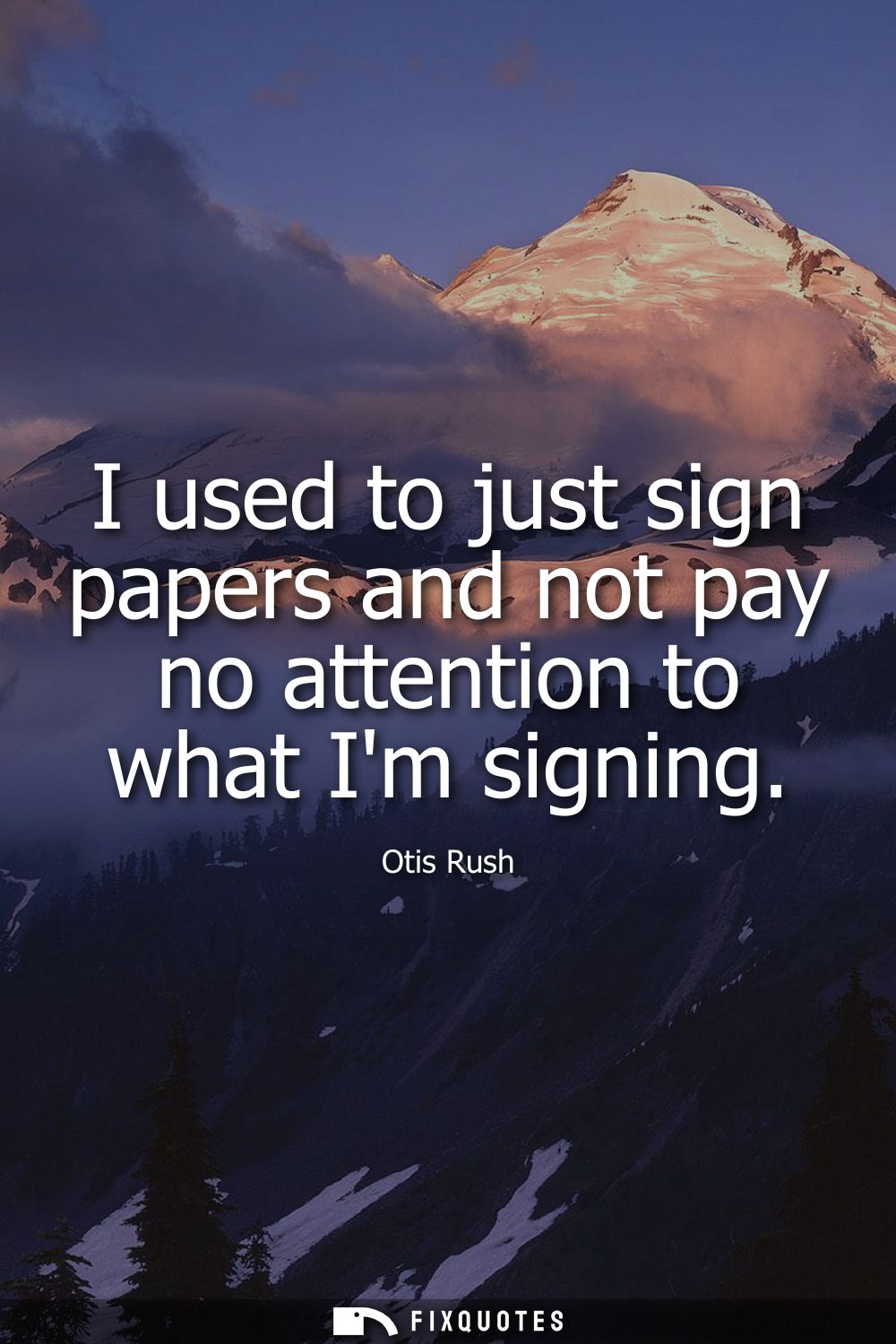
"I used to just sign papers and not pay no attention to what I'm signing"
About this Quote
There is a special kind of tragedy in how casually that sentence lands. Otis Rush delivers it in plainspoken blues grammar, the double negative doing what polished English can’t: it makes the neglect feel habitual, almost automatic. “Used to” carries a quiet timeline of damage. This isn’t a one-off mistake; it’s a pattern learned in the pressure cooker of gigs, travel, and survival, where paperwork is background noise and the music is the only thing that feels real.
The intent reads as confession without theatrics. Rush isn’t angling for sympathy; he’s naming a mechanism of exploitation that’s so normalized in the music business it can sound like personal irresponsibility. That’s the subtext: artists, especially Black blues musicians of his era, were often taught - by managers, labels, and the culture at large - that contracts were someone else’s domain. The industry thrived on that division of labor: create the art, let others “handle” the business, then act surprised when the rights, royalties, and credit don’t follow the creator.
What makes the line work is its bluntness. No villain is named, which is exactly the point: the villain is a system that turns trust, haste, and fatigue into legal surrender. “Sign papers” is almost comically bureaucratic against the intensity of Rush’s music, and that contrast stings. The quote functions as a warning disguised as a memory: the cost of not reading the fine print isn’t abstract. It’s your catalog, your leverage, your life’s work, quietly signed away while you’re just trying to get to the next set.
The intent reads as confession without theatrics. Rush isn’t angling for sympathy; he’s naming a mechanism of exploitation that’s so normalized in the music business it can sound like personal irresponsibility. That’s the subtext: artists, especially Black blues musicians of his era, were often taught - by managers, labels, and the culture at large - that contracts were someone else’s domain. The industry thrived on that division of labor: create the art, let others “handle” the business, then act surprised when the rights, royalties, and credit don’t follow the creator.
What makes the line work is its bluntness. No villain is named, which is exactly the point: the villain is a system that turns trust, haste, and fatigue into legal surrender. “Sign papers” is almost comically bureaucratic against the intensity of Rush’s music, and that contrast stings. The quote functions as a warning disguised as a memory: the cost of not reading the fine print isn’t abstract. It’s your catalog, your leverage, your life’s work, quietly signed away while you’re just trying to get to the next set.
Quote Details
| Topic | Learning from Mistakes |
|---|---|
| Source | Help us find the source |
| Cite |
Citation Formats
APA Style (7th ed.)
Rush, Otis. (2026, January 16). I used to just sign papers and not pay no attention to what I'm signing. FixQuotes. https://fixquotes.com/quotes/i-used-to-just-sign-papers-and-not-pay-no-130401/
Chicago Style
Rush, Otis. "I used to just sign papers and not pay no attention to what I'm signing." FixQuotes. January 16, 2026. https://fixquotes.com/quotes/i-used-to-just-sign-papers-and-not-pay-no-130401/.
MLA Style (9th ed.)
"I used to just sign papers and not pay no attention to what I'm signing." FixQuotes, 16 Jan. 2026, https://fixquotes.com/quotes/i-used-to-just-sign-papers-and-not-pay-no-130401/. Accessed 8 Mar. 2026.
More Quotes by Otis
Add to List