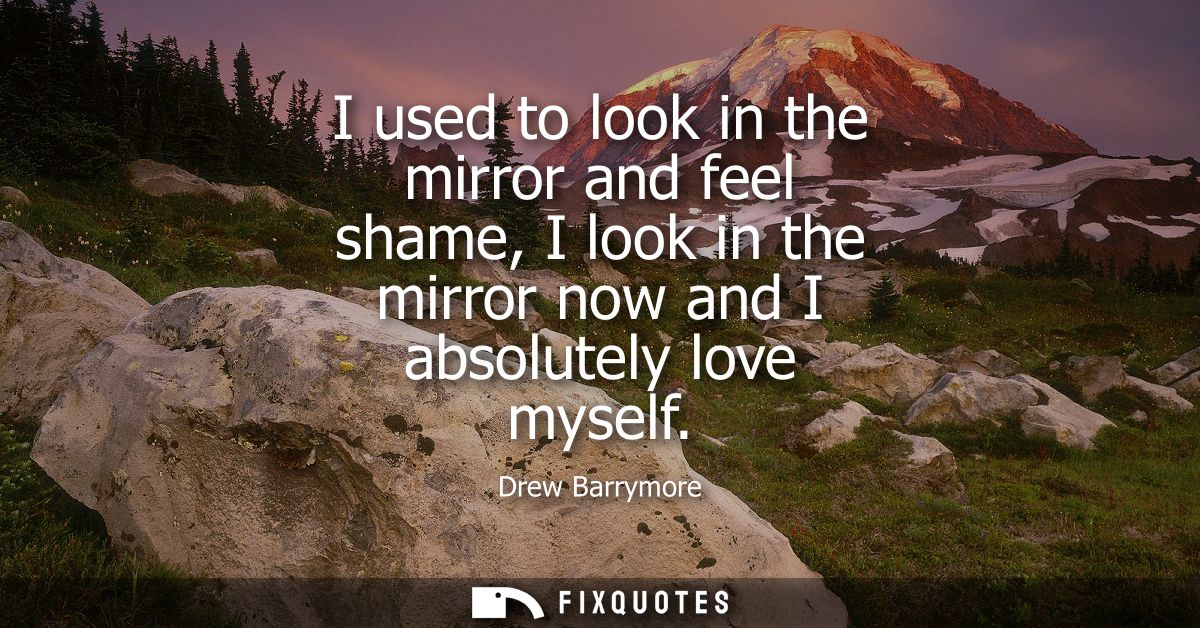
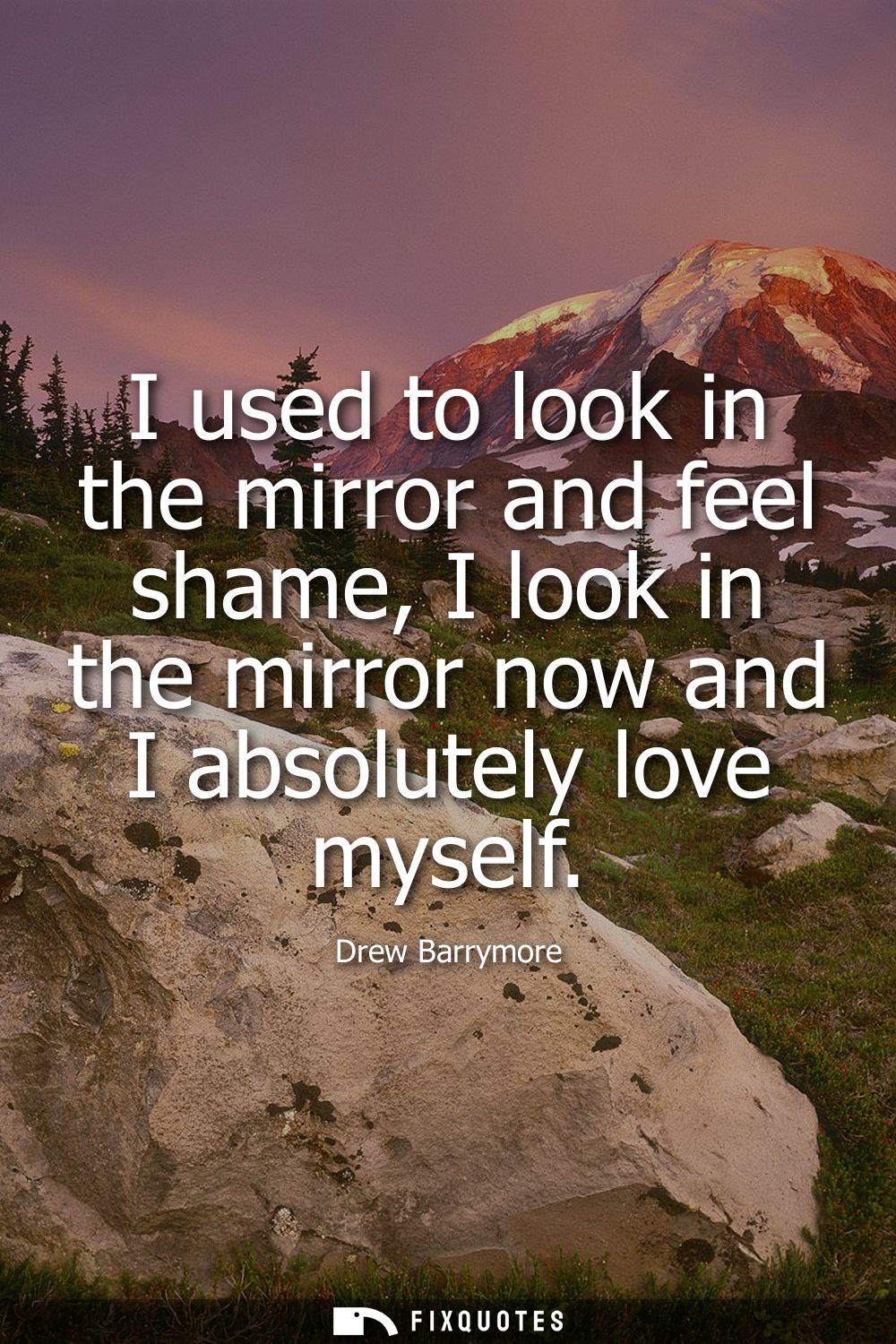
"I used to look in the mirror and feel shame, I look in the mirror now and I absolutely love myself"
About this Quote
The mirror is doing heavy symbolic lifting. It’s not just about appearance; it’s about surveillance. For women in entertainment, the mirror is a stand-in for the camera, the internet, the industry notes, the constant public audit of whether your face, body, and vibe still “work.” Saying she “used to” feel shame acknowledges how that audit gets internalized until you can’t tell where the culture ends and you begin. The pivot to “now” signals agency: she’s reclaiming the gaze, turning the mirror from a courtroom into a home.
Barrymore’s context matters. Her life has been a tabloid narrative since childhood, with very public struggles and reinventions. That history gives the quote texture: it’s not wellness-speak floating above reality, it’s someone who’s been commodified announcing she’s no longer available for self-punishment. The emphasis on “absolutely” is the tell; it’s not tentative progress. It’s a boundary line, said out loud, where other people can hear it.
Quote Details
| Topic | Self-Love |
|---|---|
| Source | Help us find the source |
| Cite |
Citation Formats
APA Style (7th ed.)
Barrymore, Drew. (2026, January 17). I used to look in the mirror and feel shame, I look in the mirror now and I absolutely love myself. FixQuotes. https://fixquotes.com/quotes/i-used-to-look-in-the-mirror-and-feel-shame-i-59645/
Chicago Style
Barrymore, Drew. "I used to look in the mirror and feel shame, I look in the mirror now and I absolutely love myself." FixQuotes. January 17, 2026. https://fixquotes.com/quotes/i-used-to-look-in-the-mirror-and-feel-shame-i-59645/.
MLA Style (9th ed.)
"I used to look in the mirror and feel shame, I look in the mirror now and I absolutely love myself." FixQuotes, 17 Jan. 2026, https://fixquotes.com/quotes/i-used-to-look-in-the-mirror-and-feel-shame-i-59645/. Accessed 29 Mar. 2026.