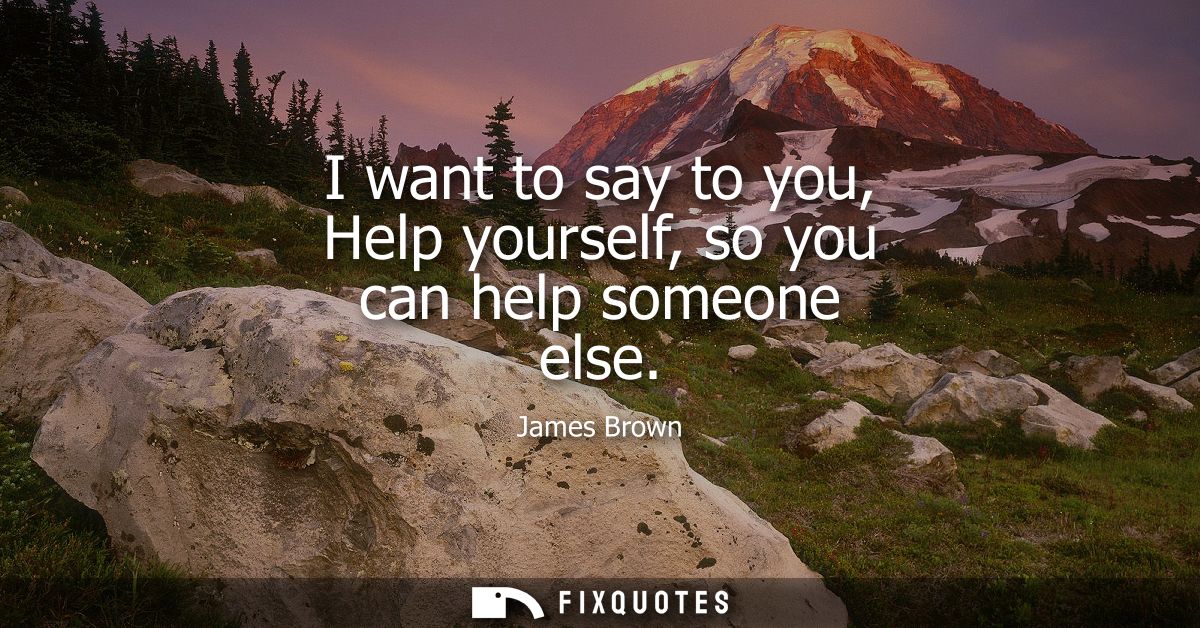
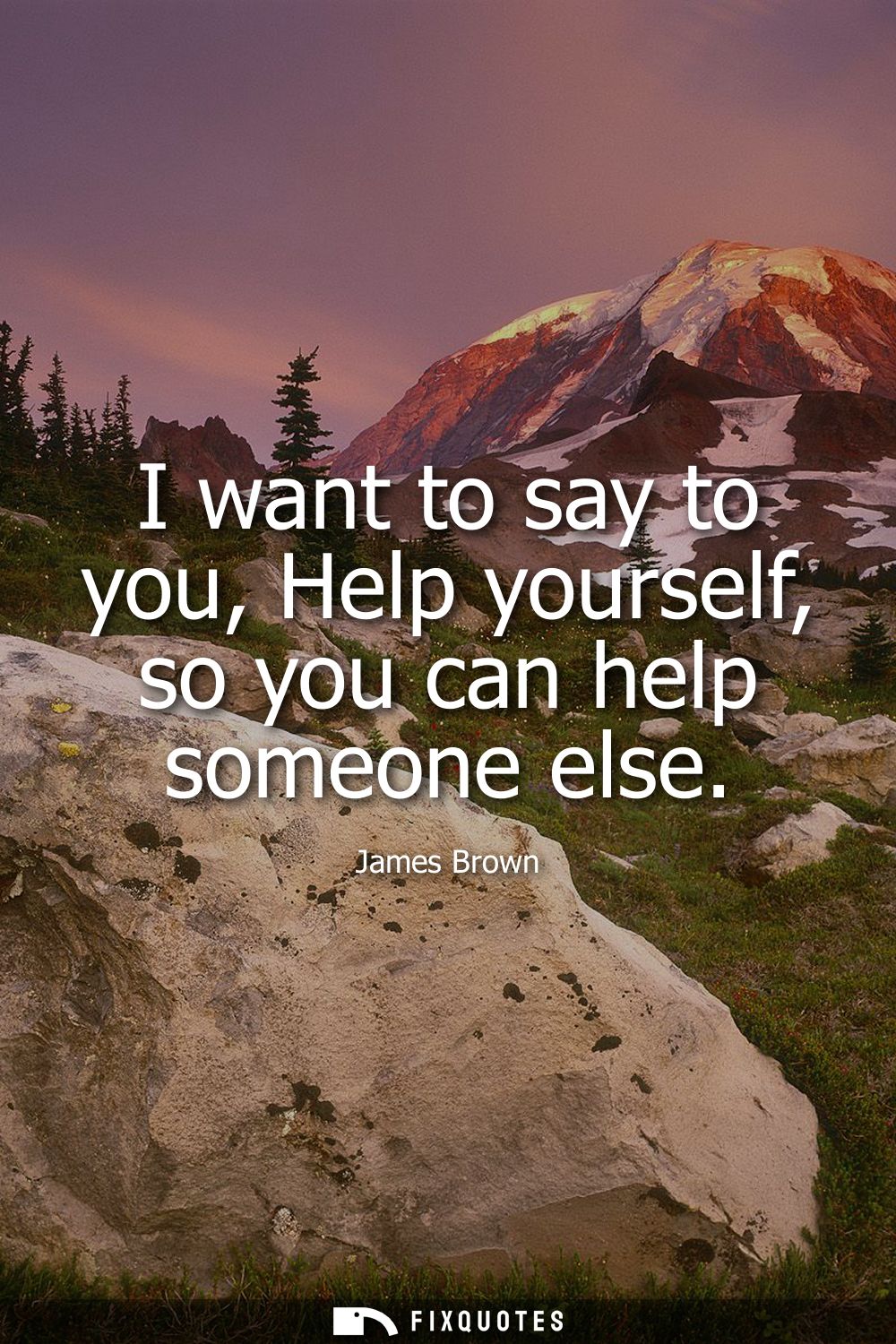
"I want to say to you, Help yourself, so you can help someone else"
About this Quote
James Brown’s line carries the snap of a bandleader’s cue: take care of your own rhythm first, because nobody else can play it for you. Coming from the Godfather of Soul, “Help yourself” isn’t the cold self-reliance of a bootstrap sermon; it’s survival advice from an artist who watched opportunity, exploitation, and pride collide in the same room. Brown built a career on discipline masquerading as showmanship: the cape routine, the razor-tight hits, the fines for missed notes. The message underneath is practical and unsentimental: agency is the only resource you can reliably control, and it’s the prerequisite for generosity that actually lands.
The second clause flips the first from personal improvement into civic ethic. Brown doesn’t sanctify self-care as an end state; he frames it as a tool. That matters in a Black American cultural context where “helping someone else” often isn’t abstract charity but mutual aid, family responsibility, and community uplift in the face of institutions that historically refused to help at all. It’s also a sly rebuke to performative virtue: you don’t get credit for rescuing people if you’re crumbling yourself.
The line works because it compresses a whole philosophy of resilience into a conversational push. Brown’s voice (even on the page) implies urgency, not contemplation. He’s not asking for perfection, just competence - enough stability to extend your hand without needing someone else to hold you up.
The second clause flips the first from personal improvement into civic ethic. Brown doesn’t sanctify self-care as an end state; he frames it as a tool. That matters in a Black American cultural context where “helping someone else” often isn’t abstract charity but mutual aid, family responsibility, and community uplift in the face of institutions that historically refused to help at all. It’s also a sly rebuke to performative virtue: you don’t get credit for rescuing people if you’re crumbling yourself.
The line works because it compresses a whole philosophy of resilience into a conversational push. Brown’s voice (even on the page) implies urgency, not contemplation. He’s not asking for perfection, just competence - enough stability to extend your hand without needing someone else to hold you up.
Quote Details
| Topic | Self-Improvement |
|---|---|
| Source | Help us find the source |
| Cite | Cite this Quote |
Citation Formats
APA Style (7th ed.)
Brown, James. (n.d.). I want to say to you, Help yourself, so you can help someone else. FixQuotes. https://fixquotes.com/quotes/i-want-to-say-to-you-help-yourself-so-you-can-133006/
Chicago Style
Brown, James. "I want to say to you, Help yourself, so you can help someone else." FixQuotes. Accessed February 3, 2026. https://fixquotes.com/quotes/i-want-to-say-to-you-help-yourself-so-you-can-133006/.
MLA Style (9th ed.)
"I want to say to you, Help yourself, so you can help someone else." FixQuotes, https://fixquotes.com/quotes/i-want-to-say-to-you-help-yourself-so-you-can-133006/. Accessed 3 Feb. 2026.
More Quotes by James
Add to List