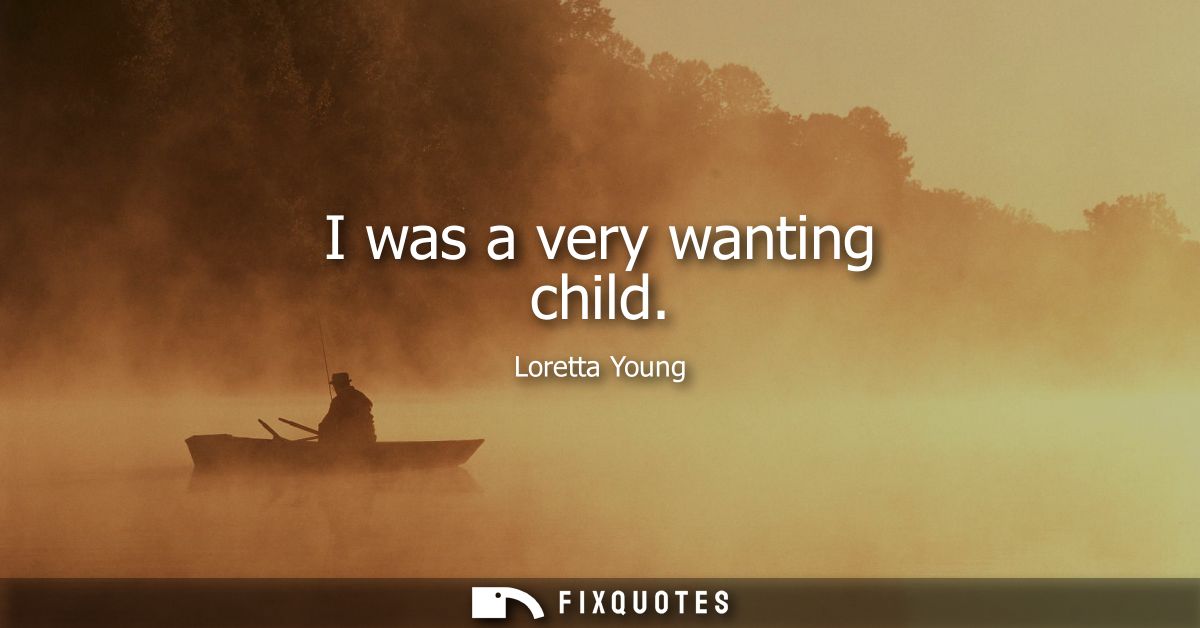
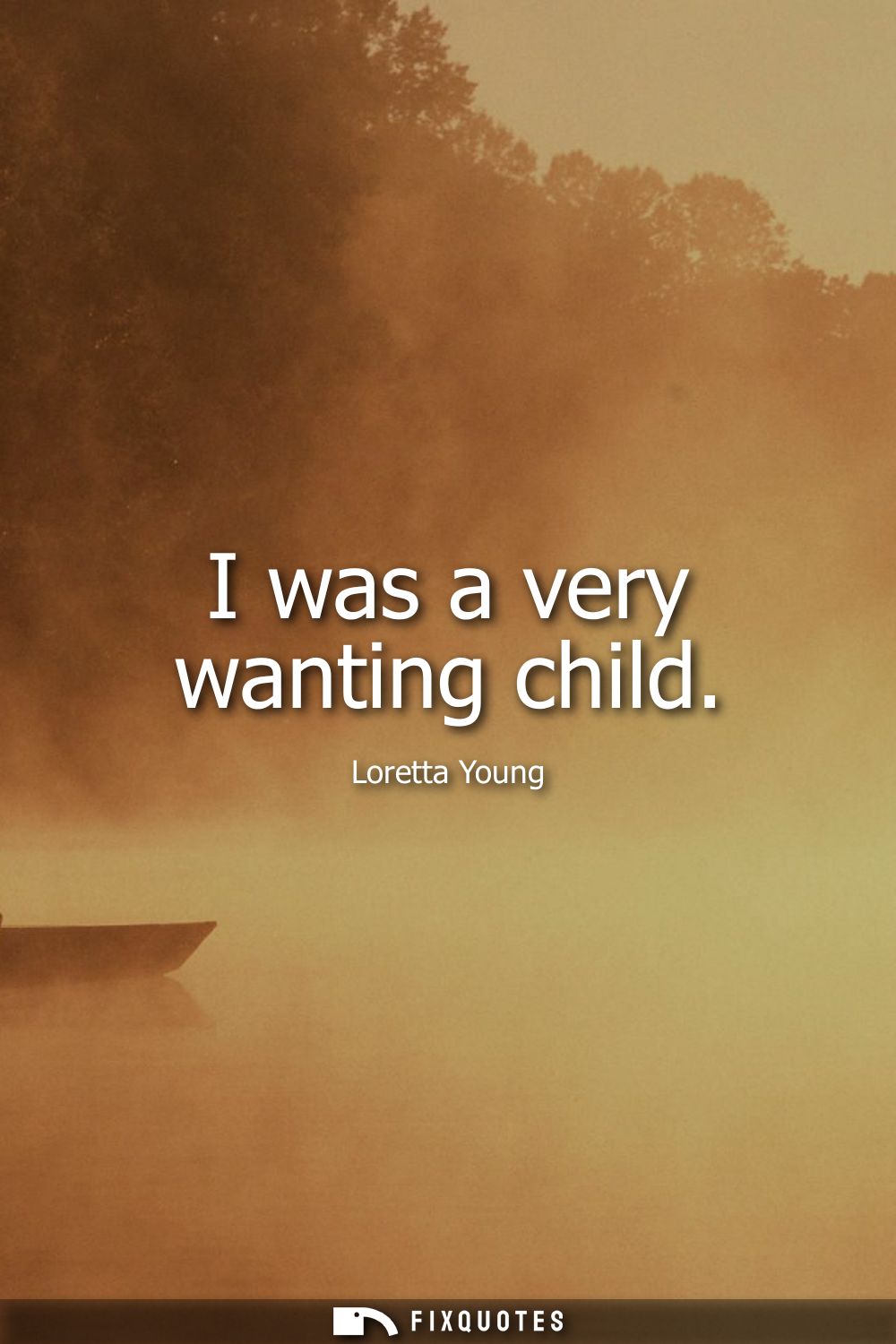
"I was a very wanting child"
About this Quote
"I was a very wanting child" lands with the quiet sting of someone choosing understatement over confession. Loretta Young isn’t saying she was needy in the casual, modern sense; she’s reaching for an older, more layered meaning of "wanting" as lacking, deprived, unfinished. The phrase makes absence feel like a personality trait, as if shortage shaped her temperament as much as family or talent did. It’s a compact way to turn childhood into a conditions report: not just what she felt, but what she didn’t have.
Coming from an actress whose public image traded in poise, moral certainty, and studio-era polish, the line reads like a seam showing through the costume. Young built a career during a period when Hollywood trained women to appear self-contained: elegant, controlled, never too hungry for anything. Calling herself "wanting" punctures that mythology. It suggests desire that couldn’t be safely expressed - for attention, security, affection, legitimacy, maybe even for permission to be complicated.
The brilliance is in the grammar. "A very wanting child" isn’t "a child who wanted a lot". It’s an identity label, not an anecdote. That phrasing implies long-term scarcity rather than a single hardship, and it sidesteps melodrama while inviting it. In a culture that rewarded actresses for being objects of desire, Young flips the axis: she was the one wanting. The vulnerability is controlled, but it’s real, and that restraint is exactly why it hits.
Coming from an actress whose public image traded in poise, moral certainty, and studio-era polish, the line reads like a seam showing through the costume. Young built a career during a period when Hollywood trained women to appear self-contained: elegant, controlled, never too hungry for anything. Calling herself "wanting" punctures that mythology. It suggests desire that couldn’t be safely expressed - for attention, security, affection, legitimacy, maybe even for permission to be complicated.
The brilliance is in the grammar. "A very wanting child" isn’t "a child who wanted a lot". It’s an identity label, not an anecdote. That phrasing implies long-term scarcity rather than a single hardship, and it sidesteps melodrama while inviting it. In a culture that rewarded actresses for being objects of desire, Young flips the axis: she was the one wanting. The vulnerability is controlled, but it’s real, and that restraint is exactly why it hits.
Quote Details
| Topic | Youth |
|---|---|
| Source | Help us find the source |
| Cite |
Citation Formats
APA Style (7th ed.)
Young, Loretta. (2026, January 15). I was a very wanting child. FixQuotes. https://fixquotes.com/quotes/i-was-a-very-wanting-child-150756/
Chicago Style
Young, Loretta. "I was a very wanting child." FixQuotes. January 15, 2026. https://fixquotes.com/quotes/i-was-a-very-wanting-child-150756/.
MLA Style (9th ed.)
"I was a very wanting child." FixQuotes, 15 Jan. 2026, https://fixquotes.com/quotes/i-was-a-very-wanting-child-150756/. Accessed 27 Mar. 2026.
More Quotes by Loretta
Add to List