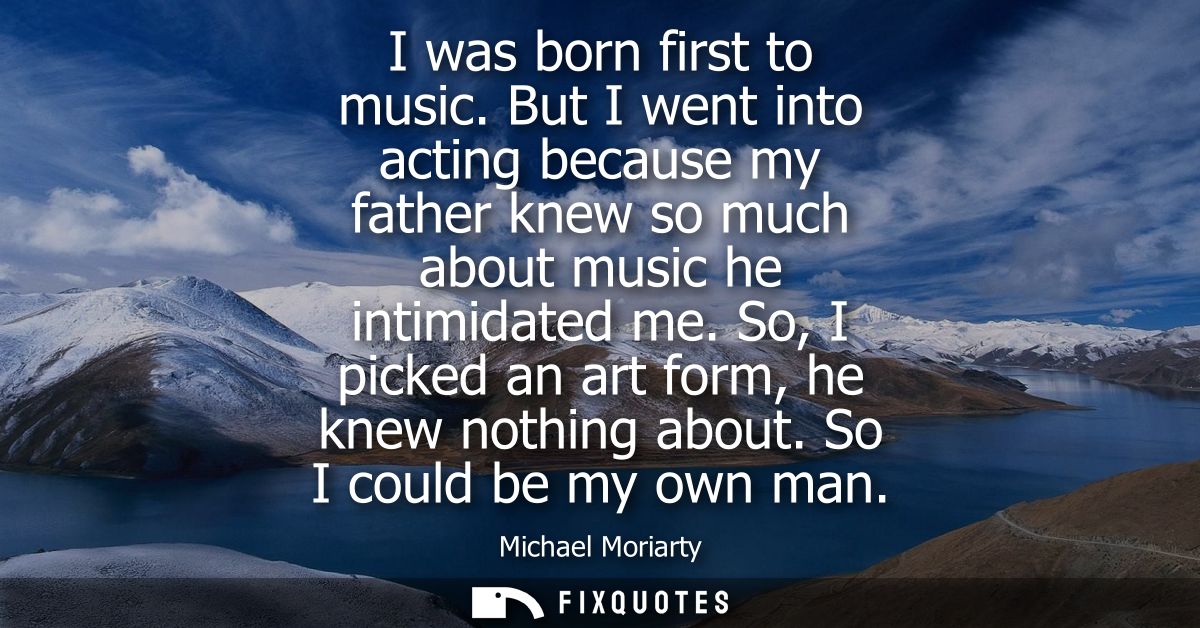
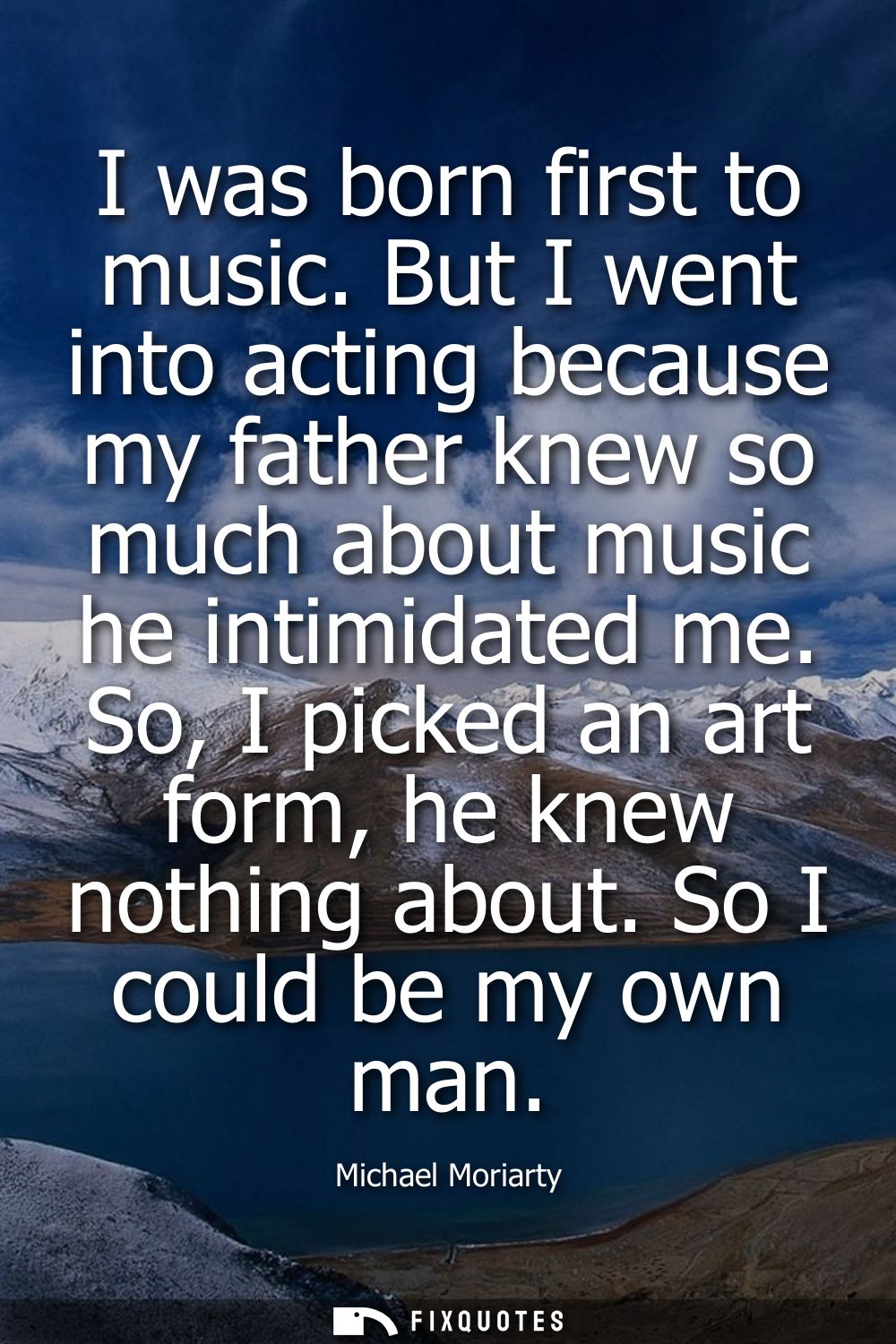
"I was born first to music. But I went into acting because my father knew so much about music he intimidated me. So I picked an art form he knew nothing about. So I could be my own man"
About this Quote
So he pivots to acting, not as a second-best compromise but as an act of strategic self-invention. The line "an art form he knew nothing about" is both pragmatic and quietly defiant. It implies that artistry isn’t only about expression; it’s about jurisdiction. Moriarty chooses a medium where he can’t be out-argued at the dinner table, where his authority is earned onstage and on set, not inherited. That’s a deeply American move: autonomy as a craft decision.
The phrasing keeps it conversational, almost shrugging, but the subtext is tense: affection mixed with competition, admiration mixed with the need to escape comparison. "So I could be my own man" lands like a thesis statement about masculinity in the mid-century family model, where becoming oneself often meant becoming elsewhere. The quote also hints at why acting, with its fluid identities, can paradoxically become the cleanest route to a stable self.
Quote Details
| Topic | Father |
|---|---|
| Source | Help us find the source |
| Cite |
Citation Formats
APA Style (7th ed.)
Moriarty, Michael. (2026, February 16). I was born first to music. But I went into acting because my father knew so much about music he intimidated me. So I picked an art form he knew nothing about. So I could be my own man. FixQuotes. https://fixquotes.com/quotes/i-was-born-first-to-music-but-i-went-into-acting-122998/
Chicago Style
Moriarty, Michael. "I was born first to music. But I went into acting because my father knew so much about music he intimidated me. So I picked an art form he knew nothing about. So I could be my own man." FixQuotes. February 16, 2026. https://fixquotes.com/quotes/i-was-born-first-to-music-but-i-went-into-acting-122998/.
MLA Style (9th ed.)
"I was born first to music. But I went into acting because my father knew so much about music he intimidated me. So I picked an art form he knew nothing about. So I could be my own man." FixQuotes, 16 Feb. 2026, https://fixquotes.com/quotes/i-was-born-first-to-music-but-i-went-into-acting-122998/. Accessed 3 Apr. 2026.