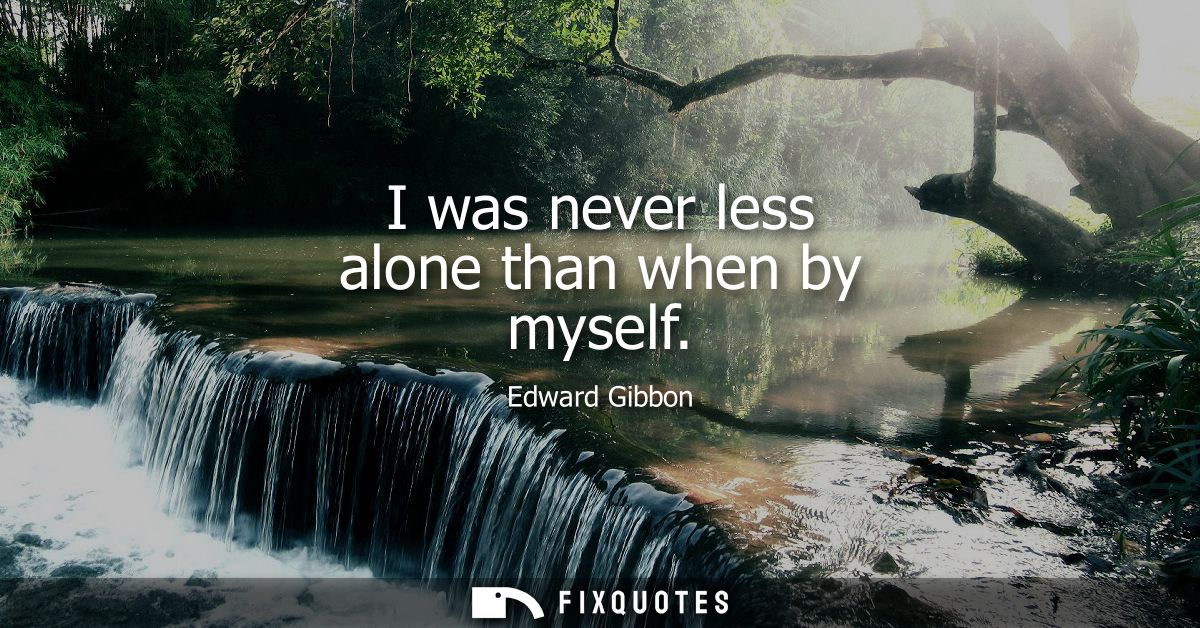
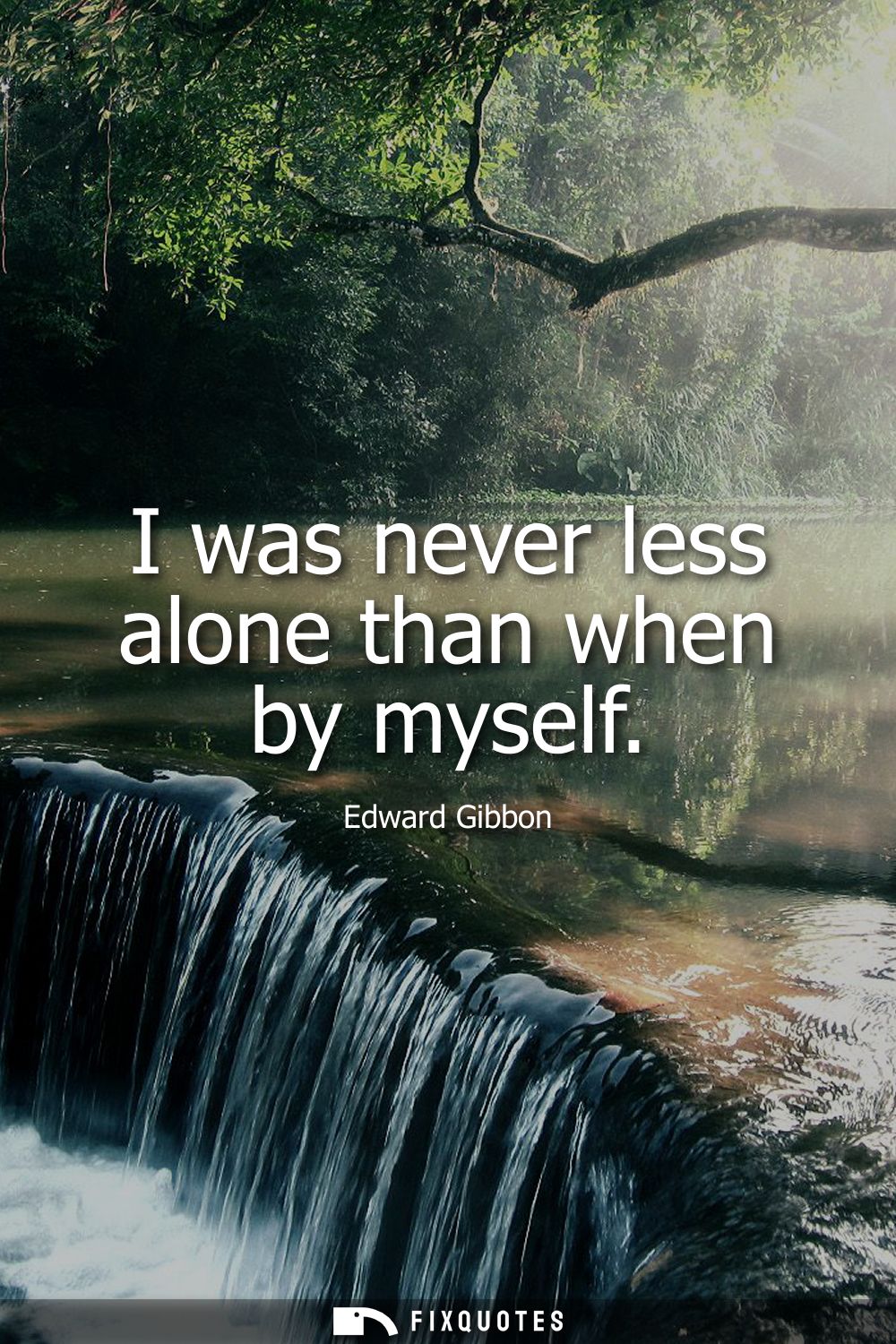
"I was never less alone than when by myself"
About this Quote
Solitude, in Gibbon's hands, isn't a lack; it's a crowded room. "I was never less alone than when by myself" is a paradox engineered to flatter a certain kind of mind: the kind that treats thought as company and books as a social world more reliable than actual society. Coming from an 18th-century historian who spent years inside the long, echoing corridors of the Roman Empire, the line reads less like a self-help mantra and more like an aristocratic shrug at the noise of everyone else.
The intent is to redefine "alone" as a psychological condition rather than a physical fact. Gibbon implies that being with people can be lonelier than being without them, because social presence often demands performance: politeness, small talk, the soft coercions of conformity. By contrast, solitude lets him keep better company - his own mind, and the dead. For a historian, the past is a populated place; the archive is a city, the footnote a dinner party with centuries.
Subtext: this is also a defense of the work. Writing history at Gibbon's scale requires monastic focus, and the line quietly dignifies that withdrawal as richness, not deprivation. In an era of salons and sociability, he's staking a claim that the deepest conversation happens offstage, where the self isn't reduced to a role. It's a private rebuke to the idea that connection is measured by proximity.
The intent is to redefine "alone" as a psychological condition rather than a physical fact. Gibbon implies that being with people can be lonelier than being without them, because social presence often demands performance: politeness, small talk, the soft coercions of conformity. By contrast, solitude lets him keep better company - his own mind, and the dead. For a historian, the past is a populated place; the archive is a city, the footnote a dinner party with centuries.
Subtext: this is also a defense of the work. Writing history at Gibbon's scale requires monastic focus, and the line quietly dignifies that withdrawal as richness, not deprivation. In an era of salons and sociability, he's staking a claim that the deepest conversation happens offstage, where the self isn't reduced to a role. It's a private rebuke to the idea that connection is measured by proximity.
Quote Details
| Topic | Loneliness |
|---|
More Quotes by Edward
Add to List