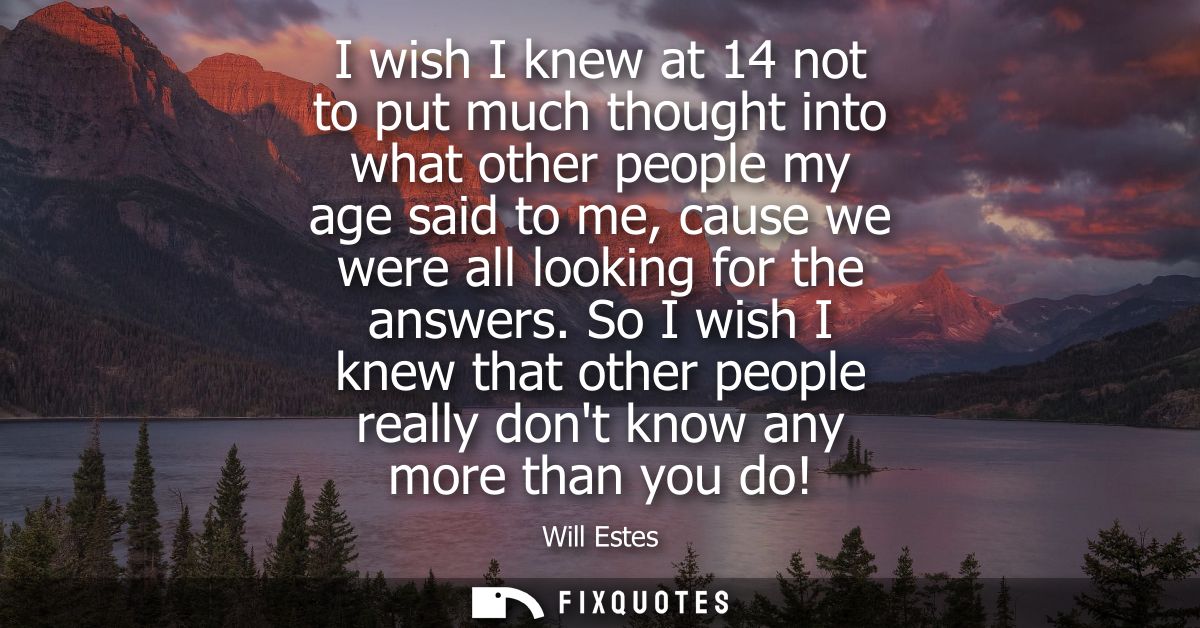
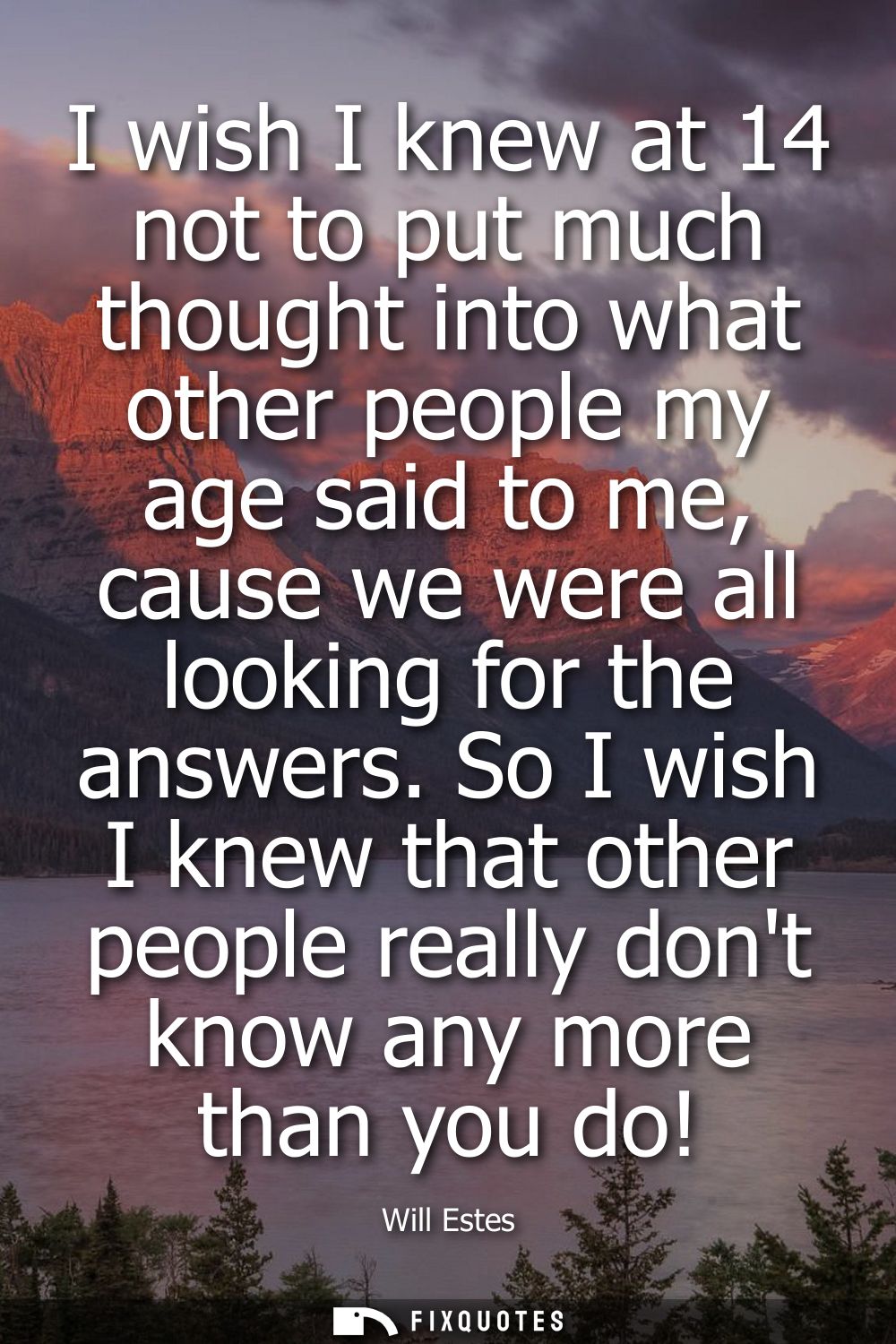
"I wish I knew at 14 not to put much thought into what other people my age said to me, cause we were all looking for the answers. So I wish I knew that other people really don't know any more than you do!"
About this Quote
There is a quiet kind of swagger in this, the kind that only shows up once you have enough distance from adolescence to see how flimsy its confidence really was. Will Estes frames teen social life as a room full of people speaking loudly while privately guessing. That’s the intent: to detox the authority we grant our peers at 14, when “everyone else” feels like a jury and every comment lands like a verdict.
The subtext is less “ignore people” than “downgrade their certainty.” Estes isn’t romanticizing teenage cruelty or dismissing it; he’s puncturing the illusion that the kids doing the judging have better information. “We were all looking for the answers” is a soft, generous clause that reclassifies the whole ecosystem of insults, gossip, and posturing as anxious research. It reframes the teenager who cuts you down not as a villain with insight, but as another confused kid trying to look like they’ve solved the puzzle.
As an actor’s retrospective, it also carries an industry-adjacent context: performance as survival. Adolescence is a first stage, and the audience is brutal. Estes’ phrasing nudges you toward a practical takeaway: don’t outsource your self-concept to people who are still building theirs. The most effective move here is the leveling: “don’t know any more than you do” hands authority back to the listener without pretending adulthood comes with clean answers either. It’s permission to be unfinished without being ashamed of it.
The subtext is less “ignore people” than “downgrade their certainty.” Estes isn’t romanticizing teenage cruelty or dismissing it; he’s puncturing the illusion that the kids doing the judging have better information. “We were all looking for the answers” is a soft, generous clause that reclassifies the whole ecosystem of insults, gossip, and posturing as anxious research. It reframes the teenager who cuts you down not as a villain with insight, but as another confused kid trying to look like they’ve solved the puzzle.
As an actor’s retrospective, it also carries an industry-adjacent context: performance as survival. Adolescence is a first stage, and the audience is brutal. Estes’ phrasing nudges you toward a practical takeaway: don’t outsource your self-concept to people who are still building theirs. The most effective move here is the leveling: “don’t know any more than you do” hands authority back to the listener without pretending adulthood comes with clean answers either. It’s permission to be unfinished without being ashamed of it.
Quote Details
| Topic | Youth |
|---|
More Quotes by Will
Add to List